

What a pigeon net is and who needs one
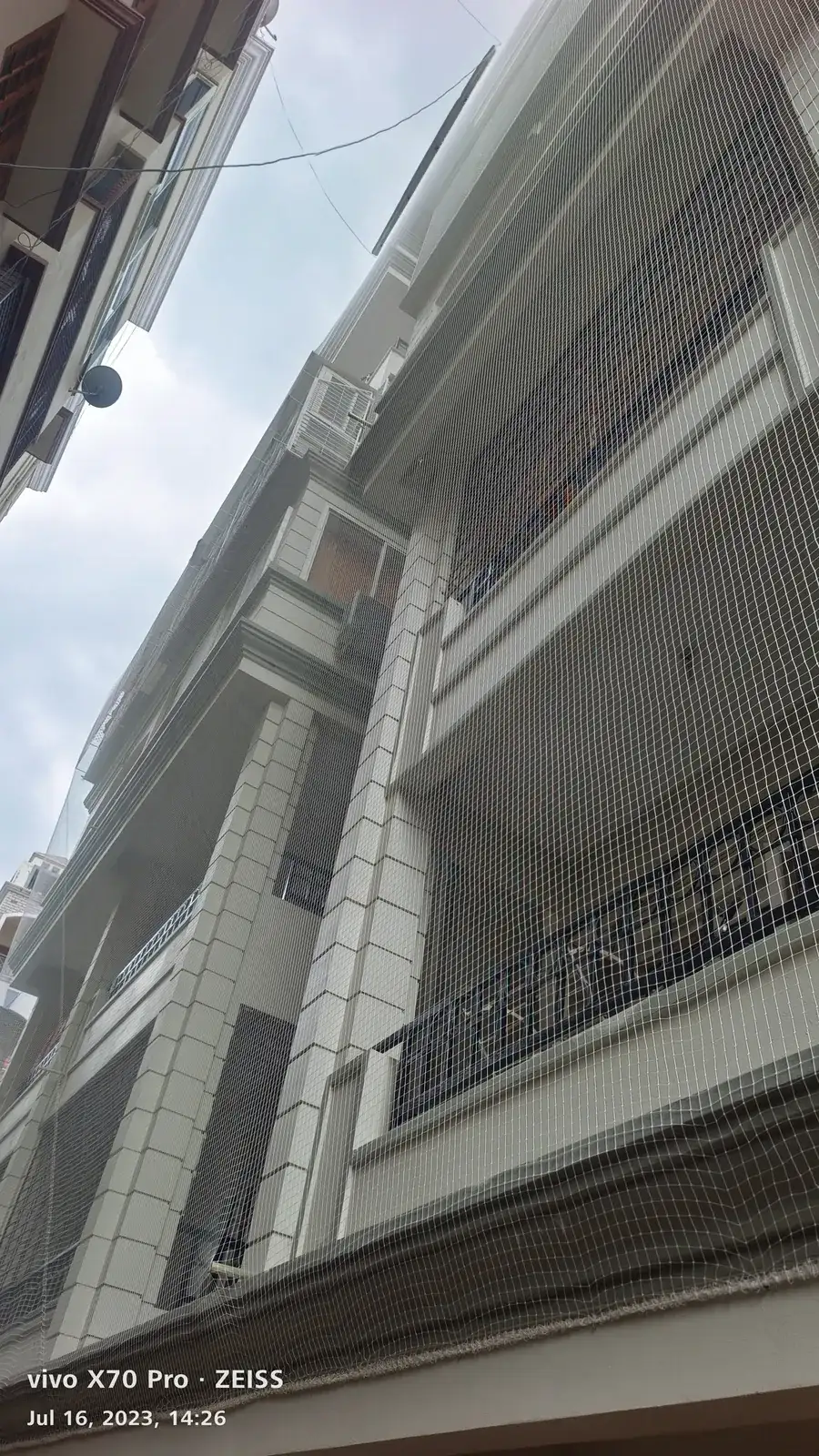
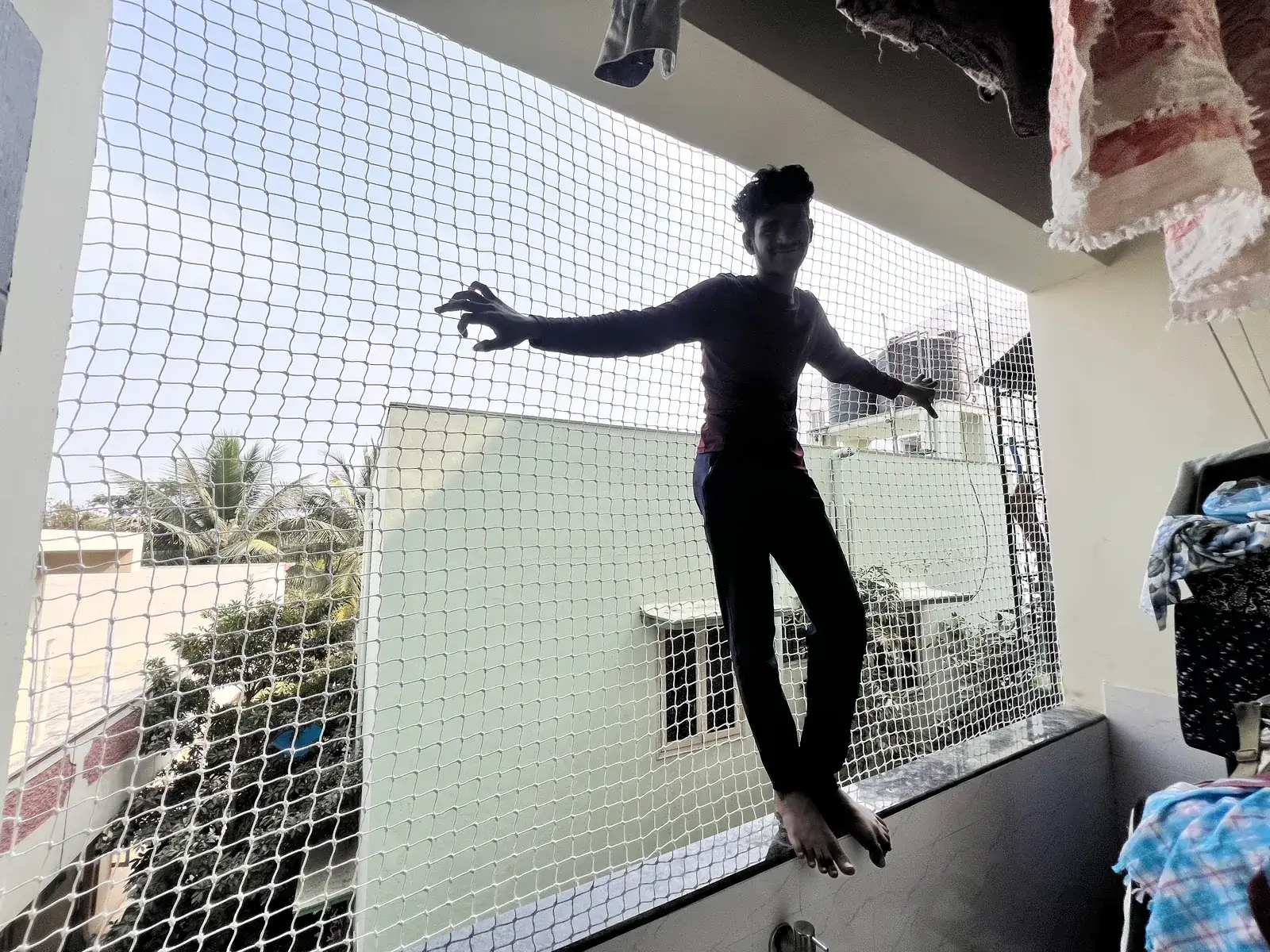
A pigeon net is a lightweight mesh fixed across an opening so that pigeons cannot get in. It is tied to a tight border rope or wire, and that border is held by hooks or anchors placed every 30–60 cm along the edge of the opening. When it is done properly, the net sits flat, does not sag and does not flap in wind.
You probably need a pigeon net if any of these sound familiar:
- Pigeons sit on your balcony railing or window ledge every morning and evening.
- Droppings collect on the floor, the AC outdoor unit or the washing machine.
- Birds are nesting behind the AC unit, on top of a cupboard or inside the duct area.
- You hear cooing and fluttering in the duct or utility area at night.
- Clothes drying in the balcony are getting soiled.
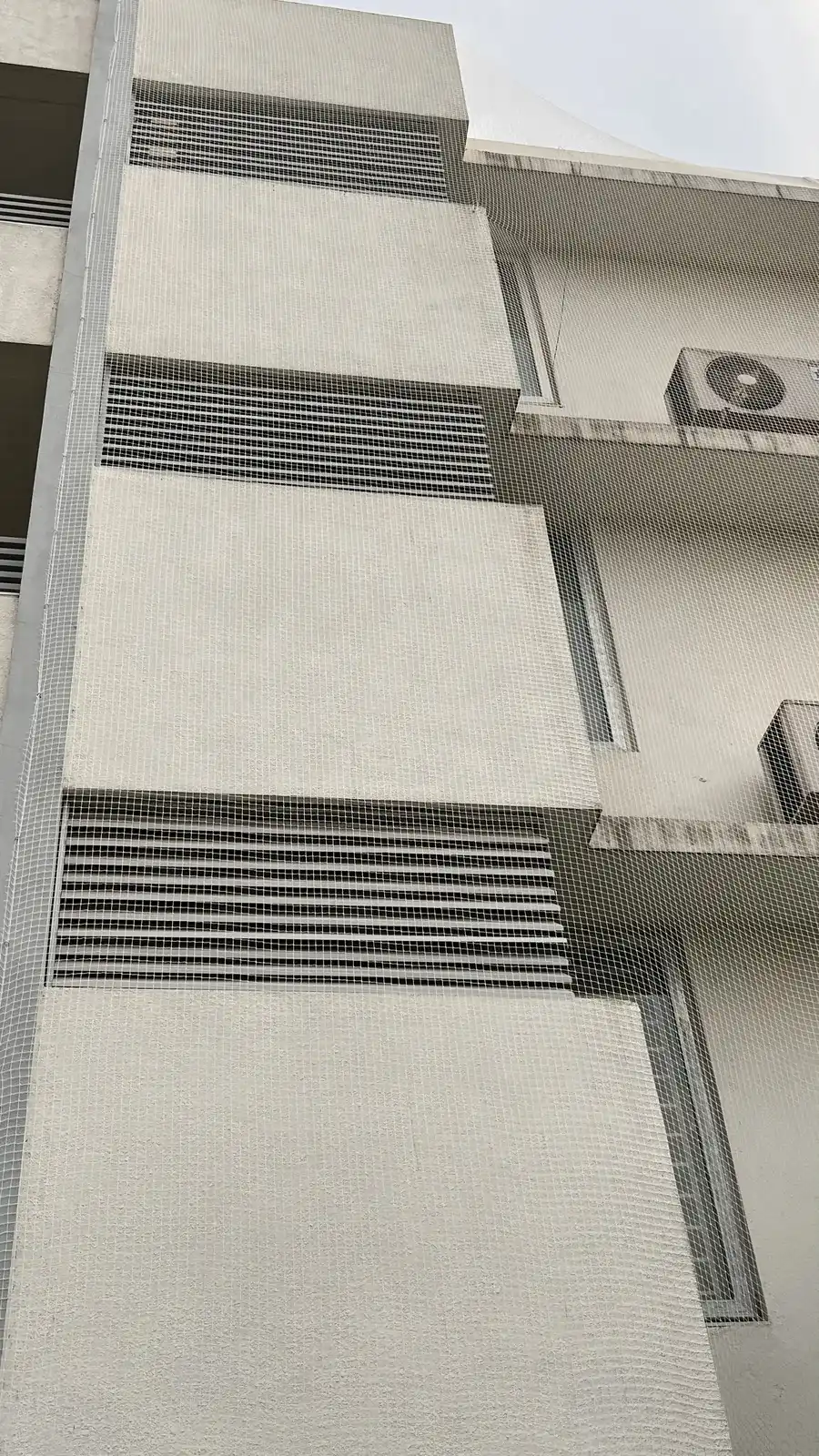
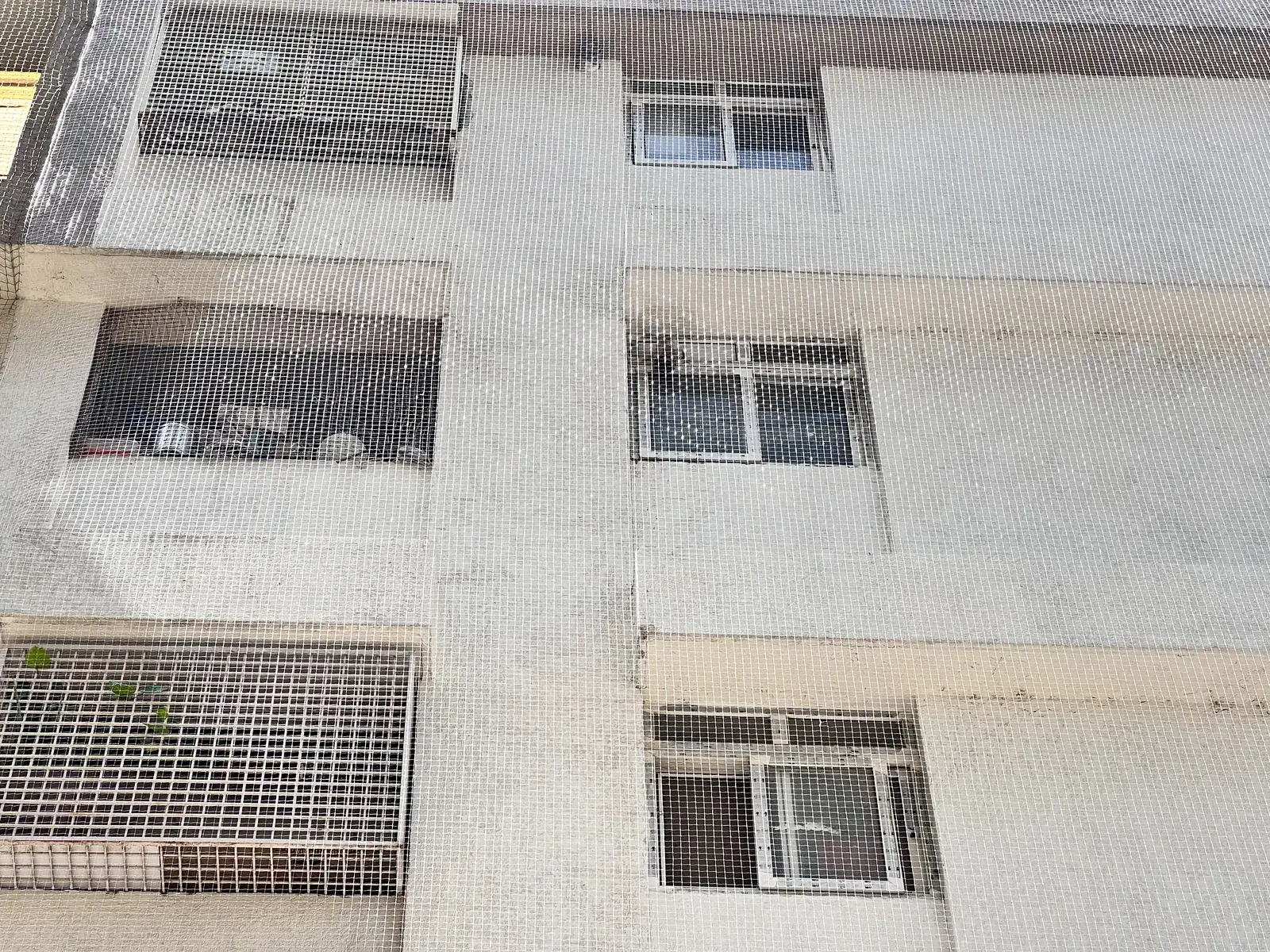
The problem is worst in apartment buildings, because each balcony, sunshade and duct gives pigeons a sheltered ledge high above the ground. Independent houses get pigeons too, mostly in open staircases, terraces, car porches and the gaps under roof sheets.
Why pigeons are more than a nuisance
Pigeon droppings are acidic. Over time they stain tiles, damage paint and corrode metal railings and the casing of AC units. Wet droppings make a balcony floor slippery. Nests block AC drains and pipes, and the feathers and dust get into homes through open windows.
There is also a health side. Dried droppings break down into fine dust. Breathing that dust over long periods has been linked to lung problems such as hypersensitivity pneumonitis, sometimes called “bird fancier’s lung”. Fungal infections such as histoplasmosis and cryptococcosis are also associated with bird droppings. The risk is higher for children, older people and anyone with asthma. A pigeon net does not clean up existing mess, but it stops the build-up from starting again.
Materials we use
The right net depends on how much sun the opening gets, how big it is and whether there is salt in the air. These are the materials we usually work with.
| Part | Common options | Why it matters |
|---|---|---|
| Net | HDPE (high-density polyethylene) or nylon, UV-stabilised | HDPE resists sun and water well; nylon is softer and stronger for its weight |
| Mesh size | 50 mm for pigeons, about 25 mm where small birds also enter | Smaller openings stop smaller birds but are slightly more visible |
| Colour | Transparent, white, black or green | Transparent and black are least noticeable on most buildings |
| Border | Nylon or polyester rope, or coated stainless-steel wire | Keeps the net tight; wire is better for large spans |
| Fixings | Stainless-steel hooks, eye bolts and anchors | Stainless steel does not rust and stain your walls |
For homes near the sea, where salt air corrodes ordinary iron within months, we use only stainless-steel fittings. For balconies that face the afternoon sun, we recommend a UV-stabilised net because ordinary plastic becomes brittle when it sits in direct sun all day.
Benefits of a pigeon net
- It works around the clock. Unlike spikes, gels or sound devices, a net physically closes the gap, so birds cannot simply get used to it.
- It is hard to see. From the street most people will not notice it, and your view stays largely open.
- Air and light still come in. Your balcony stays usable for drying clothes, plants and sitting out.
- It protects your property. Less staining on floors and walls, fewer blocked AC drains, and less corrosion on railings.
- It is humane. Birds are kept out, not harmed.
- It costs less than structural changes. Glass or steel enclosures cost far more and need approval in many buildings.
How we install a pigeon net, step by step
- Inspection and measurement. We look at the opening, check where the birds are entering and landing, and measure every side. We also check the wall surface so we can choose the right anchors.
- Choosing the net. We explain the mesh size, colour and border options that suit your balcony and confirm the quote with you before work begins.
- Cleaning the area. If there are old nests or droppings at the fixing points, we clear them so the hooks sit firmly. A full clean of the balcony can be done by you or arranged separately.
- Fixing the anchors. Small holes are drilled along the edge of the opening, and stainless-steel hooks or anchors go in at regular spacing.
- Running the border. A rope or coated wire is run through the hooks around the whole opening and pulled tight.
- Tying the net. The net is tied to the border at close intervals so there are no gaps at the corners or edges, which is where pigeons usually get through on poor installations.
- Final check. We trim the extra net, check every edge for gaps, show you the finished work and clear away our waste.
Maintenance and lifespan
A pigeon net needs very little care.
- Brush off dust, leaves and feathers every few weeks.
- Wash it with plain water or a mild soap solution once or twice a year.
- Look at the corners and edges after heavy storms and tell us if anything has loosened.
- Do not hang heavy items on the net or let children climb on it; it is designed to stop birds, not to carry weight. For fall protection, see our safety nets and children safety nets.
How long a net lasts depends mostly on sunlight. A UV-stabilised net on a shaded balcony can last many years. One that faces strong afternoon sun all year will age faster and should be checked more often. Stainless-steel fittings normally outlast the net itself, so a replacement later is usually just a change of mesh.
Pigeon nets compared with other methods
Bird spikes stop pigeons from sitting on one ledge but do not stop them from entering the space behind it. Gels and sprays wear off. Ultrasonic devices and reflective tape tend to work for a short time and then birds get used to them. A net is the only common method that physically closes the opening. You can read a fuller comparison in our article on pigeon nets vs bird spikes.
If your problem is mainly in the balcony, see balcony pigeon nets. If birds are getting into the shaft between flats, see duct area safety nets. If you would like a stronger barrier that also protects against falls, compare with invisible grills.