


Where pigeons settle in a Chirala house
At the ventilators
Almost every bathroom and kitchen has a ventilator with a deep ledge, and it’s usually the first place a pair chooses. A small framed net over the outside keeps air flowing and birds out. If the fan has stopped because of a nest, it usually runs again once the nest is cleared.
Above the windows
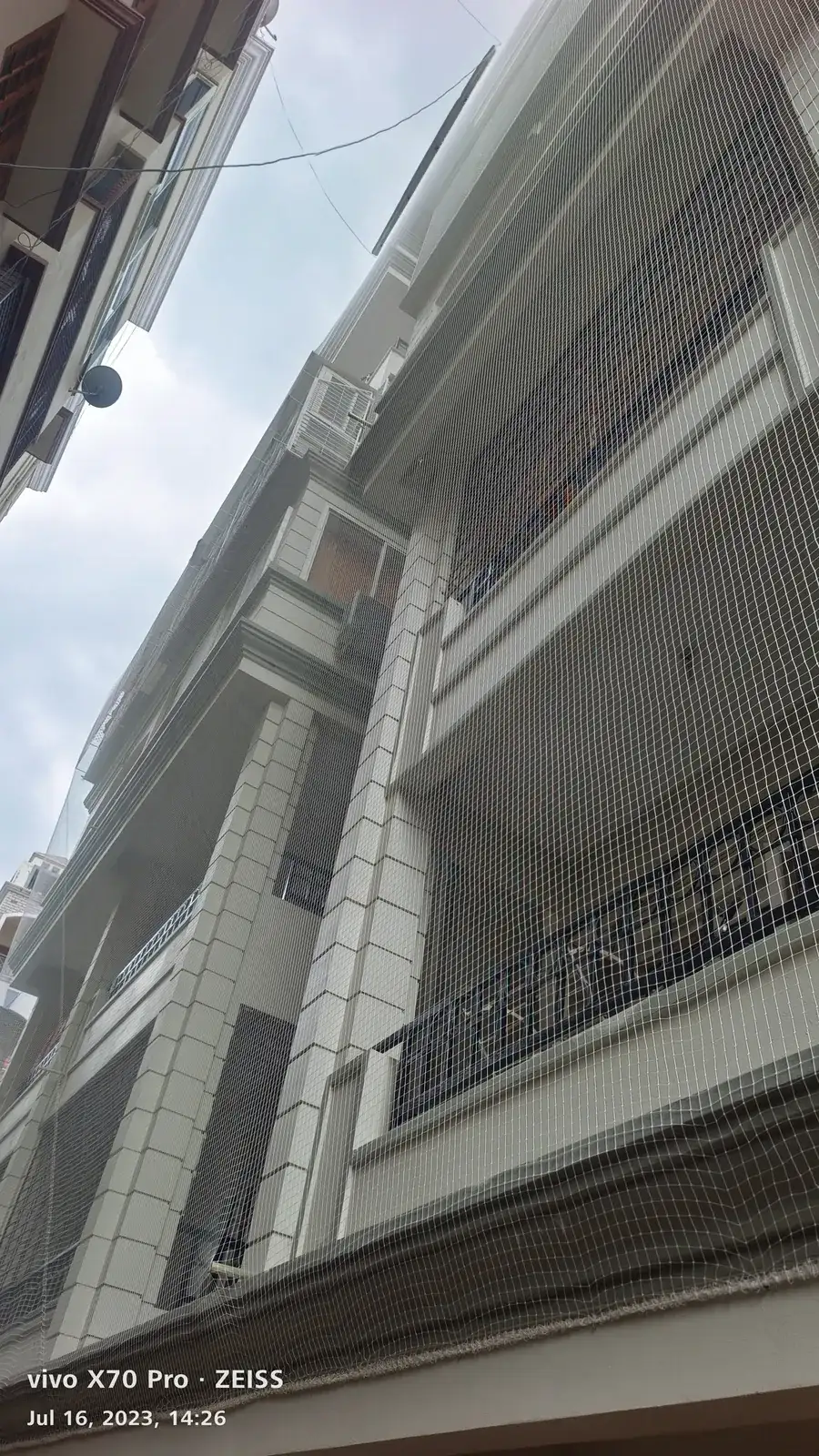
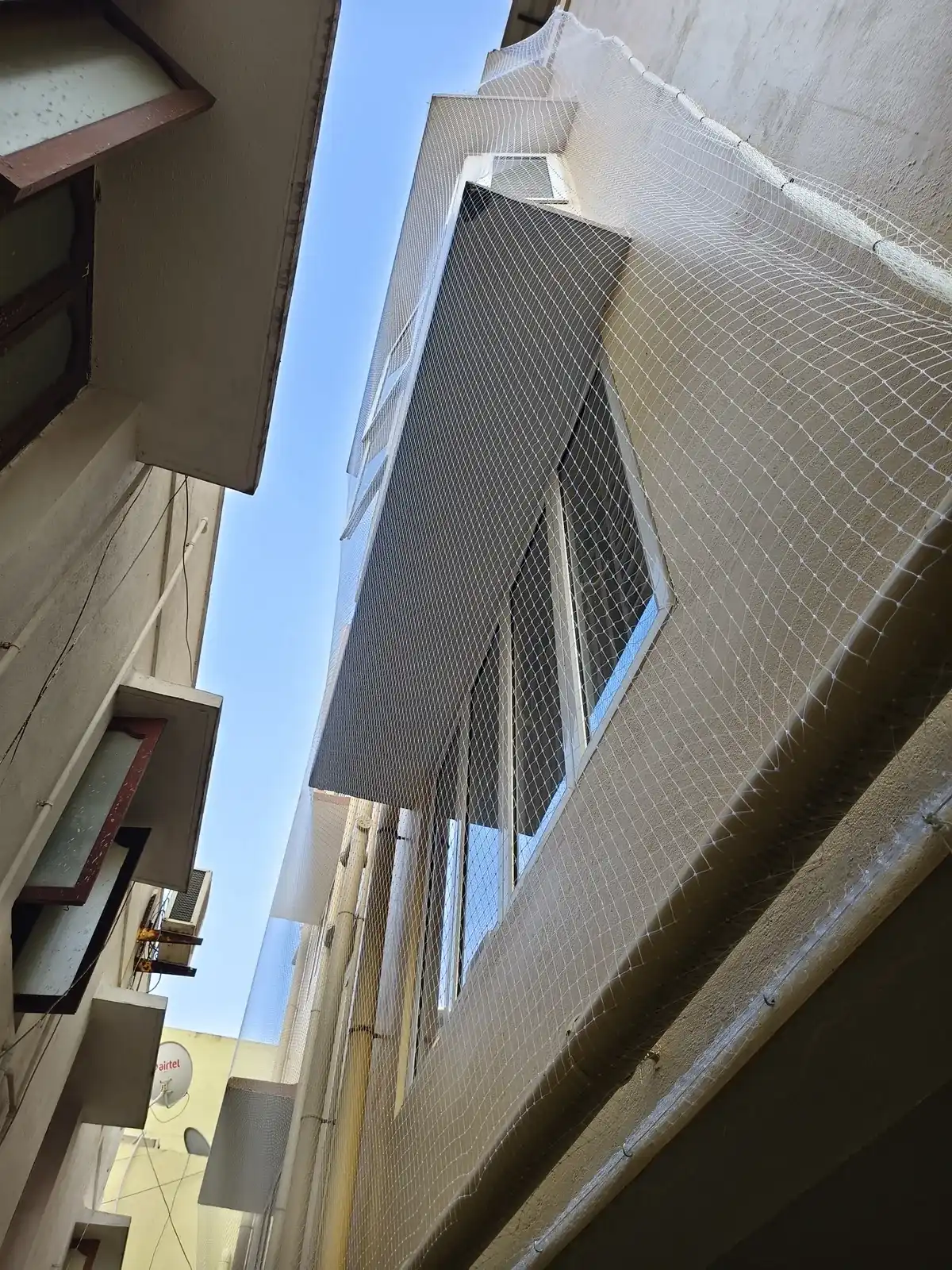
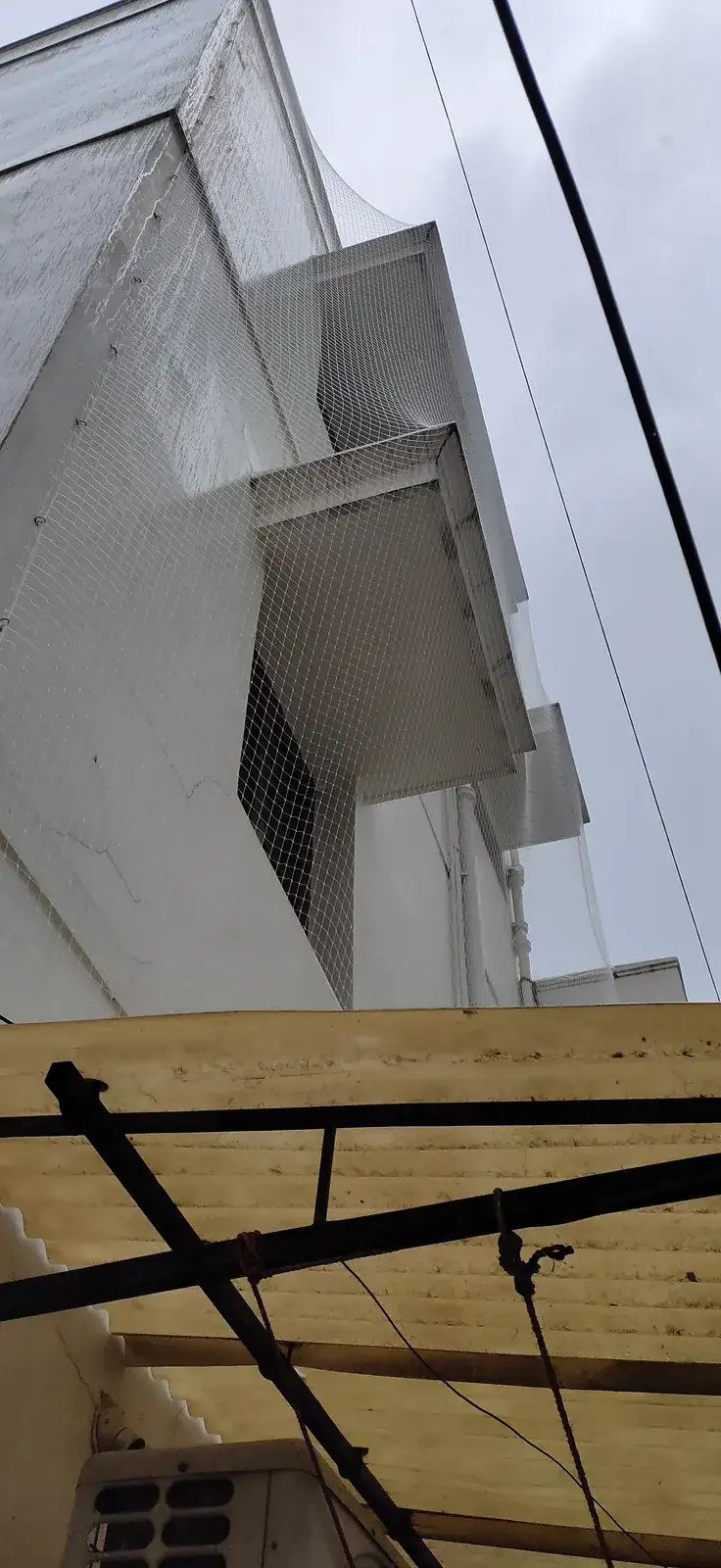
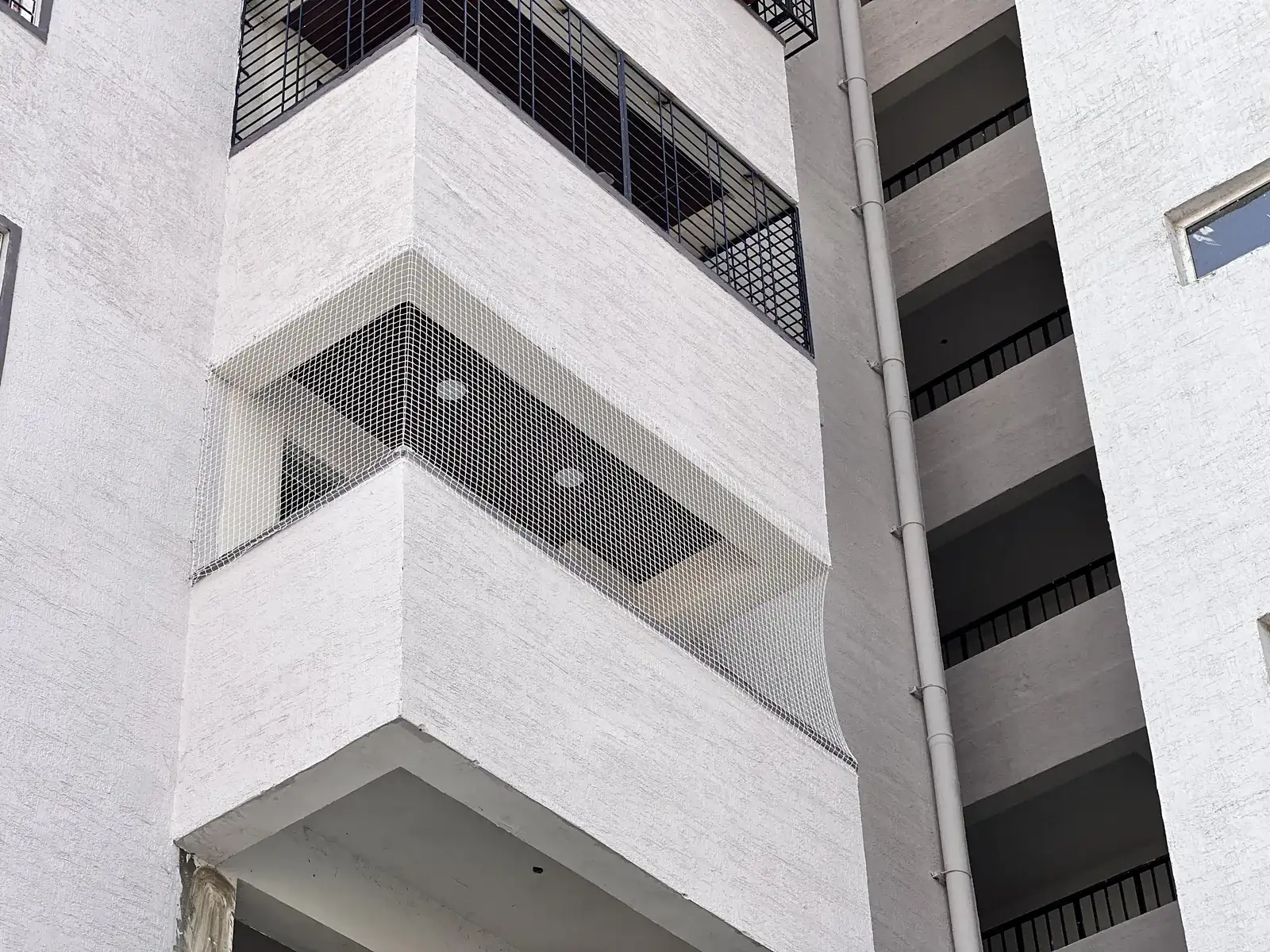
The concrete sunshade over a window is a dry shelf with shade from the afternoon sun. Birds sit there all day, and the wall below turns white. Netting the gap between the shade and the wall takes the shelf away.
On the roof
Many roofs have a sheet over the staircase head or the drying area. Where it meets the wall, there’s a sheltered gap out of the wind, which is exactly what pigeons look for. A strip of net closes it.
Behind the AC
In newer houses and the few apartment buildings, the outdoor AC unit’s bracket is an easy nest site. We net the space behind it and leave room for airflow and servicing.
Near the sea
Salt in the air rusts plain iron hooks within a season, and the rust stains run down the wall. We use only stainless steel. Nets are UV-stabilised for the strong coastal sun. In homes closest to the beach, rinse the net with fresh water every few weeks to wash off salt.
Choosing the net
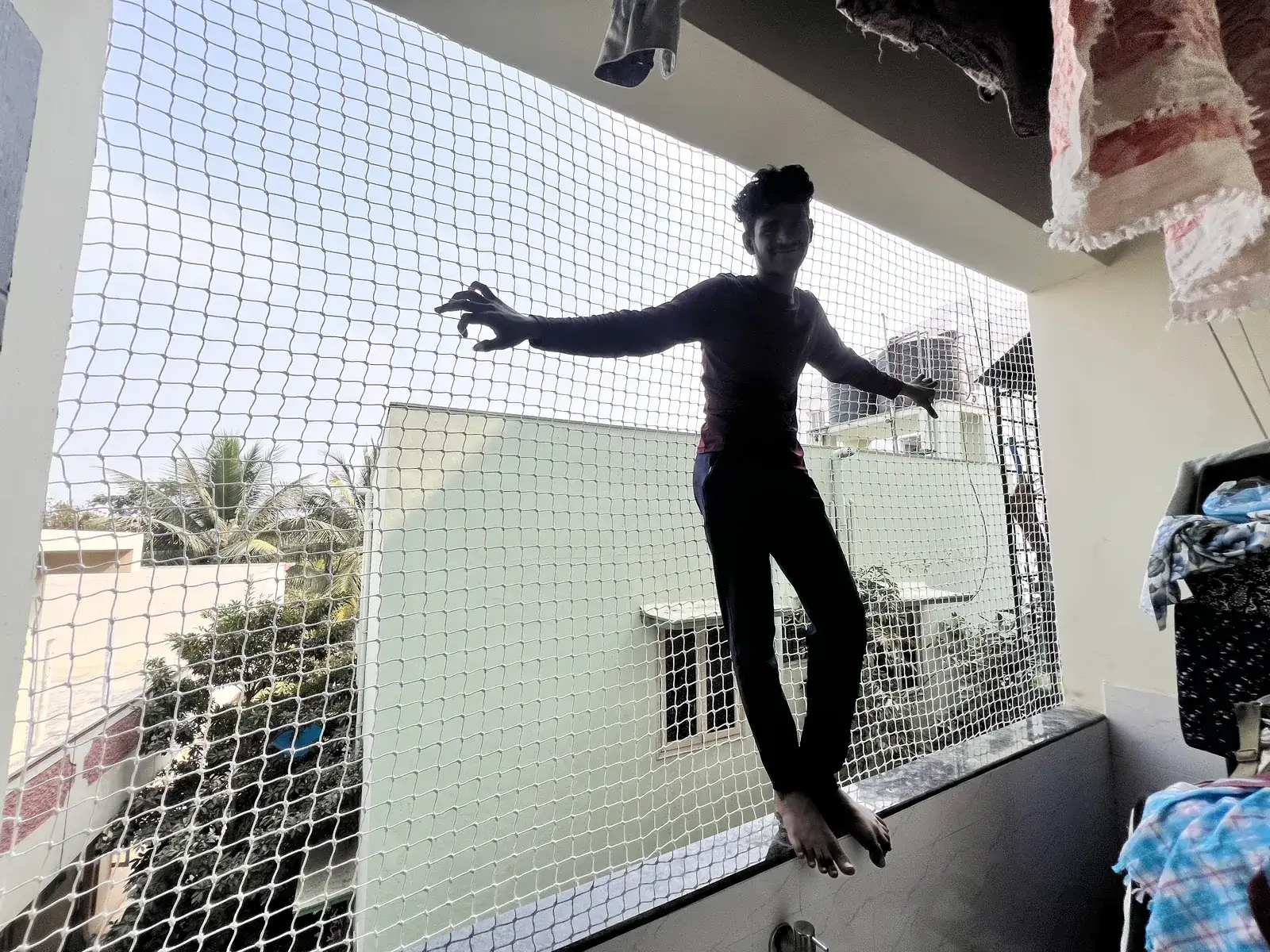
Transparent nets disappear against the sky and suit openings that face the street. Black nets are easier to see through from inside and hide dust, so they suit openings that face a wall. Both are fitted the same way.
How we fit it
We walk round the house and note every ledge in use, measure each opening, clear nests at the fixing points, fix stainless hooks around the edge, tension a border and tie the net to it at close intervals. Corners get extra ties.
Afterwards
Brush or rinse the net now and then and look it over after storms. A loose tie is quick to fix.
Before we come
Take a photo of every spot birds use and send it on WhatsApp, so we bring enough net.
For whole balconies, see balcony pigeon nets in Chirala. More on pigeon nets.
Mistakes to avoid
Closing one ledge and ignoring the rest. The pair simply moves to the next sheltered spot on the same house. Check every ventilator, sunshade and roof gap before the visit.
Using iron hooks. Near the coast they rust within months, the net sags and birds get back in. Stainless steel costs a little more and lasts.
Netting over an active nest. The parents keep trying to get back to the young. Wait until they’ve flown.
What the price depends on
The number of openings, the total area of net, how high and how easy to reach each spot is, and whether old nests need clearing first. We measure and give you the price on site before starting.