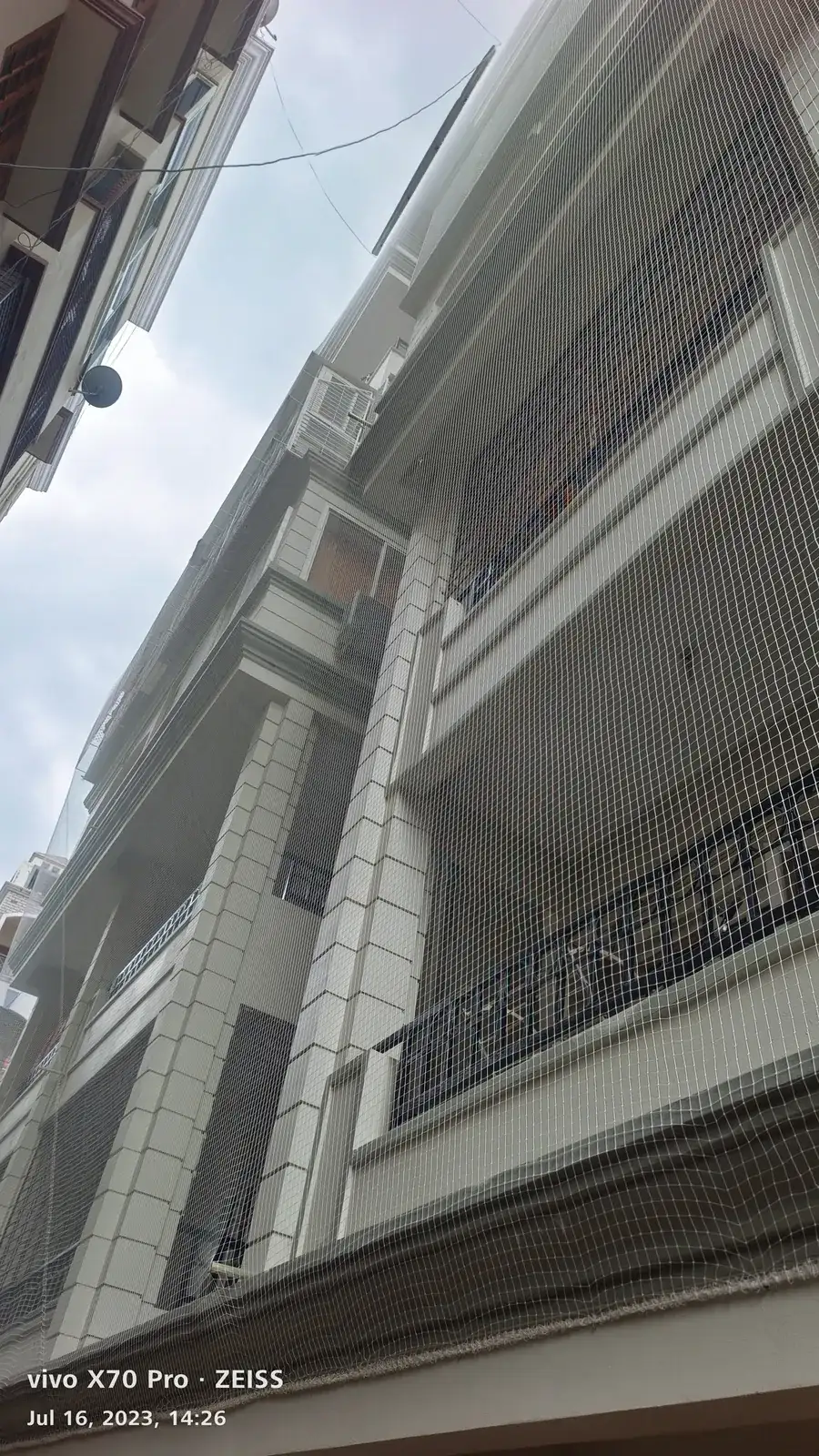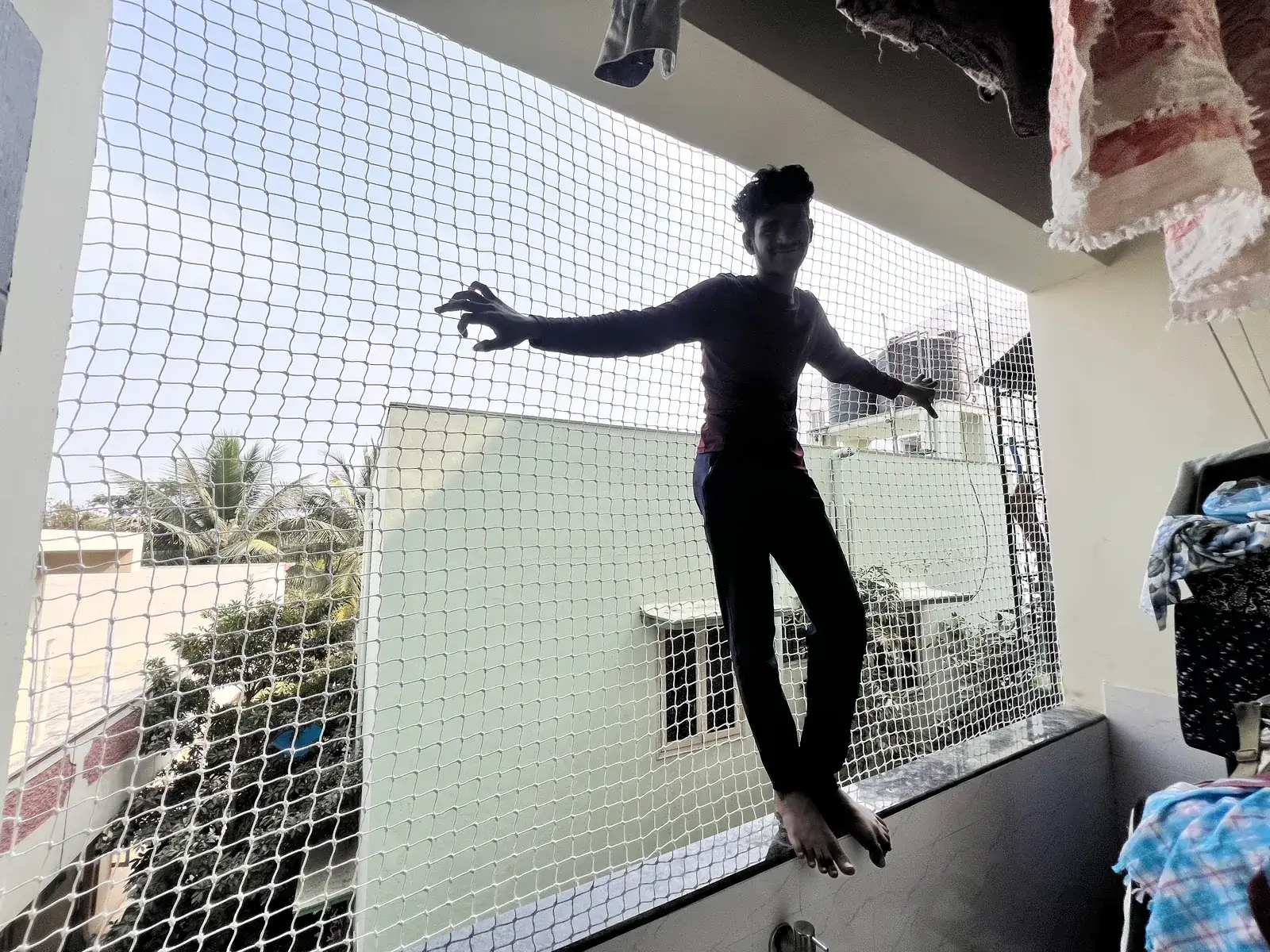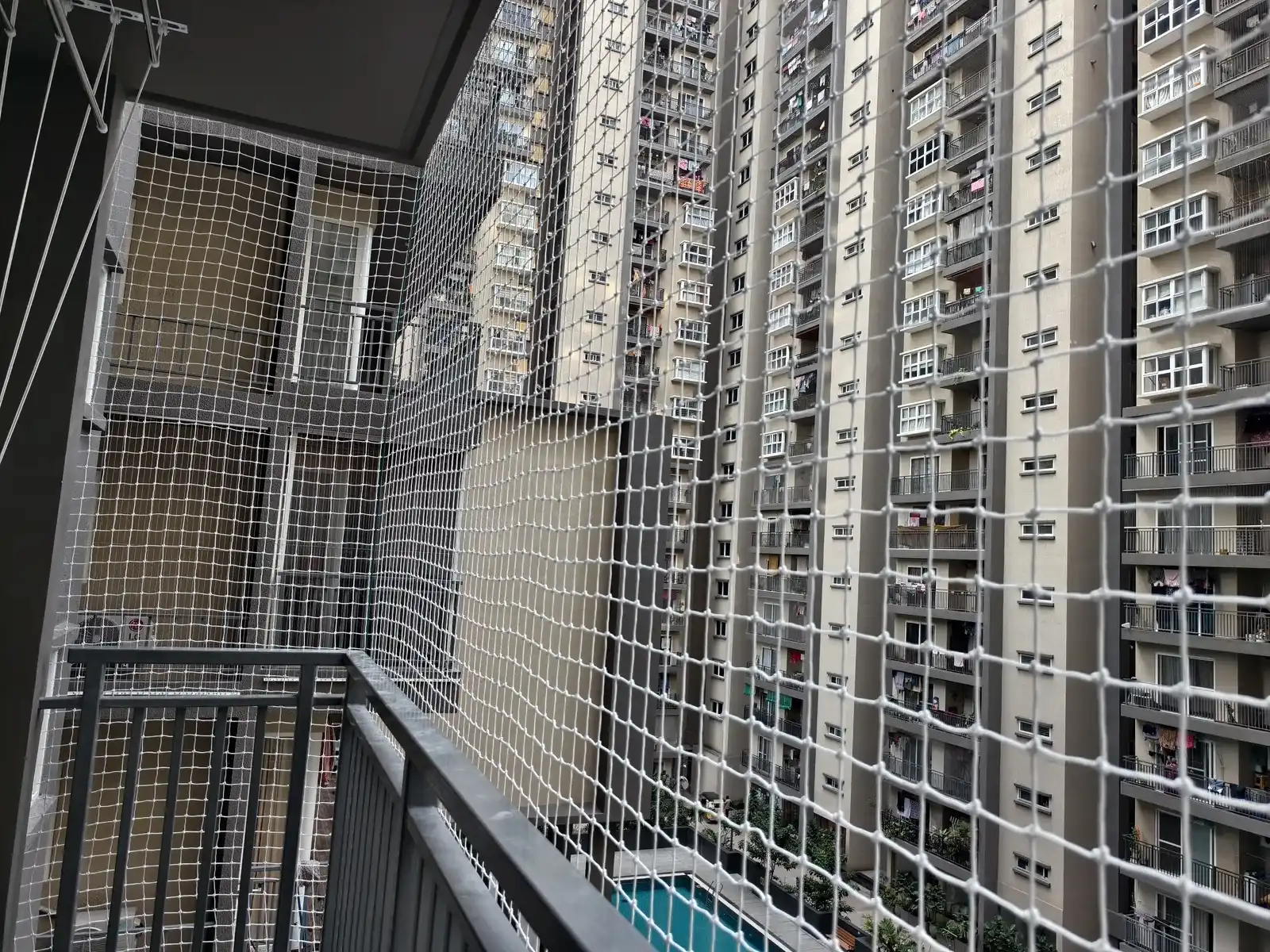


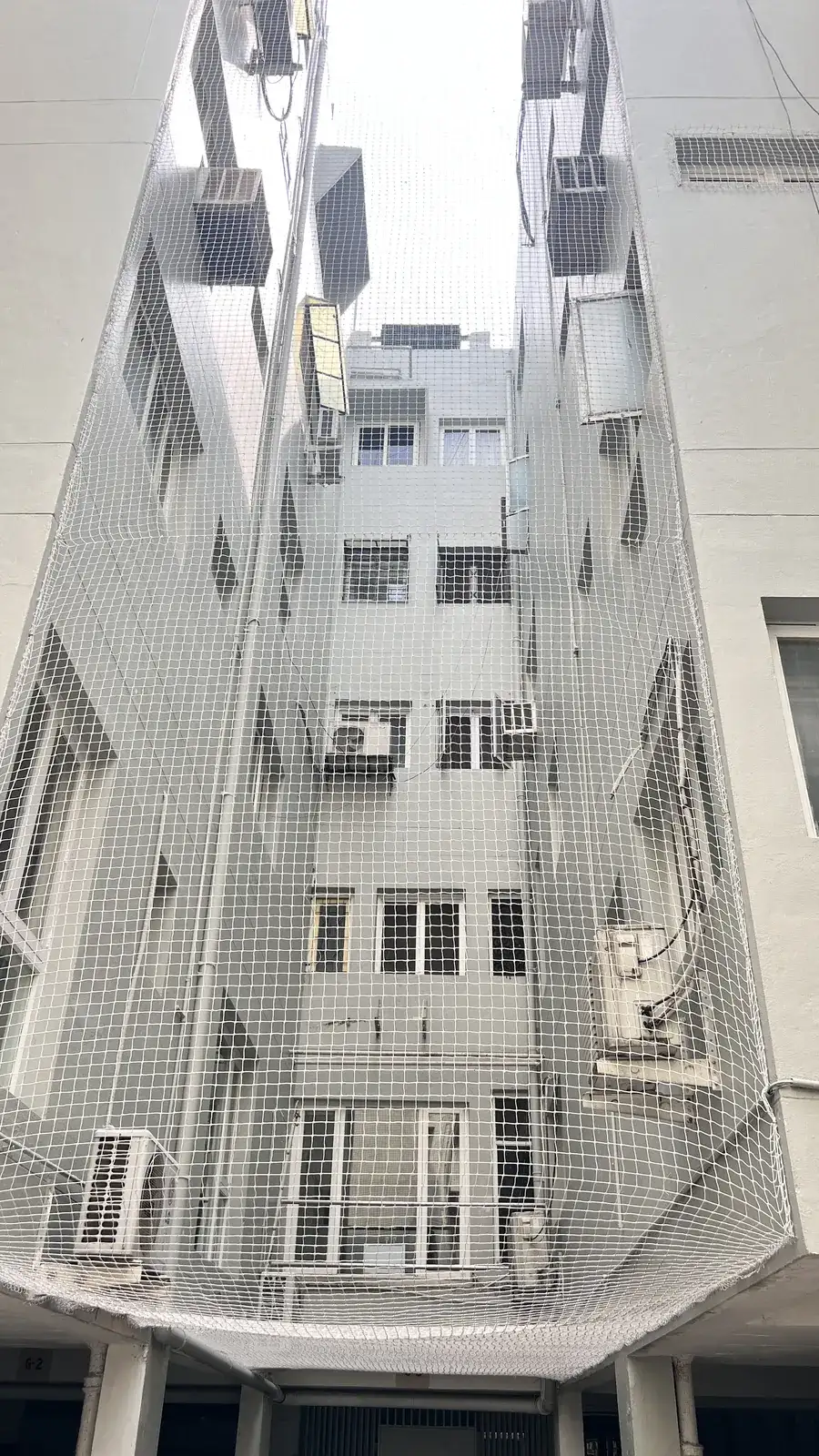


Is this for you?
You’ll recognise the signs: twigs on a ledge, white streaks below a window shade, cooing at first light from the same corner, a bathroom fan that’s stopped turning. Any one means a pair has picked your house.
A typical job, start to finish
You send photos. A picture of each spot birds use, taken from a window or the ground, tells us how much net to bring.
We look round the house. Before fixing anything, we check every ventilator, sunshade and roof gap. Closing one ledge while birds still use three others just moves them along the wall.
We clear and fix. Nests and droppings come off the fixing points. Stainless hooks go in close together around each opening, a rope or coated wire border is tensioned, and the net is tied on at short intervals with extra ties at the corners.
We check with you. Before leaving, we go round each net together so you can see every edge is closed.
Which spot needs what?
A ventilator gets a small framed net over the outside, so air still flows. A sunshade gets a strip closing the gap between the shade and the wall. A roof-sheet gap gets a long strip along the wall line. An AC bracket gets a net enclosing the space behind the unit, with room left for airflow and servicing.
In the humid months
Delta humidity rusts plain iron hooks within a season, and the brown streaks are hard to clean off. Stainless hooks avoid that. The net itself is UV-stabilised HDPE or nylon, which copes with summer sun and monsoon rain.
Looking after it
Brush off dust in the dry months and look the net over after a big storm. A loose tie at a corner is quick to redo.
Questions we hear in Tenali
“Will a fake owl work?” Not for long; birds soon learn it never moves. “Spikes?” They often push the pair a little further along the ledge. A net physically closes the space, which is why it lasts.
For whole balconies, see balcony pigeon nets in Tenali. More on pigeon nets.
Older houses in the centre
In Kothapeta, Chenchupeta and around Bose Road, many houses were built close together and extended upwards over the years, so one building can have ventilators at three or four levels. We work floor by floor and note each ledge, so nothing is missed.