

Pigeon problems we see in Chennai homes
In Chennai, pigeons favour a few spots above all others.
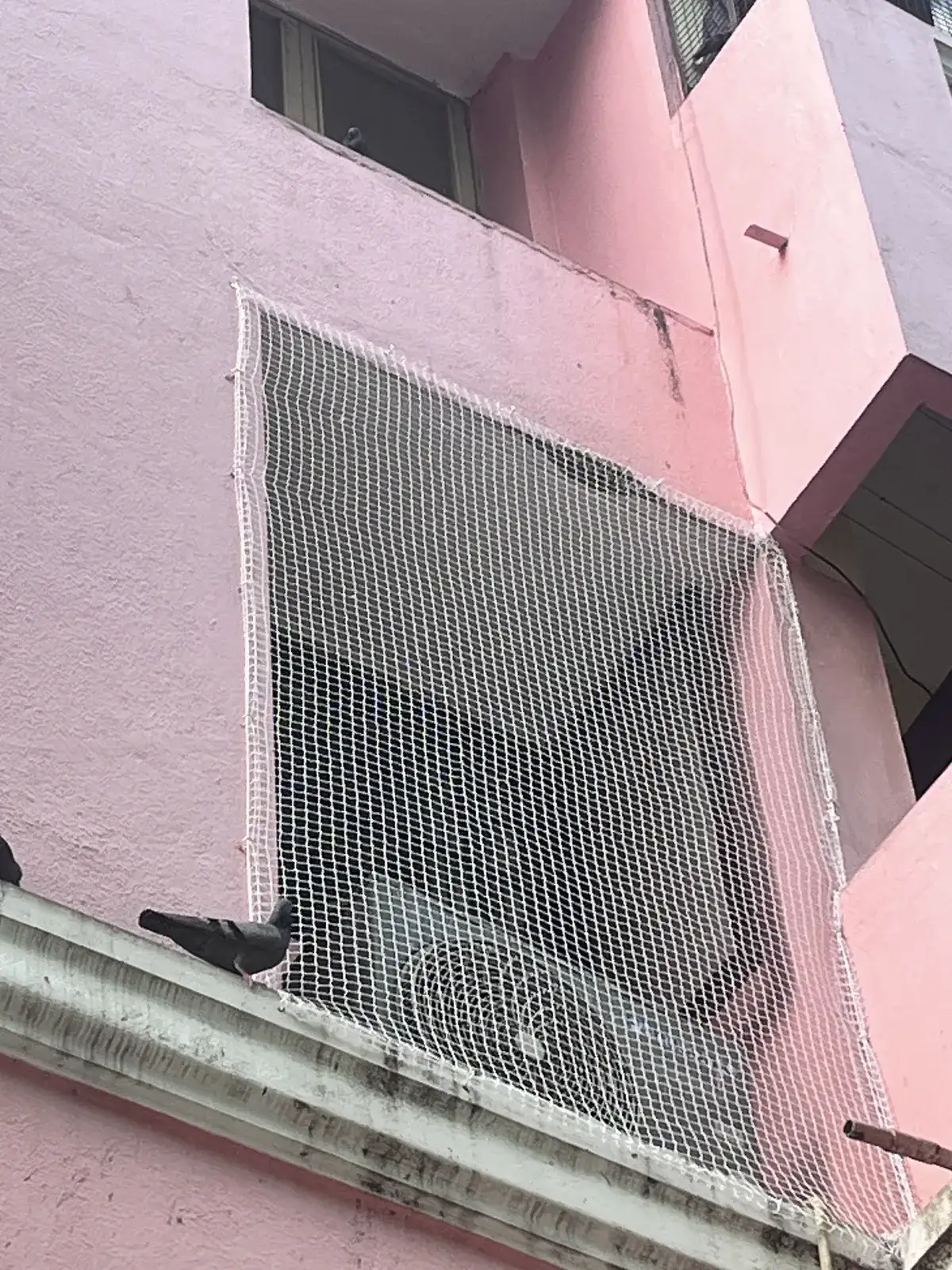
- AC outdoor units. The gap between the unit and the wall is warm, dry and sheltered, which makes it a favourite nesting spot. Droppings collect on top of the unit and can block its drain.
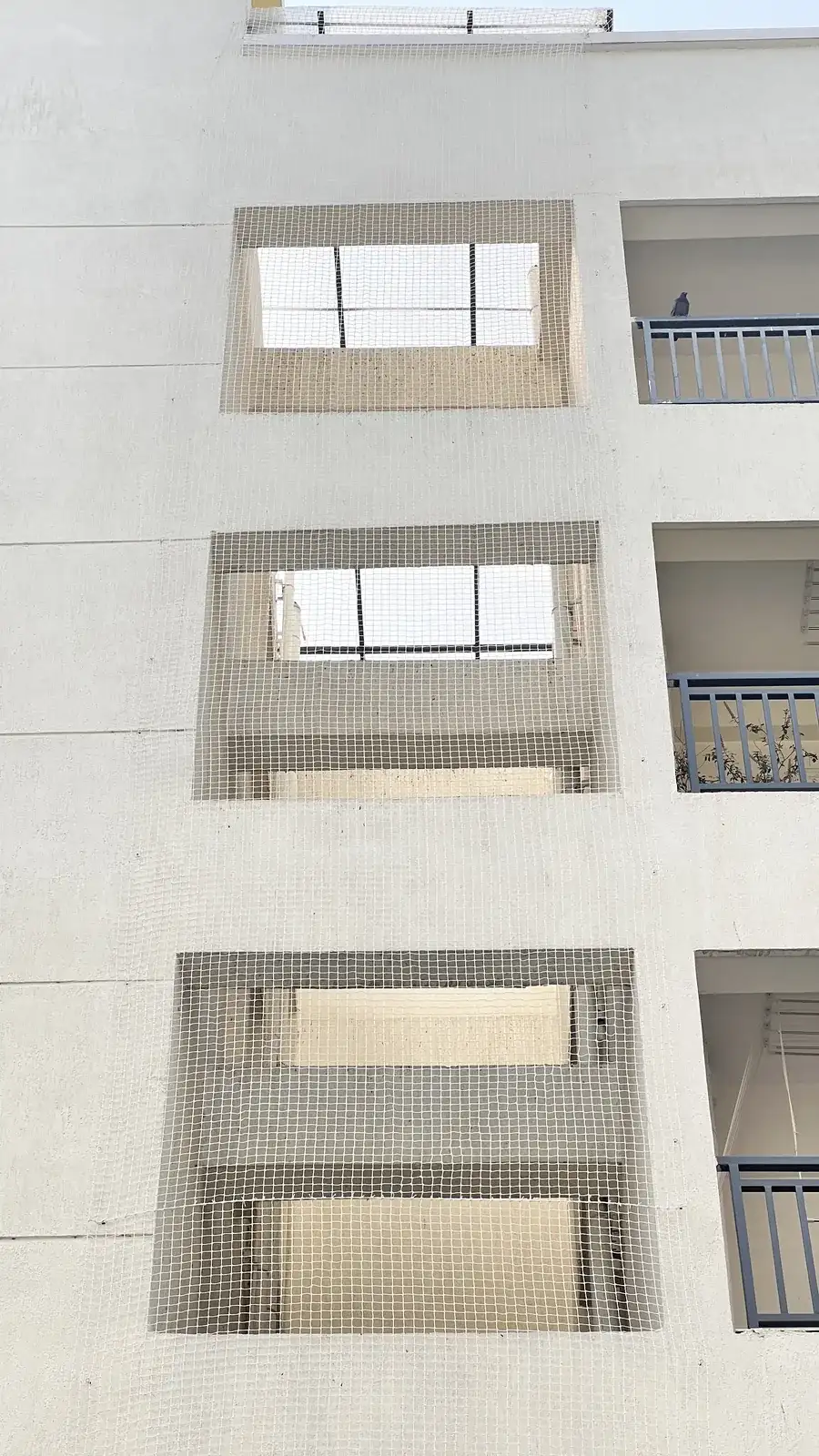
- Duct areas. Most apartment buildings in the city have a duct or utility shaft between flats. Once pigeons find it, the shaft fills with nests, feathers and droppings that are very hard to clean.
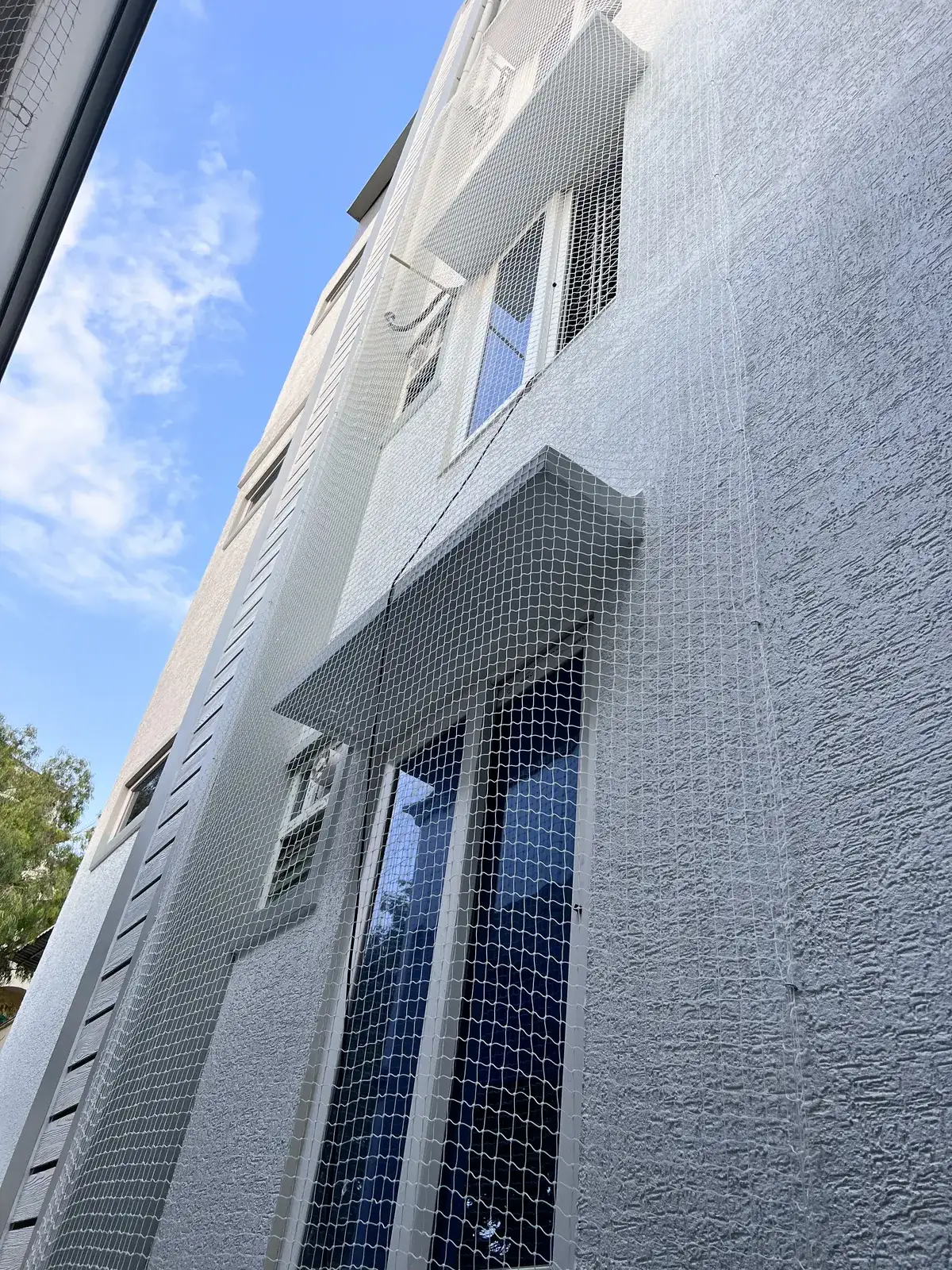
- Sunshades over windows. The concrete chajja above Chennai windows gives pigeons shade from the strong sun and protection from rain.
- Balcony ceilings and lofts. In older buildings, pigeons nest on top of lofts, pipes and electrical boxes in the balcony.
Humidity makes the mess worse. In the long, damp months around the monsoon, droppings stay wet, smell stronger and grow mould on walls and floors. Pigeon problems in Chennai rarely go away on their own; they spread from one floor of a building to the next.
Which Chennai buildings need pigeon nets
Almost any Chennai home with an open balcony or duct can need a pigeon net, but we see the most requests from three kinds of buildings.
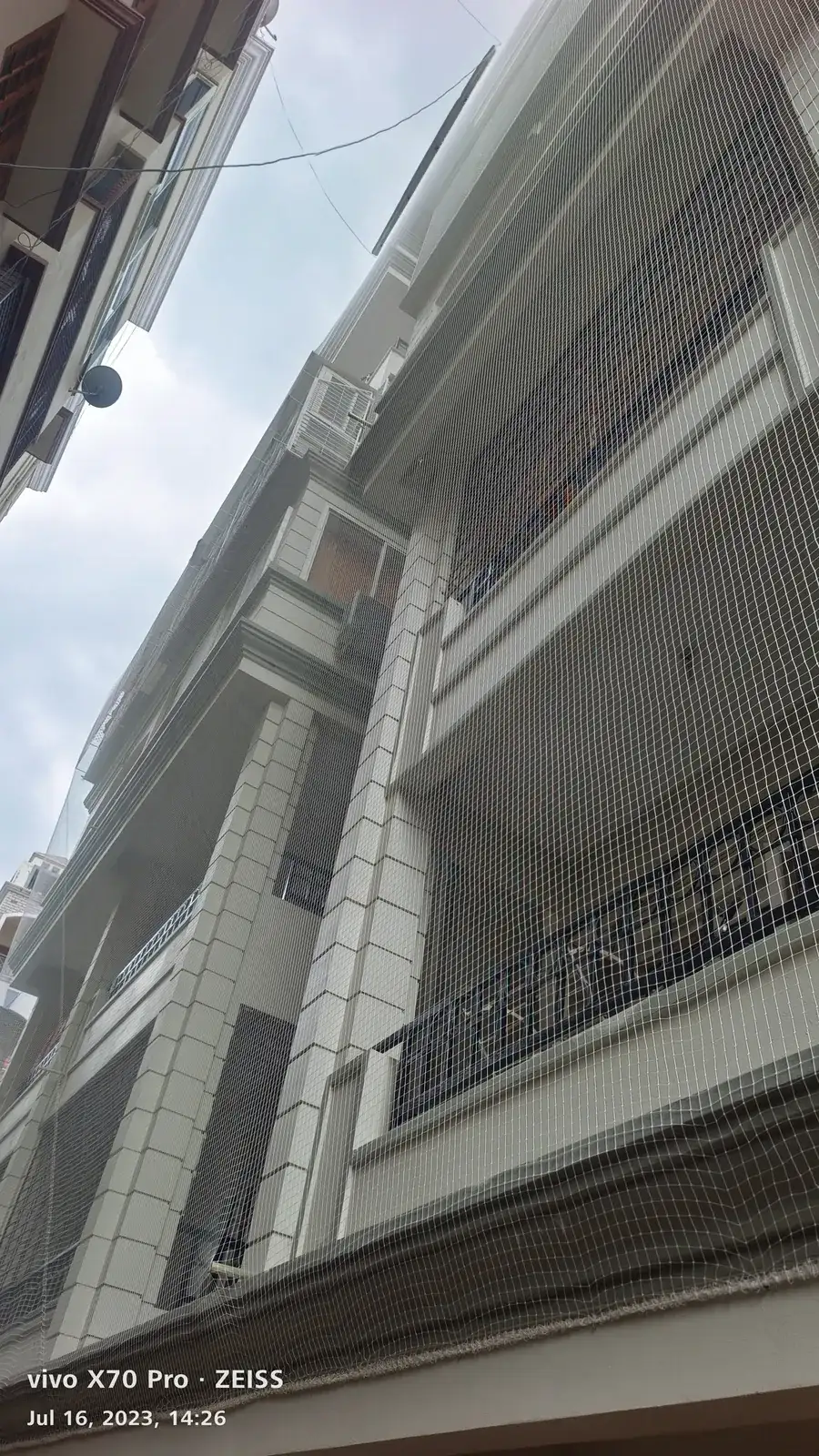
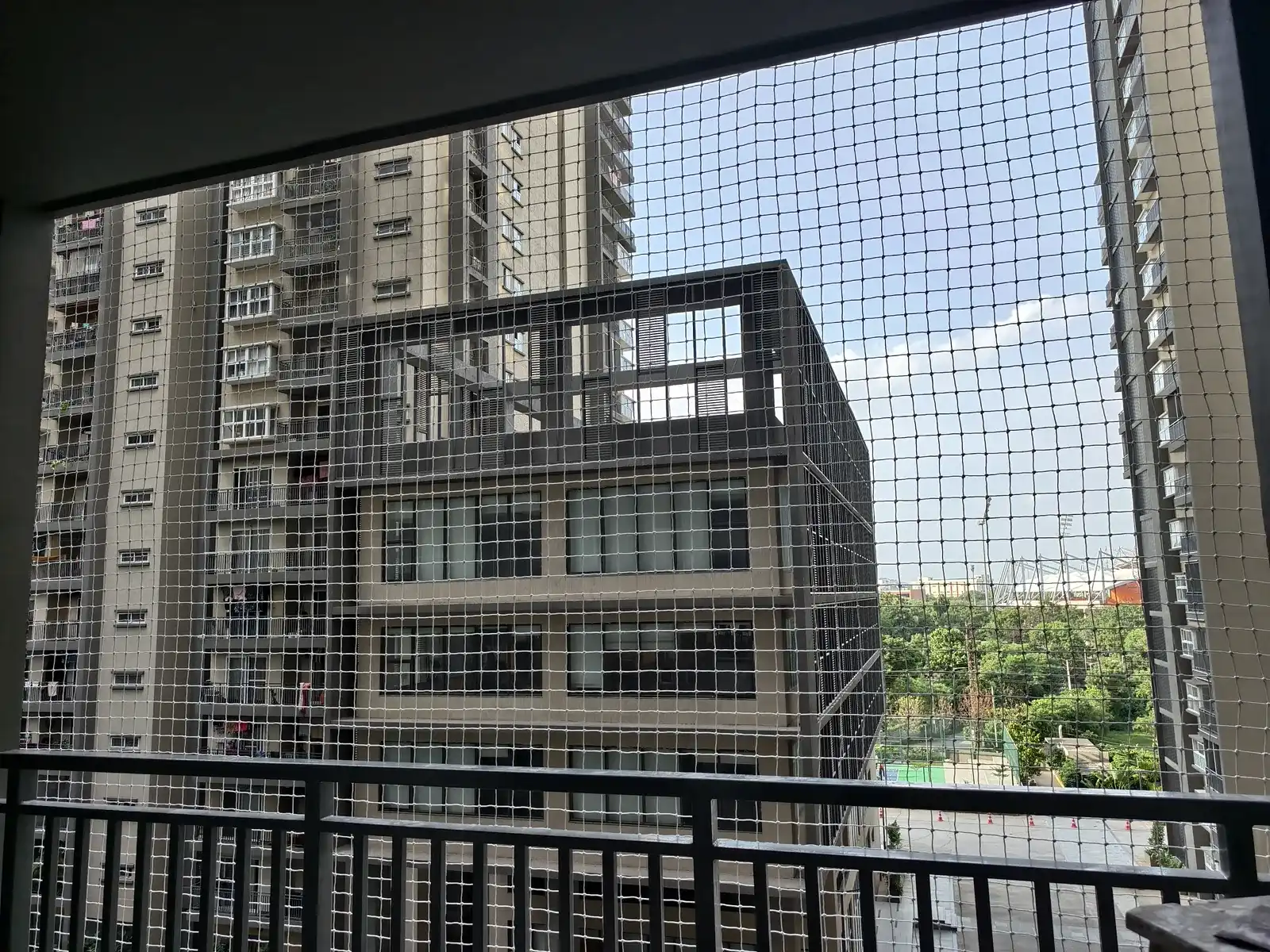
High-rise apartments and gated communities, mainly along OMR, GST Road and in the western suburbs. Upper floors attract pigeons because they are high and quiet. These buildings often have deep balconies and large duct shafts, and the net has to be strong enough for the wind at height.
Mid-rise apartment blocks of four to eight floors, found all over south and west Chennai. Here the usual problem is a balcony or utility area that opens onto a quiet side of the building where pigeons gather.
Independent houses and older homes in neighbourhoods like Mylapore, T. Nagar and Kilpauk. Pigeons get in through open staircases, terraces, ventilators and the gaps under sheet roofs. These jobs need more custom fitting because the openings are irregular.
Materials we use for Chennai
Because of Chennai’s coastal climate, we are strict about materials here.
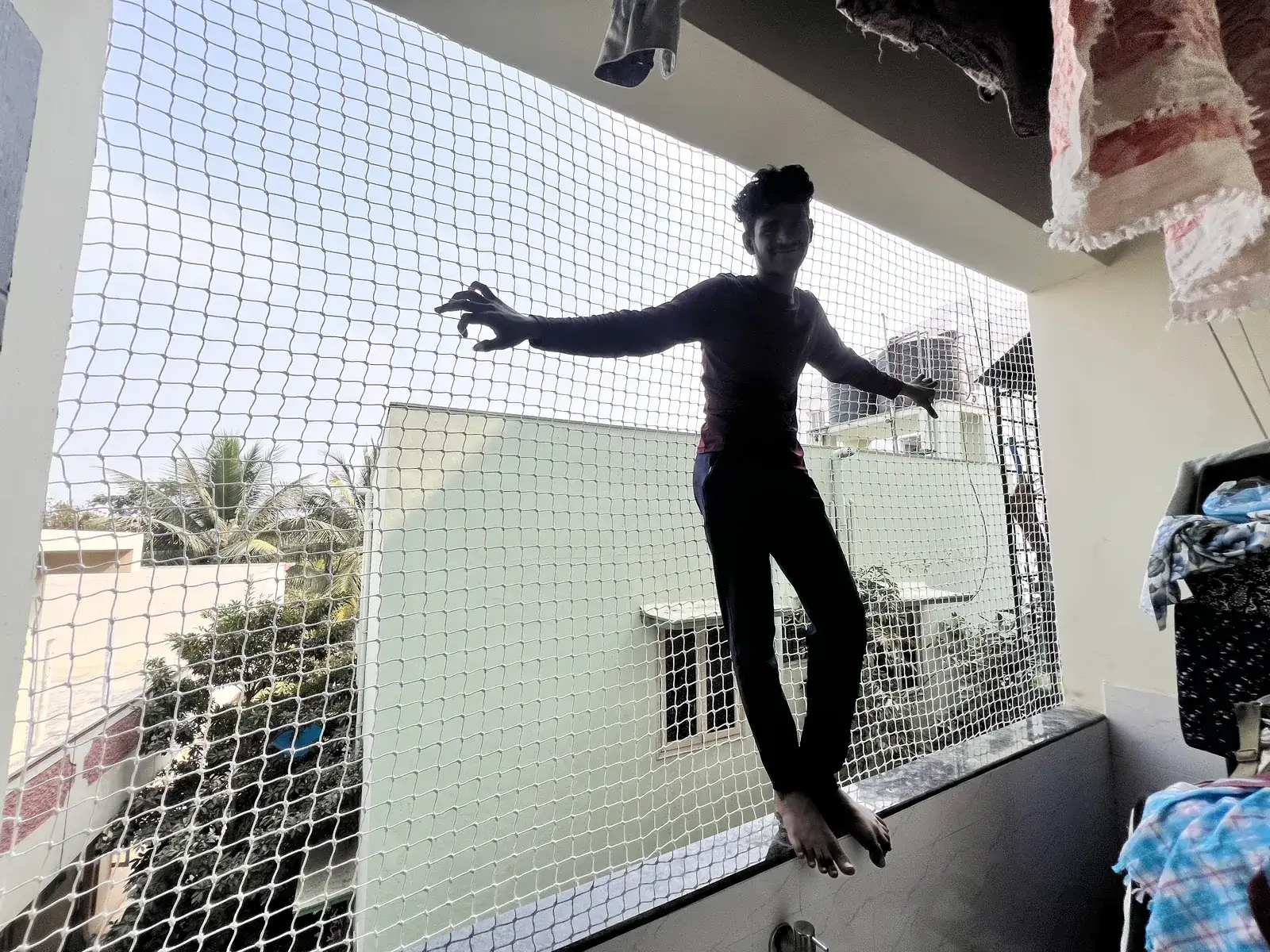
- Net: UV-stabilised HDPE or nylon, usually with a 50 mm mesh. If sparrows or mynas are also getting in, we use a mesh of about 25 mm.
- Colour: transparent or black for most facades, so the net is not noticeable from the street. Some associations ask for a specific colour, and we can match it.
- Border: a strong rope or coated stainless-steel wire, tensioned all the way around the opening.
- Fixings: stainless-steel hooks and anchors only. In homes near the coast, ordinary iron hooks can show rust stains within a single monsoon season.
Our installation process in Chennai
- Call or WhatsApp us with your area and, if possible, a few photos of the balcony, duct or window.
- Site visit. We look at where the pigeons are landing and entering, and measure every opening.
- Advice and quote. We suggest the mesh, colour and border to suit your building, and confirm the price before work starts.
- Preparation. Old nests and droppings are cleared from the fixing points so the anchors sit firmly.
- Fitting. Anchors go in along the edge of the opening, the border is pulled tight, and the net is tied at close intervals with no gaps at the corners.
- Handover. We check every edge, clear our waste and show you how to clean the net.
Looking after your net in Chennai’s climate
Hose the net down or brush it every few weeks, especially in the dusty summer months. Before the northeast monsoon begins in October, check the corners and border. After a heavy storm, look again and call us if any section has loosened. With stainless fittings, the hardware itself should not rust, so most maintenance is simply keeping the net clean.
For the full details of mesh sizes, materials and how a pigeon net compares with spikes and other methods, see our main pigeon nets page.