
Why duct areas attract pigeons
Duct shafts give pigeons everything they want: shelter from sun and rain, ledges on every floor, quiet and almost no human activity. Pipes, AC drains and window sills provide places to build nests. Once one pair nests, others follow, and a single shaft can host many nests across all floors.
The problems that follow:
- Smell and dirt. Droppings build up on ledges and pipes, and the smell drifts into bathrooms and kitchens.
- Noise. Cooing and wing-beating, often early in the morning.
- Blocked pipes and vents. Nests clog ventilators, exhaust fans and AC drains.
- Health concerns. Dried droppings turn into dust in an enclosed space with little airflow.
- Falling objects. Clothes, tools and debris dropped into the duct are hard to recover and can hit someone below.
Two ways to net a duct
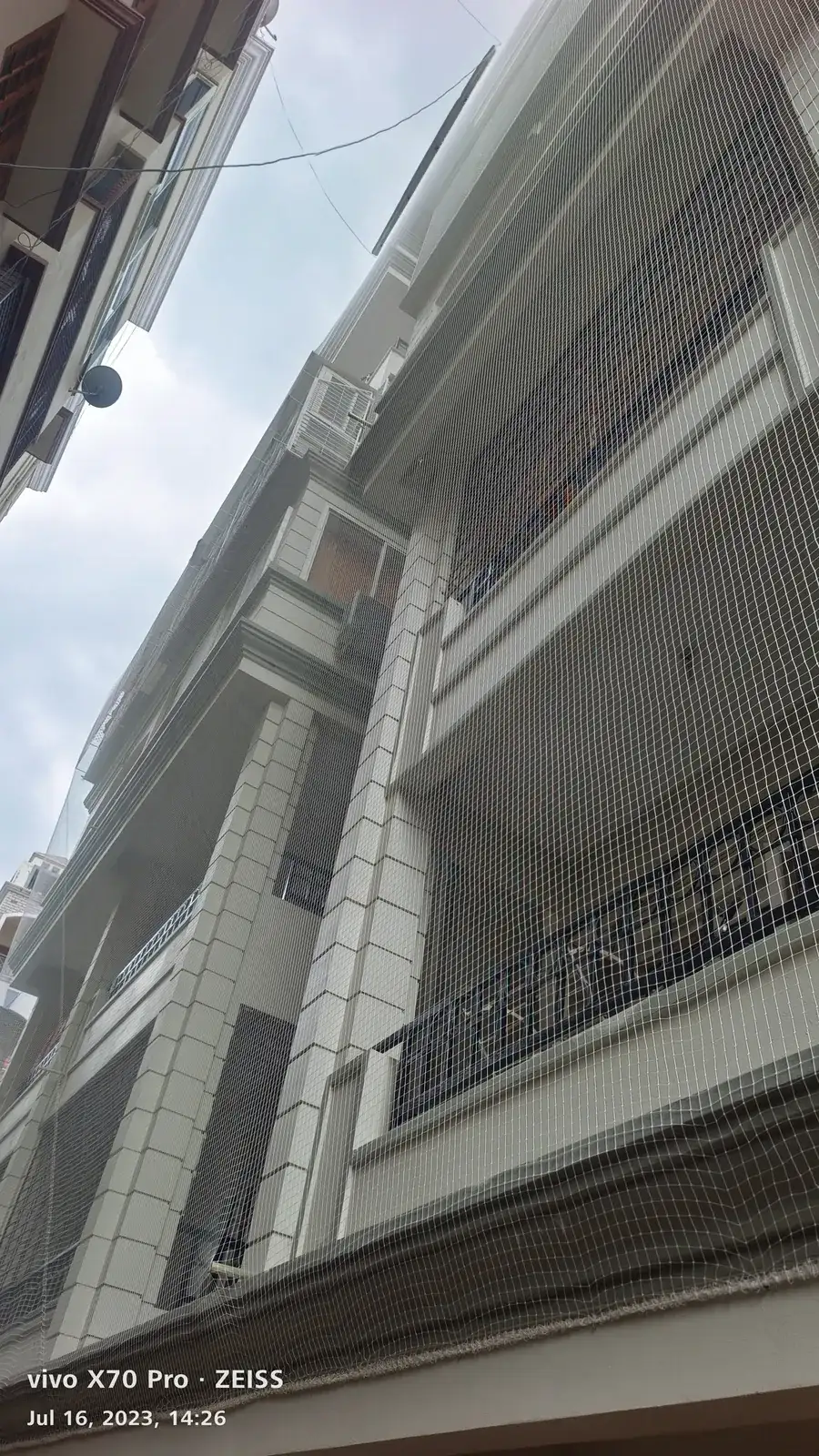
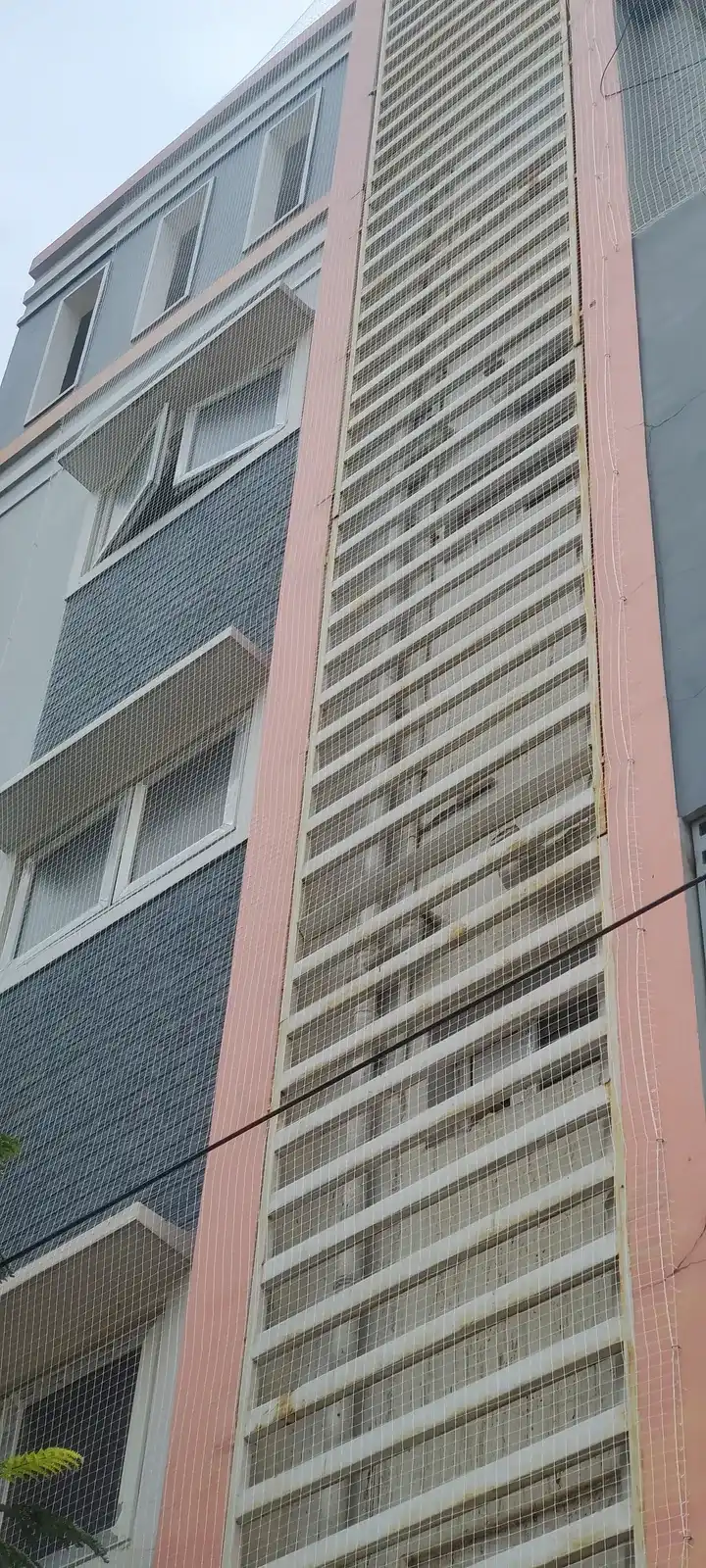
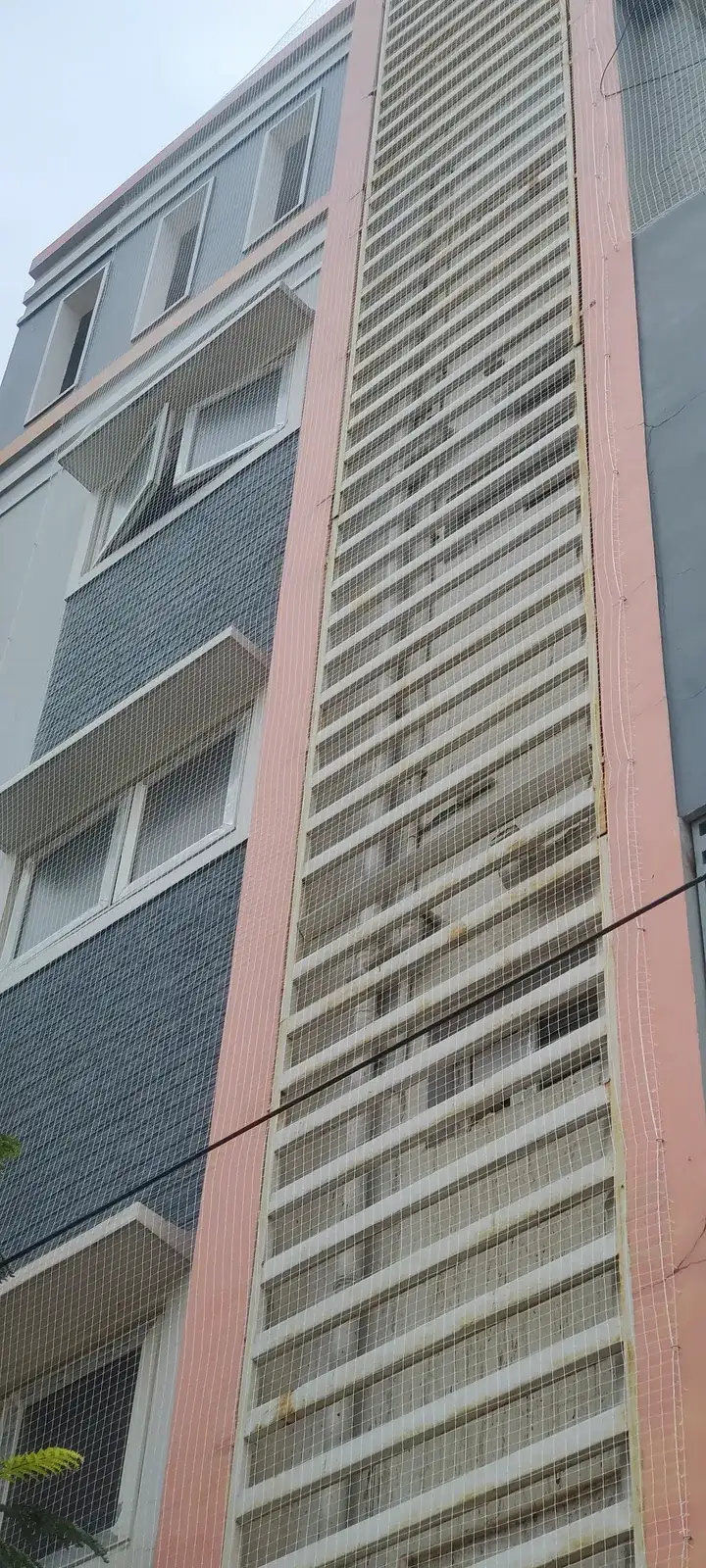
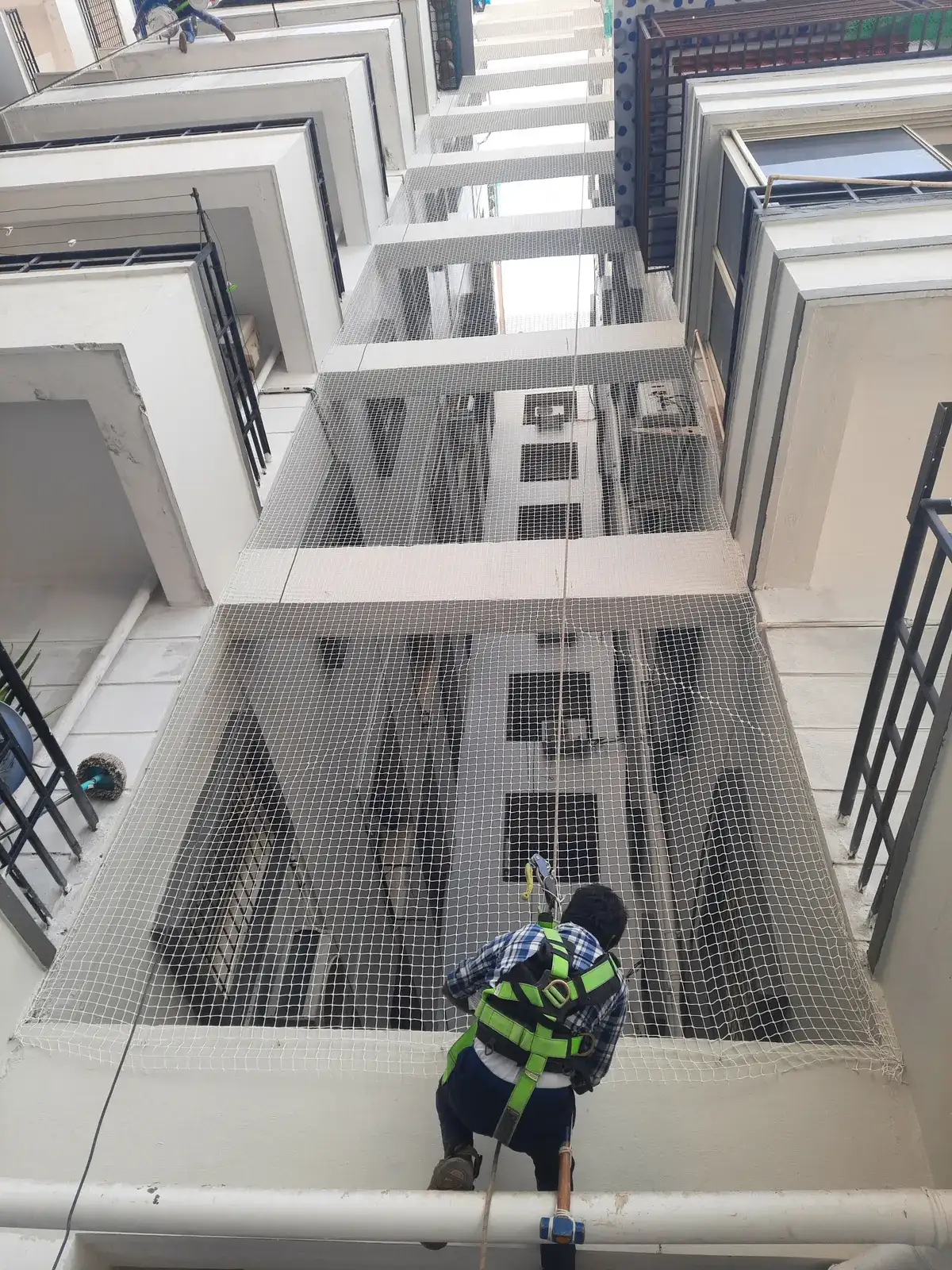
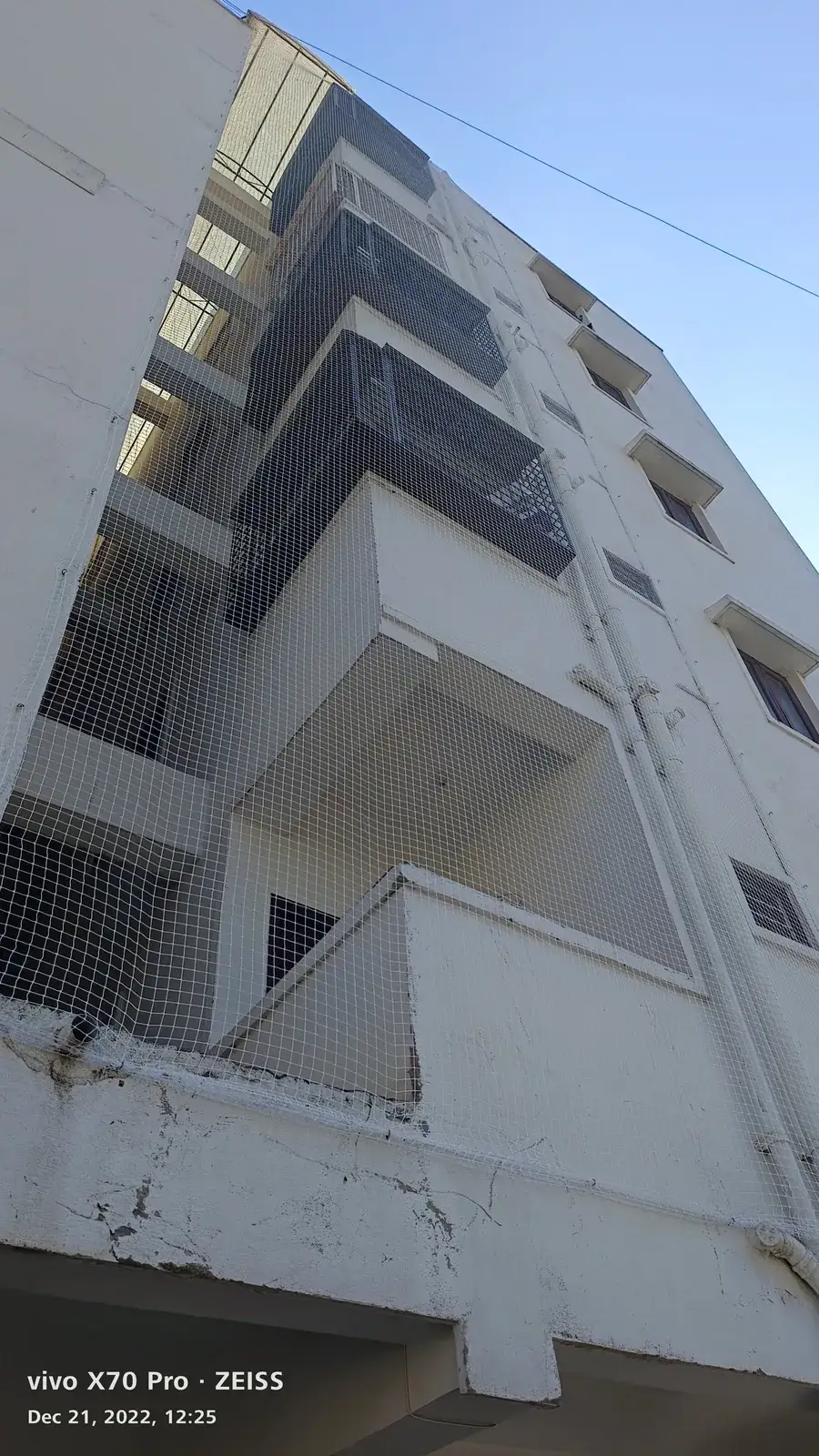
At the top of the shaft. A single net across the opening at terrace level keeps birds out of the whole duct. This is the most effective option, but it needs agreement from the association or the owners of all flats.
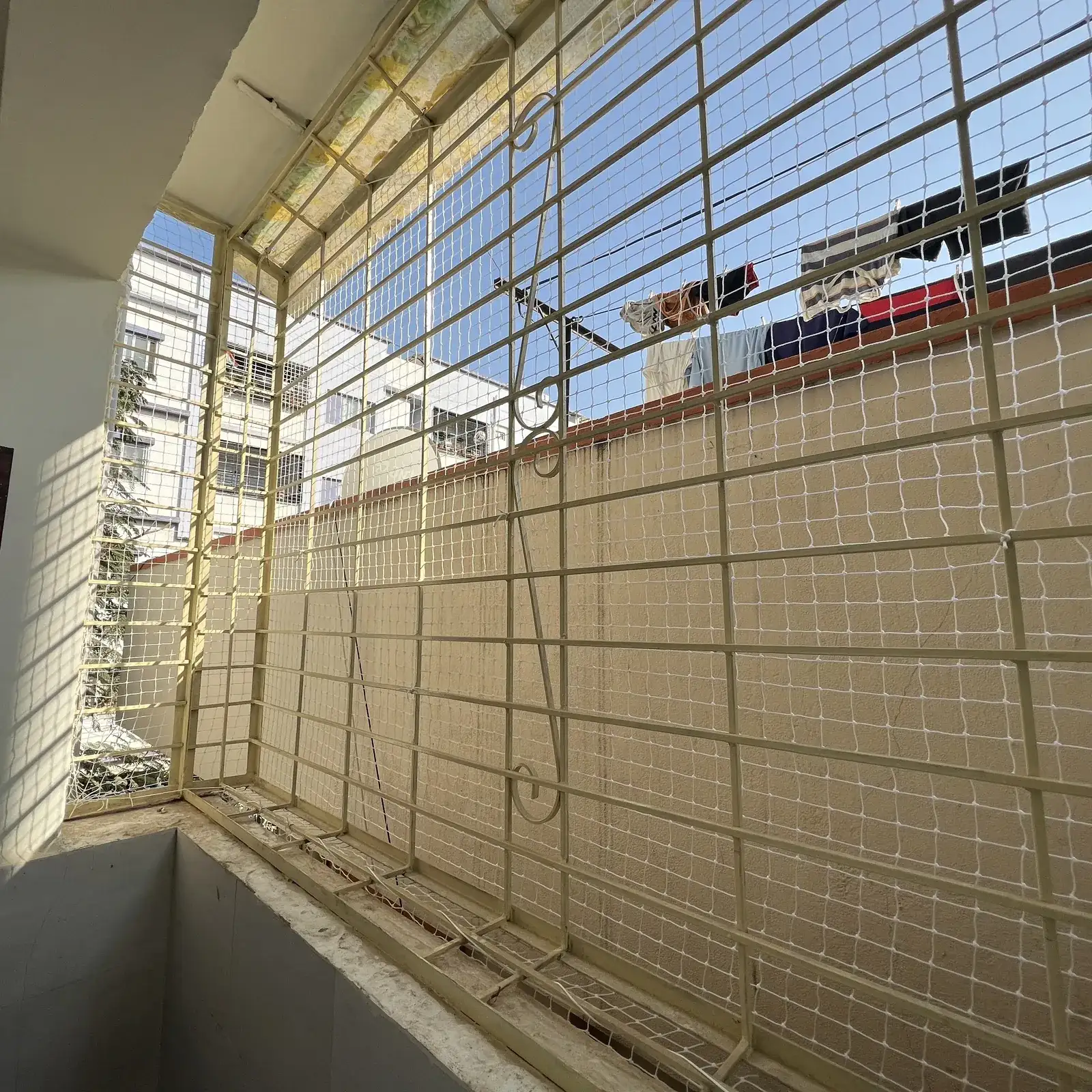
At your level. A net across your window, ventilator or the open face of the duct beside your flat keeps birds out of your part. This works well when a building-wide decision is not possible.
In both cases we leave an access point for plumbers and electricians.
Materials
| Part | What we use |
|---|---|
| Net | UV-stabilised HDPE or nylon; heavier twine where falling objects are a concern |
| Mesh | 50 mm for pigeons; smaller if sparrows or mynas use the duct |
| Border | Rope or coated stainless-steel wire |
| Fixings | Stainless-steel hooks and anchors; ducts are damp, so plain iron rusts quickly |
| Access | Zip opening or hook-off panel near pipes |
Even with the top of the shaft netted, birds that were already nesting inside may stay until they leave on their own. It is kinder, and easier, to fit the net when nests are empty, so if you can see eggs or chicks, wait a few weeks before booking.
Benefits
- No more nesting in the shaft.
- Cleaner, quieter bathrooms and kitchens.
- Fewer blocked pipes, vents and AC drains.
- Easier maintenance with an access point built in.
- Stops objects falling down the shaft when heavier twine is used.
Installation, step by step
- Inspect the duct and decide whether to net at the top or at your level.
- Plan safe access. Duct work is at height, so we decide how to reach the fixing points safely before starting.
- Clear nests and droppings where the net will be fixed.
- Fix stainless anchors around the opening.
- Run and tension the border.
- Lace the net with no gaps along pipes and at corners. Pipes that pass through the netted area are sealed around with extra ties.
- Fit the access panel and show you how it opens.
Maintenance and lifespan
Duct nets are out of the sun, so they usually last longer than balcony nets. The main things to check are that the access panel is closed after any repair work and that no new gap has opened around pipes. Ask plumbers to reclose the panel properly. Because ducts are damp, stainless-steel fittings are essential.
Working with your association
Because duct shafts are shared, the most lasting fix is a building-wide decision. If you are a resident trying to convince your association, it helps to collect photos of the nests and droppings, note which flats are affected and ask for the top of the shaft to be netted with an access point for maintenance. We can visit, assess the shaft and explain the options to the committee.
Related services
For pigeon problems on windows, AC ledges and balconies, see pigeon nets and balcony pigeon nets. For fall protection in open shafts inside a home, see safety nets. Our guide on why apartment duct areas need nets explains more.