


Where Hyderabad pigeons nest
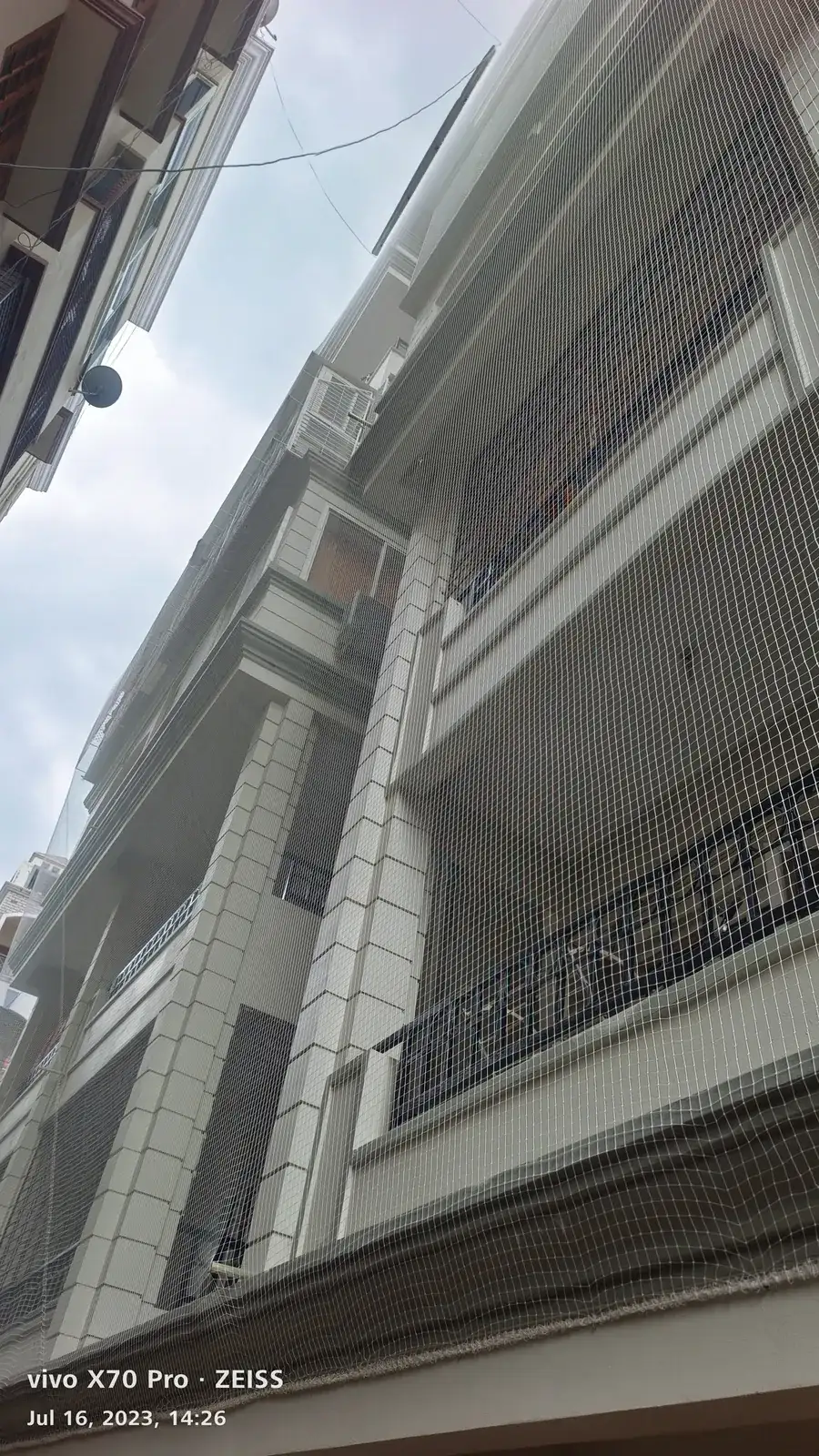
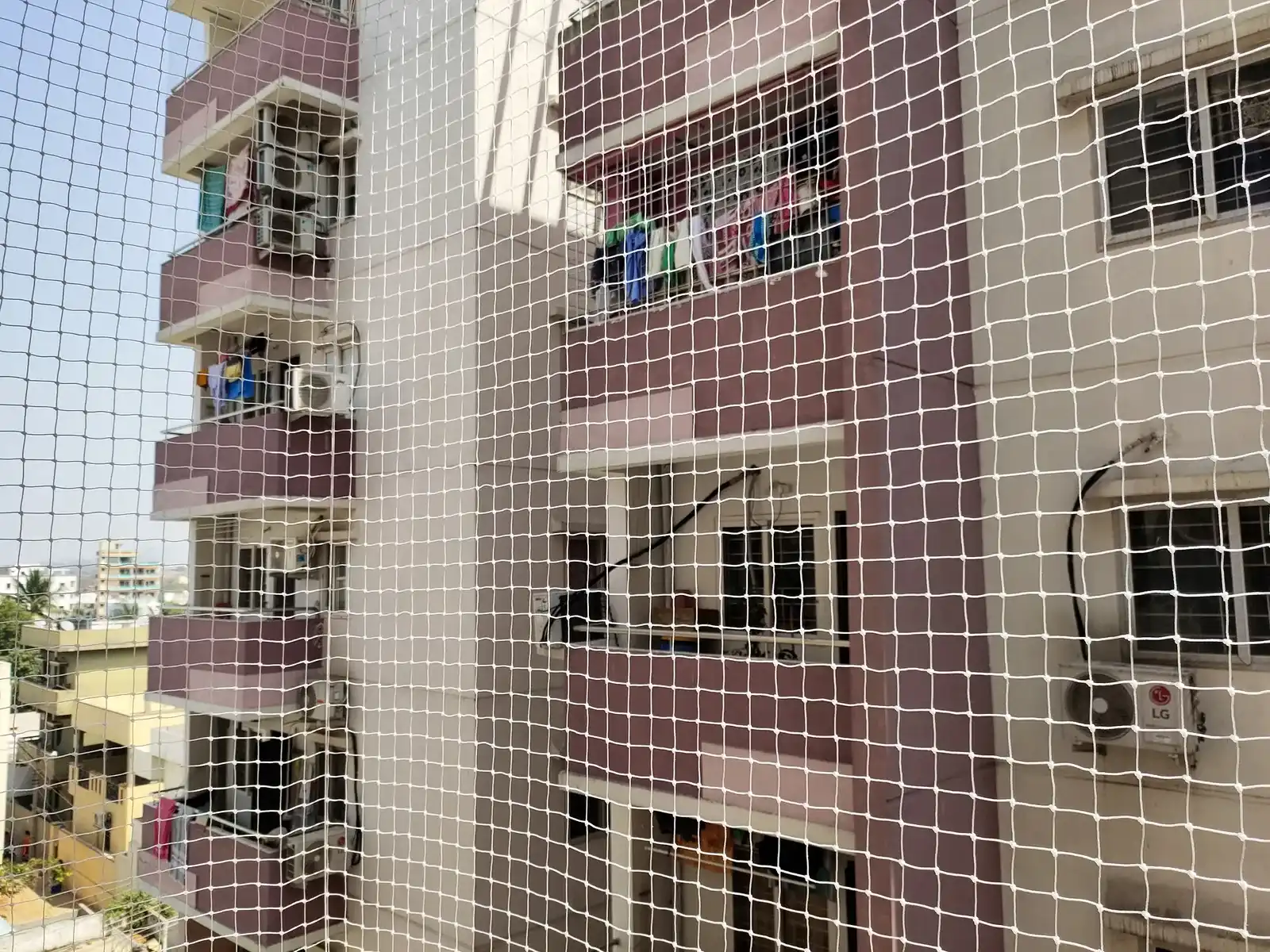
- Behind AC outdoor units, the most common spot in the city’s flats, because the unit gives shade and a flat ledge.
- Duct shafts in mid-rise and high-rise blocks, where nests build up floor by floor.
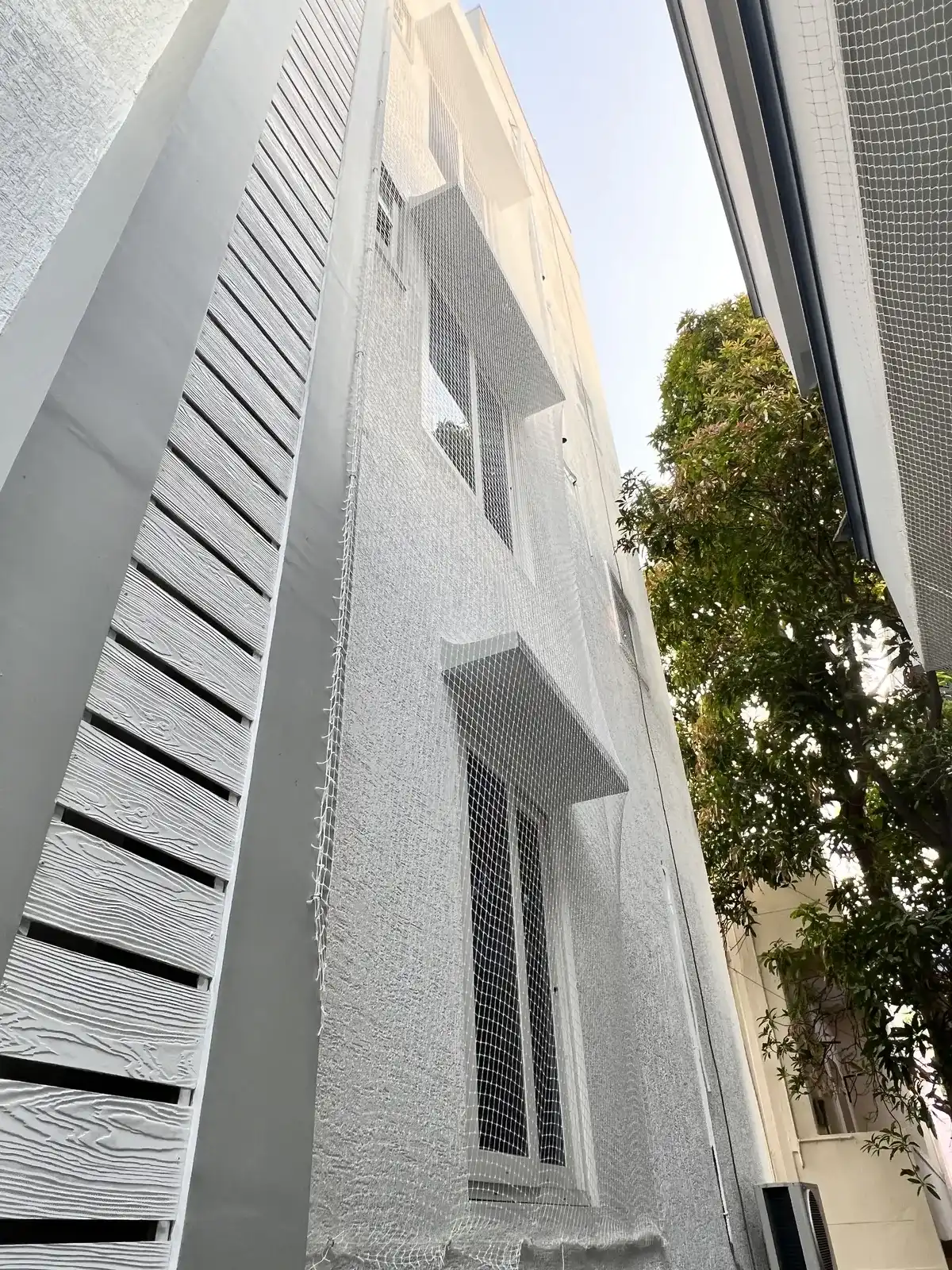
- Window sunshades on older buildings in Ameerpet, Secunderabad and the central areas.
- Under sheet roofs and staircase landings on the terraces of independent houses.
Why the Deccan climate matters
In Hyderabad the main threat to a net is not salt but sun. From March to May the heat is intense, and a net on a west-facing ledge can sit in direct sunlight for most of the afternoon. We use only UV-stabilised mesh, usually 50 mm for pigeons, or about 25 mm if sparrows also get in. Construction dust settles on nets quickly in growing areas, so we suggest rinsing them every few weeks.
The monsoon brings short, heavy storms with strong gusts. Close hook spacing and a tight border stop the edges from lifting, which is how birds usually get back in after a storm.
How we fit them
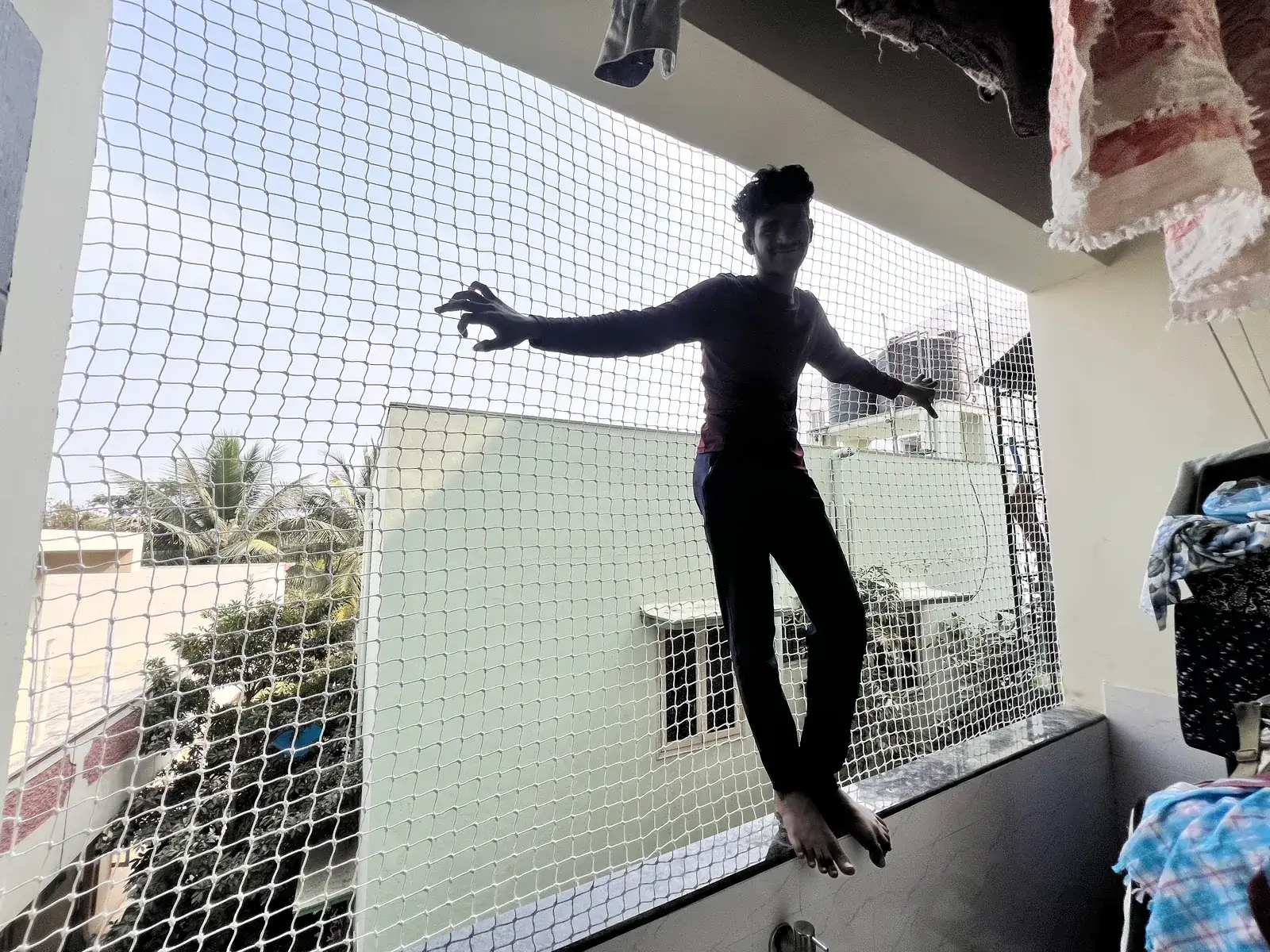
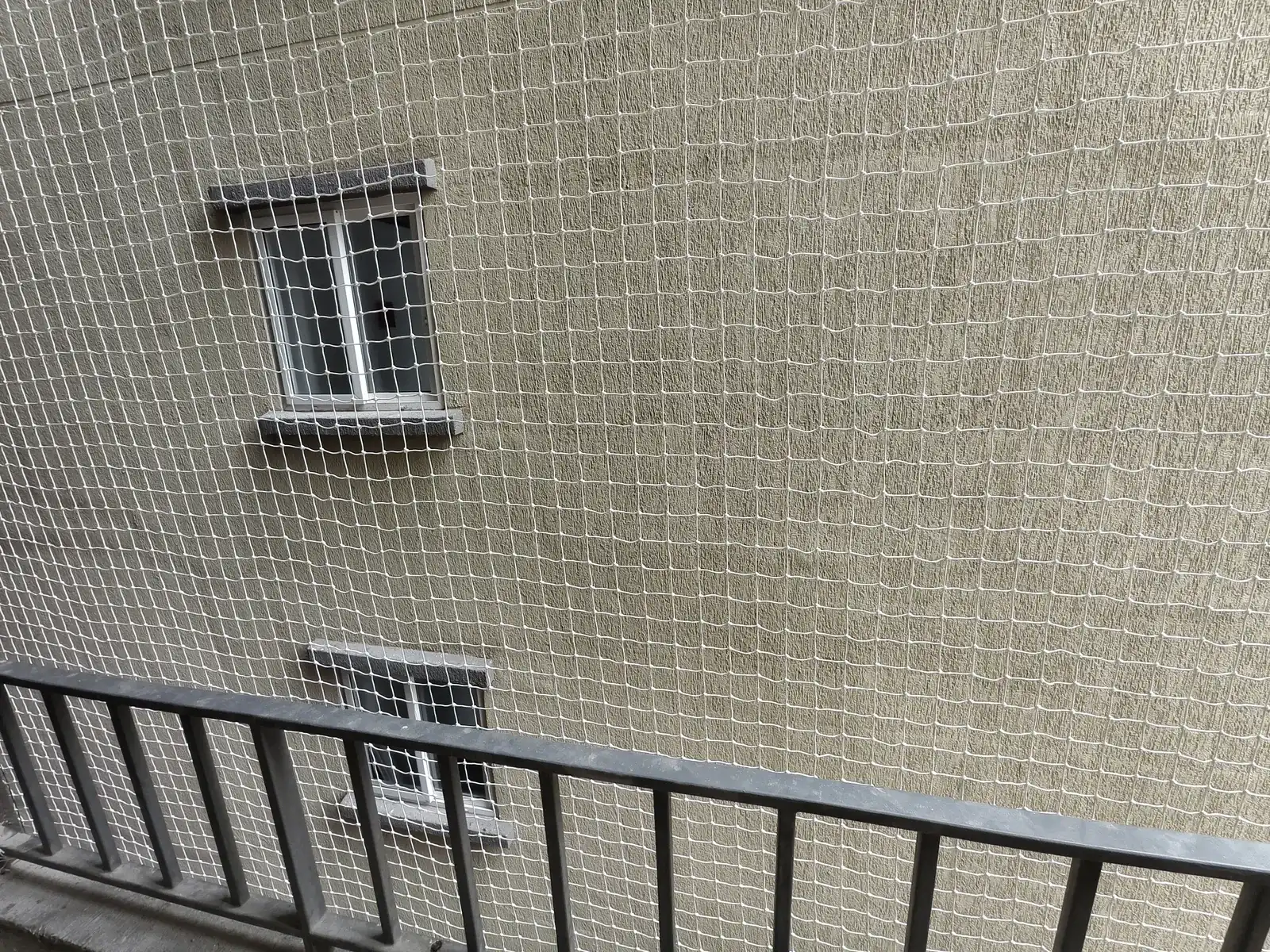
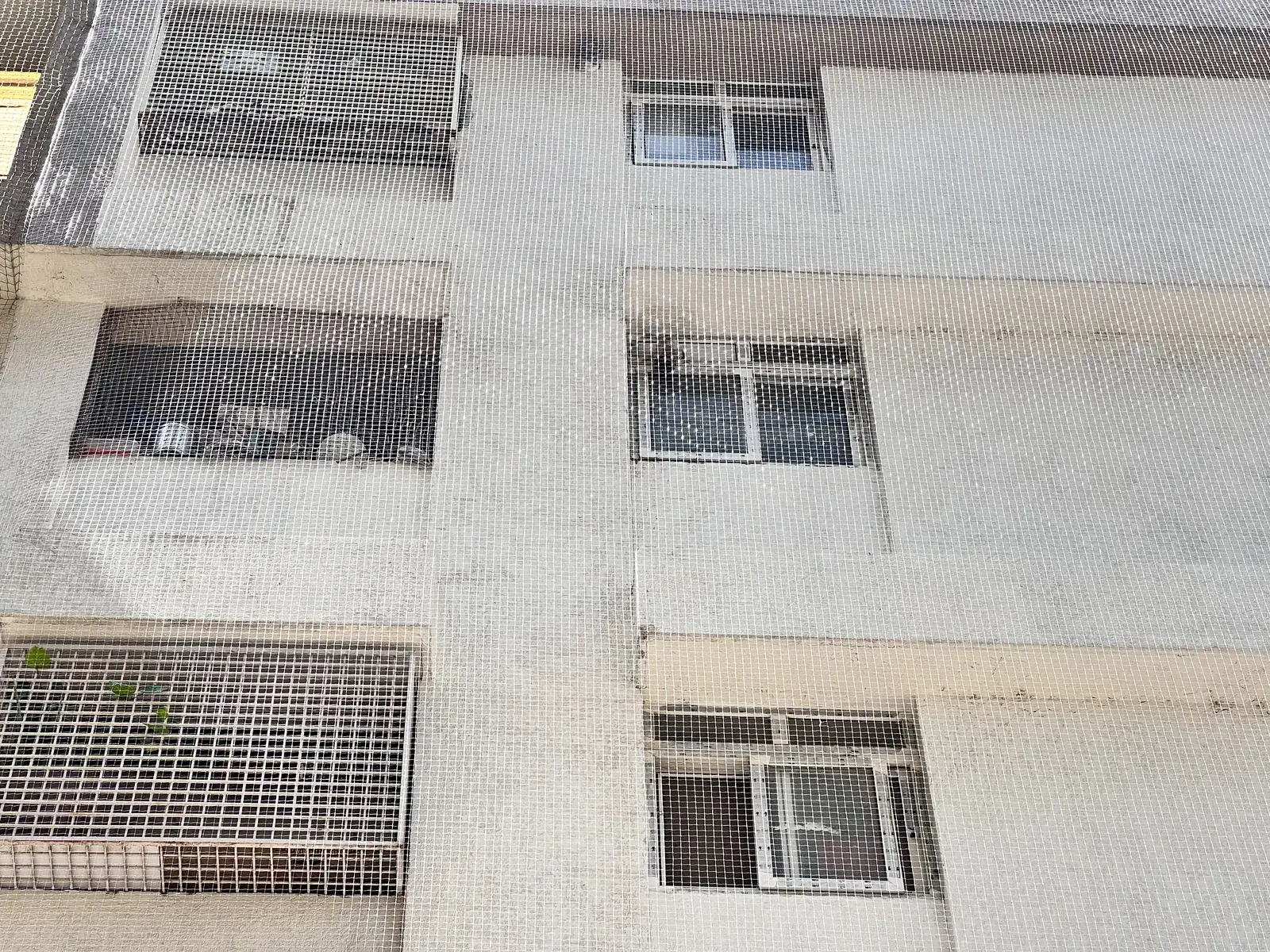
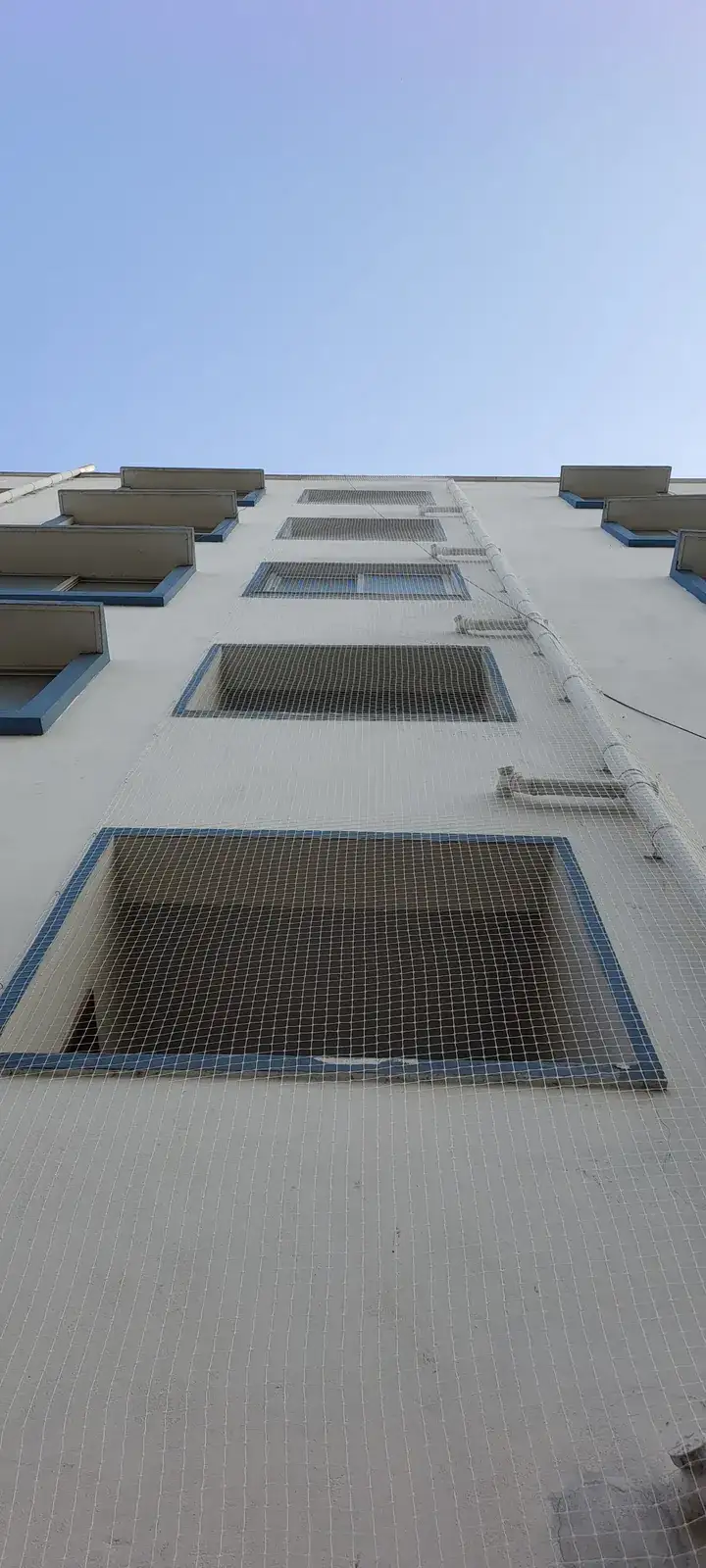
We look at where the birds land and enter, measure each opening, fix stainless-steel hooks along the edges, tension a border and tie the net at short intervals with extra care at corners. Old nests and droppings are cleared from the fixing points first.
For mesh sizes, materials and how nets compare with spikes, see our main pigeon nets page. If birds are using the whole balcony, see balcony pigeon nets in Hyderabad.
Pigeon problems across Hyderabad’s neighbourhoods
The pattern changes from one side of the city to the other. In the western towers of Gachibowli, Kondapur and Narsingi, birds go for the highest, quietest spots: AC ledges on upper floors and the top of duct shafts. In Kukatpally, Miyapur and Nizampet, where builder flats stand close together, they nest in the narrow gaps between buildings. In older areas such as Ameerpet, Begumpet, Secunderabad and Dilsukhnagar, deep sunshades, open ventilators and light wells are the problem. In the east, around Uppal and Boduppal, many independent houses have sheet-roofed terraces with a gap under the roof that birds slip through.
Knowing which of these applies to your home tells us where to net first, and often a single well-placed net solves the whole problem.