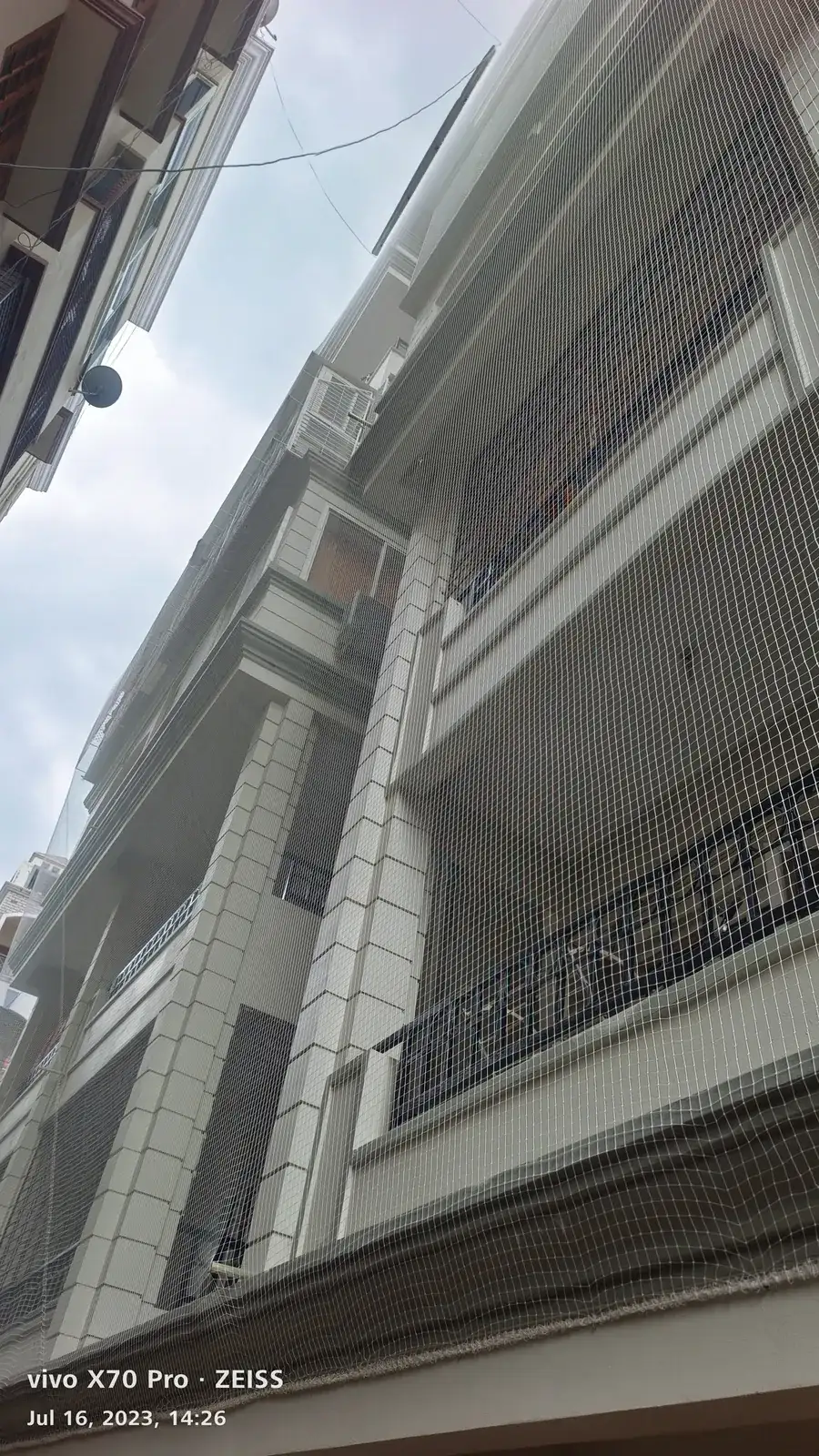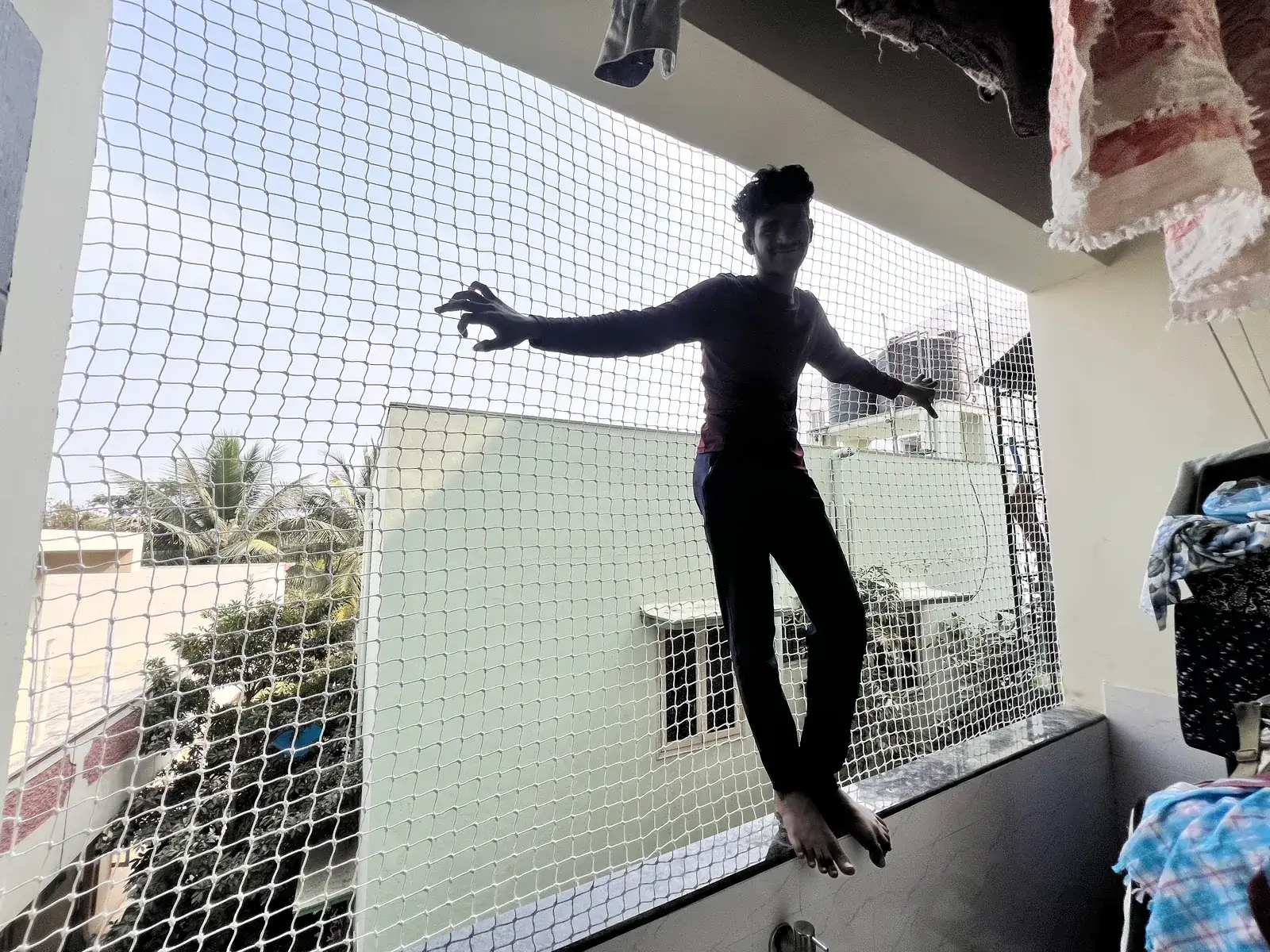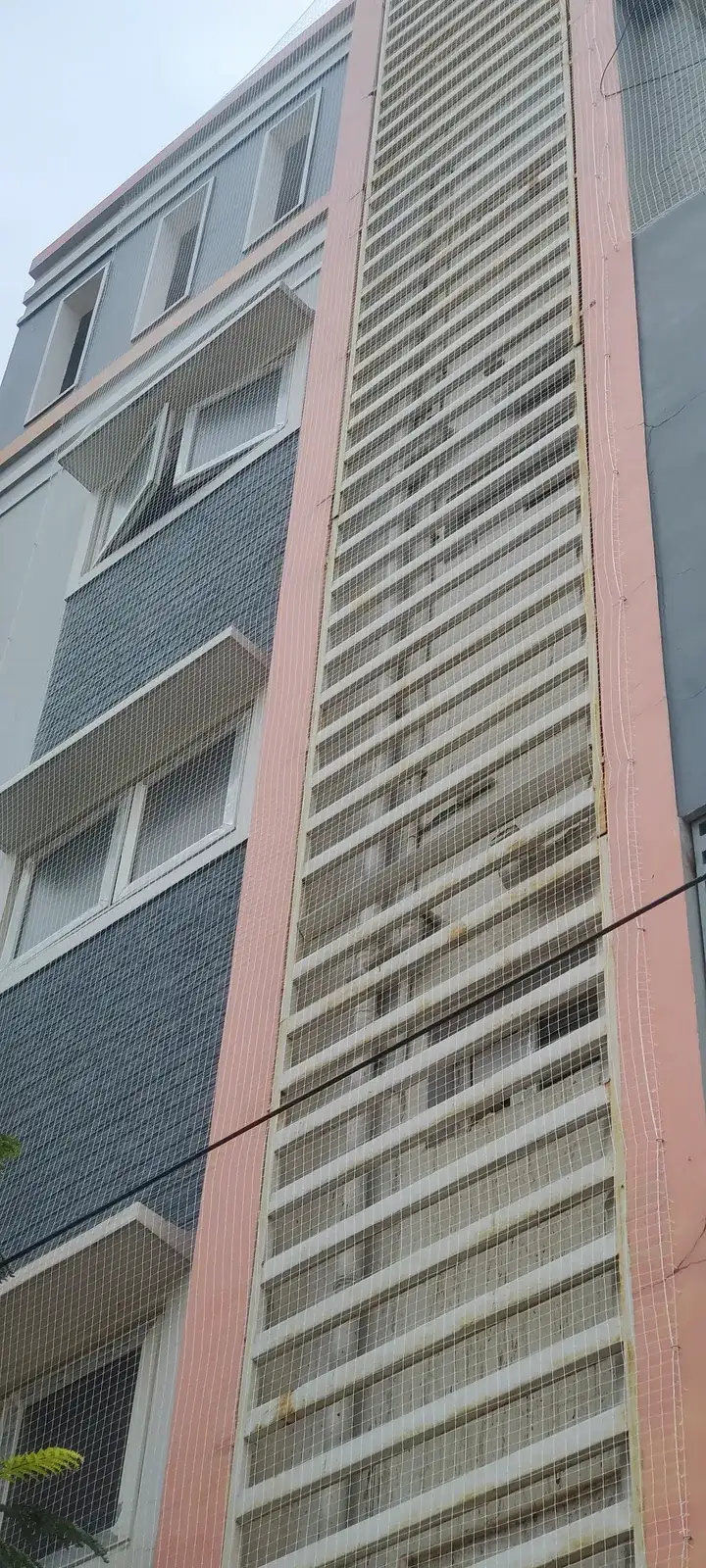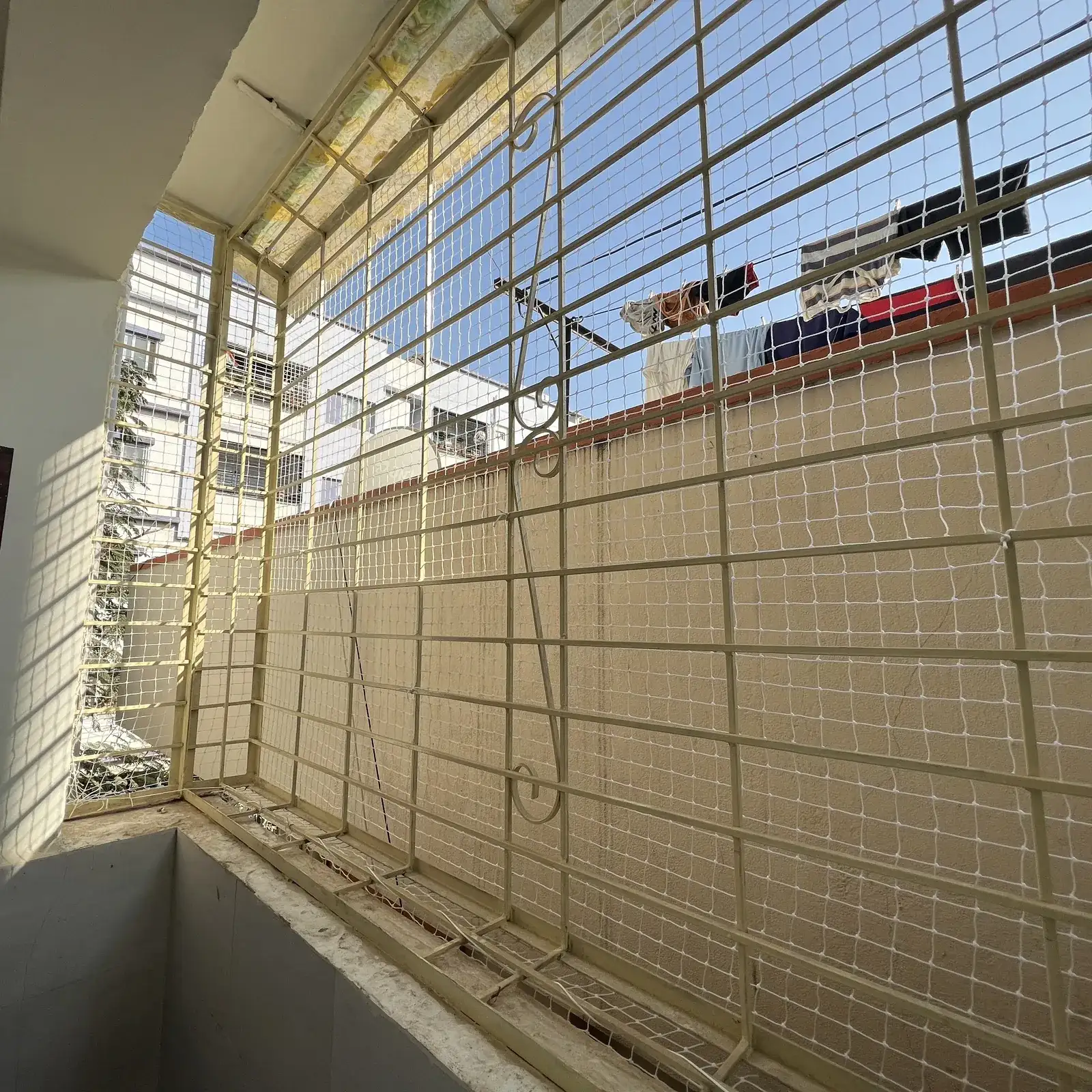
When you need a monkey safety net
Monkey problems are local. In some neighbourhoods monkeys are never seen; in others, especially near hills, forests, temples, parks and older tree-lined areas, troops pass through every day. Common signs that you need protection:
- monkeys sitting on your balcony railing or parapet
- food, fruit or plants taken from the balcony or terrace
- kitchen windows opened or pushed in
- damage to water tank lids, solar panels, pipes or dish antennas
- clothes pulled off the line
Once monkeys learn a home has food, they return. A net that physically closes the opening is the most reliable fix.
How a monkey net differs from a bird net
| Bird net | Monkey net | |
|---|---|---|
| Twine | Thin | Much thicker, high-strength |
| Mesh | About 50 mm | Similar or smaller, with heavier strands |
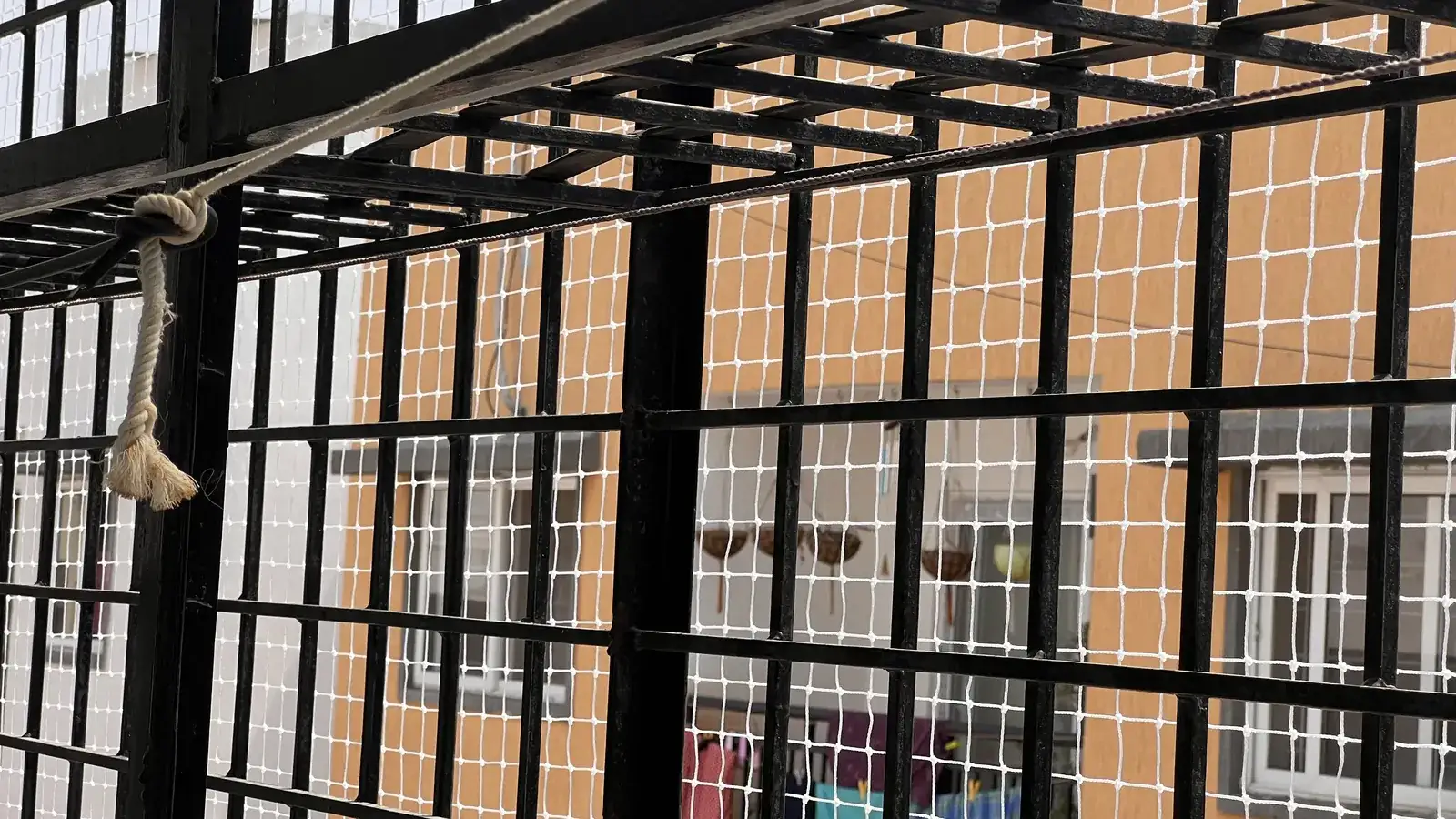
| Border | Rope or light wire | Heavy rope or stainless-steel wire rope |
| Anchor spacing | Moderate | Close, so the net cannot be lifted at the edges |
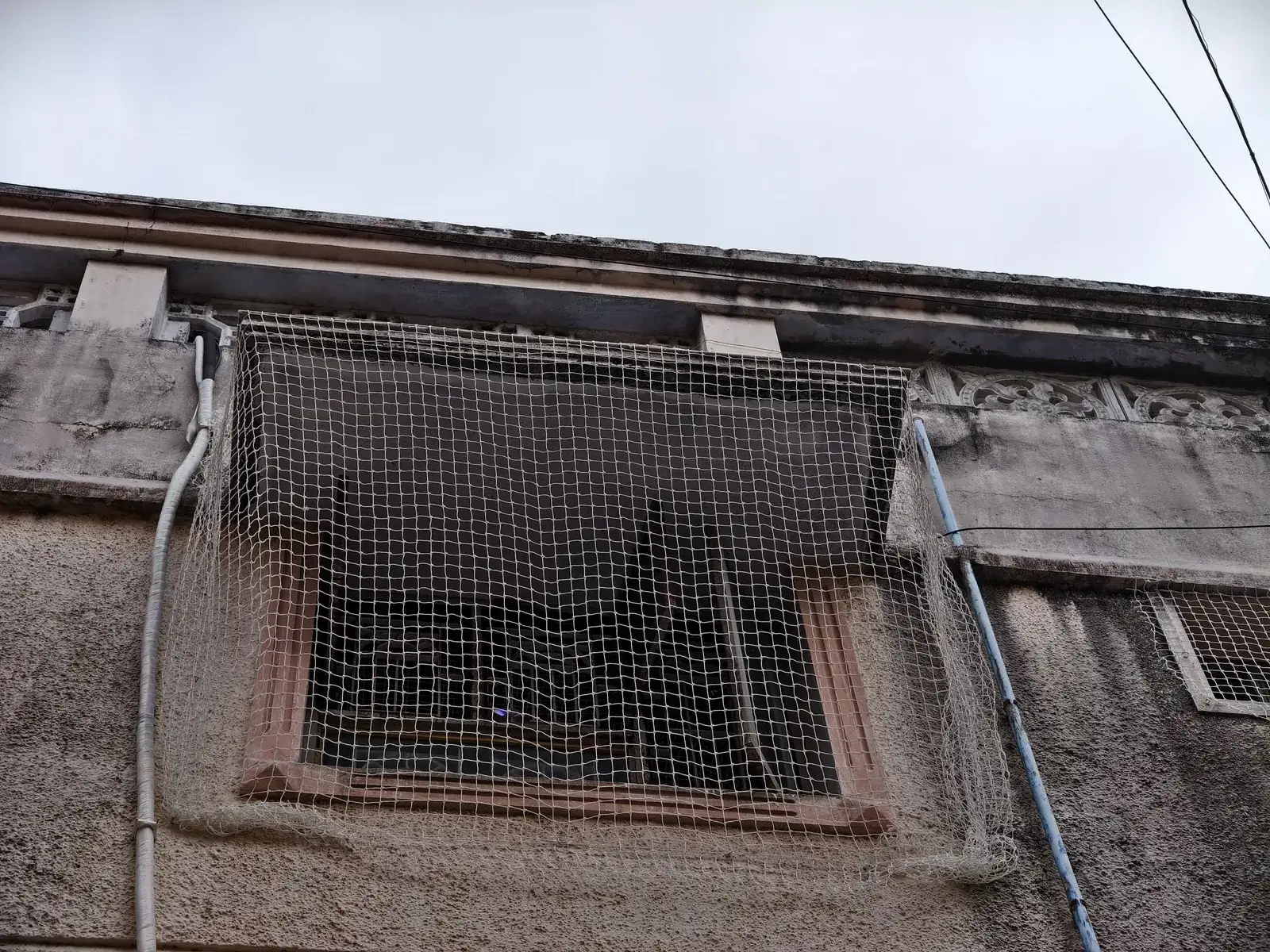
| Edges | Tied | Fully closed to the slab and side walls, with no climbable gap |
Monkeys pull, jump and bite, so every part of the installation is heavier.
Materials
- Net: heavy-duty UV-stabilised HDPE or nylon, thick enough to resist biting and tearing
- Border: stainless-steel wire rope or heavy rope, tensioned tightly
- Anchors: stainless-steel eye bolts at close spacing, set into concrete where possible
- Access: an optional lockable door or opening panel for terraces and utility areas
Benefits
- Monkeys stay out and are not harmed. No traps, no electric wires, no poisons.
- Food, plants and clothes stay safe.
- Fewer repairs to pipes, tank lids and fittings that monkeys damage.
- Air and light are kept. Unlike a solid enclosure, the net keeps the space open.
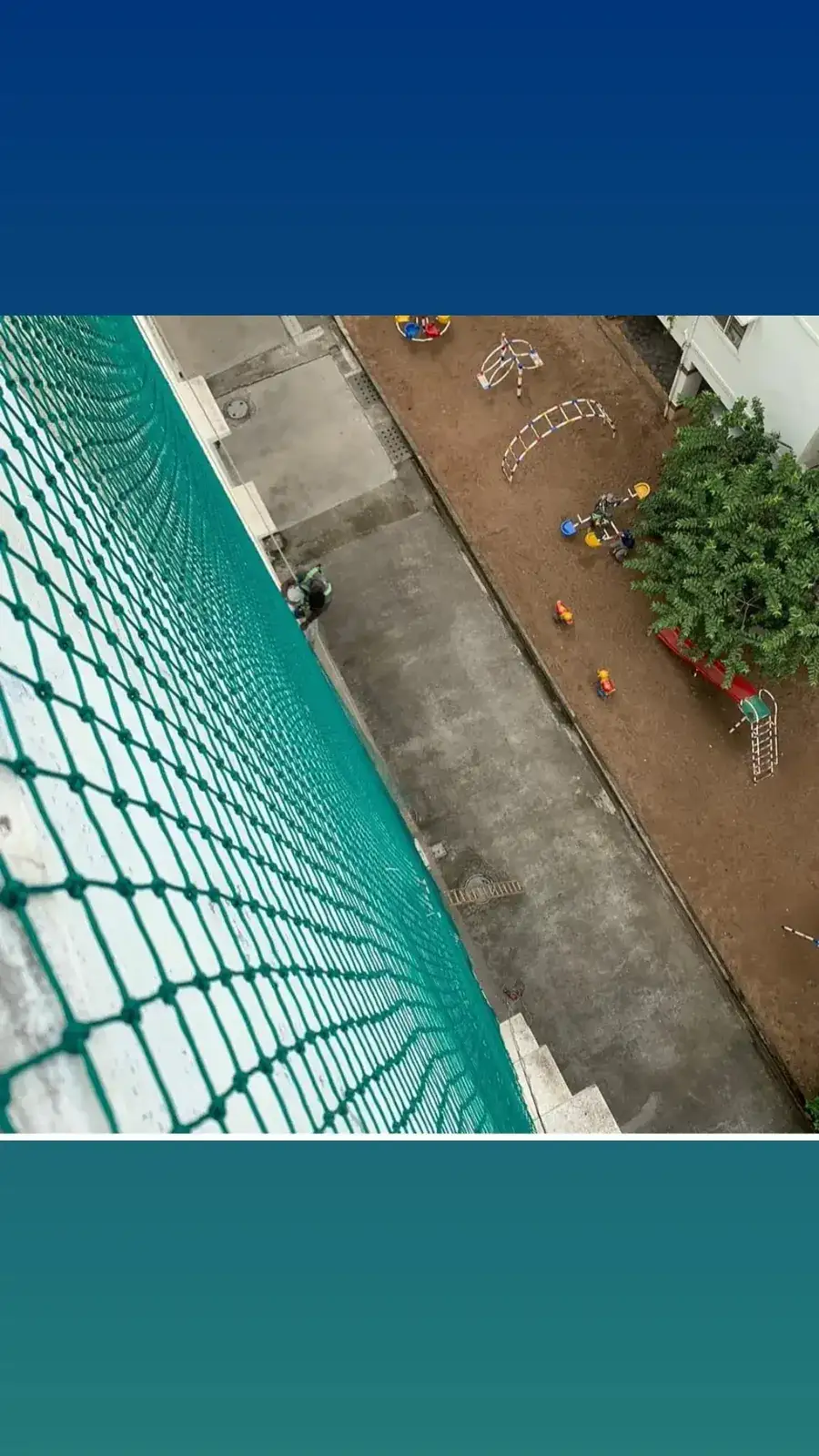
- Doubles as a pigeon and safety barrier.
Installation, step by step
- Find the entry routes. We watch for where monkeys land and climb, such as trees, parapets, pipes and neighbouring roofs.
- Plan a complete enclosure. A monkey net has to close the whole opening, or monkeys simply go around it.
- Fix heavy anchors along the slab, walls and parapet.
- Run and tension the border using wire rope or heavy rope.
- Lace the net tightly, with extra ties at the top edge and corners, where monkeys test first.
- Add a door if you need regular access to the terrace or tank.
- Pull test. We pull on the net at several points to check that nothing moves.
Nets work best together with good habits. Keep fruit, grains and pet food inside, close kitchen windows when you are out, and never feed monkeys from the balcony or terrace. Once monkeys stop finding food at your home, they test your barriers less often, and the net lasts longer.
Maintenance and lifespan
Check the net every month or two, and after any time monkeys have been seen on it. Look for:
- bite marks and stretched or thinned strands
- loose ties at the top and corners
- anchors that have moved
Small repairs done early keep the net working. Keep food, fruit peels and pet food away from the netted area so monkeys have less reason to test it. A heavy-duty net in partial shade lasts for years; constant sun and frequent monkey testing shorten its life, so inspection matters more than with other nets.
Signs your net needs attention
Monkeys test barriers. If you see torn strands, a corner pulled outward, a sag along the top edge or monkeys sitting on the netted area for long periods, call us to inspect it before a small weakness turns into a way in.
Also useful
Removing food sources makes any barrier work better: keep bins closed, do not leave fruit on balconies and do not feed monkeys. For full fall protection as well as monkey protection, invisible grills can be combined with a net. For terraces and stair openings, see safety nets. Our article on how to stop monkeys entering your home has more tips.