


Our service in Bengaluru
Bengaluru’s housing falls into a few clear types. Large gated communities and towers dominate the east and south-east, along the Outer Ring Road, Whitefield, Sarjapur Road and Electronic City. Mid-sized apartment blocks fill areas such as HSR Layout, BTM Layout, JP Nagar and Banashankari. And the older parts of the city, from Malleshwaram and Rajajinagar to Jayanagar and Basavanagudi, are full of independent houses, many rebuilt as two or three floors with the owner on one floor and tenants on the others.
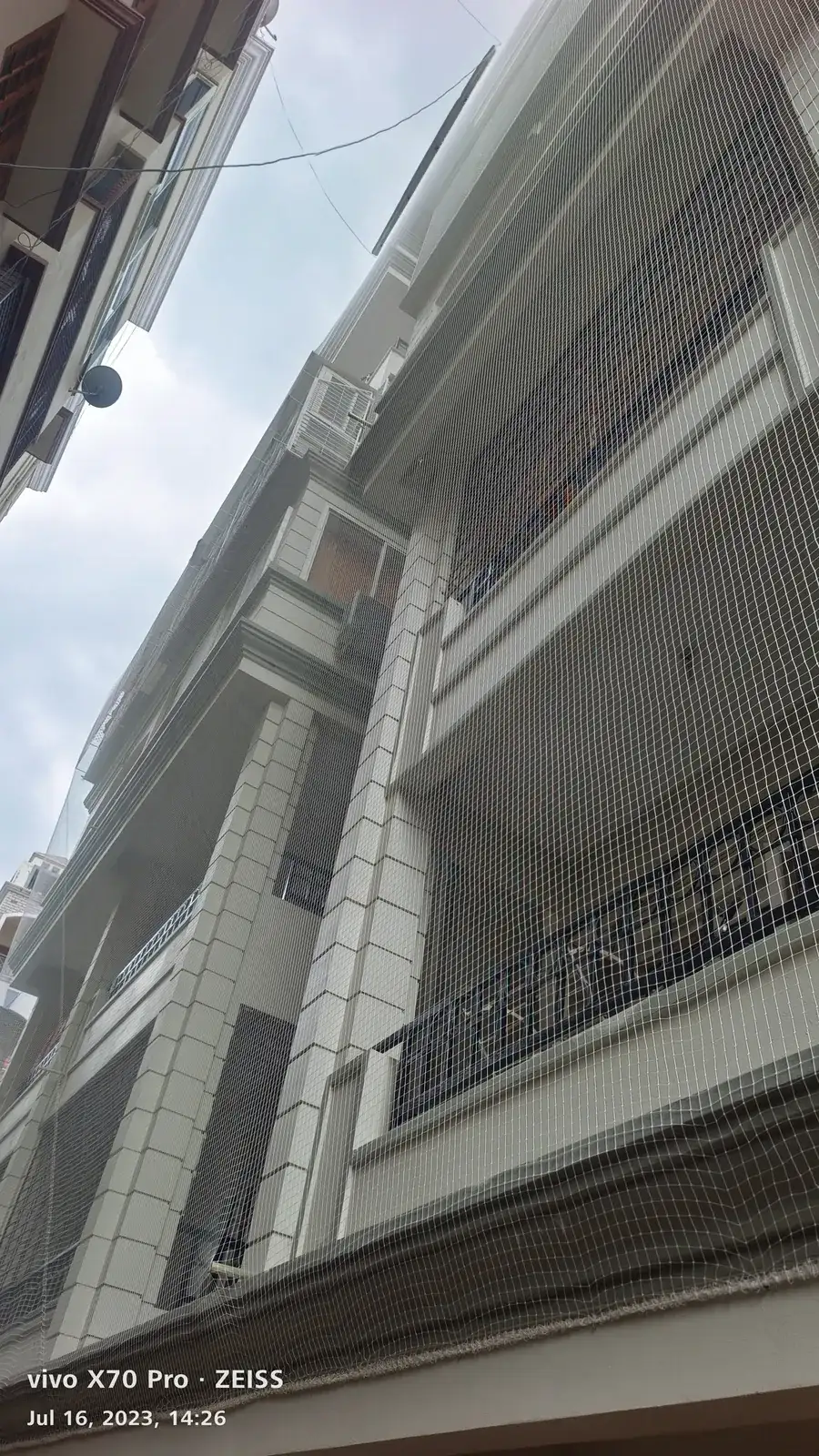
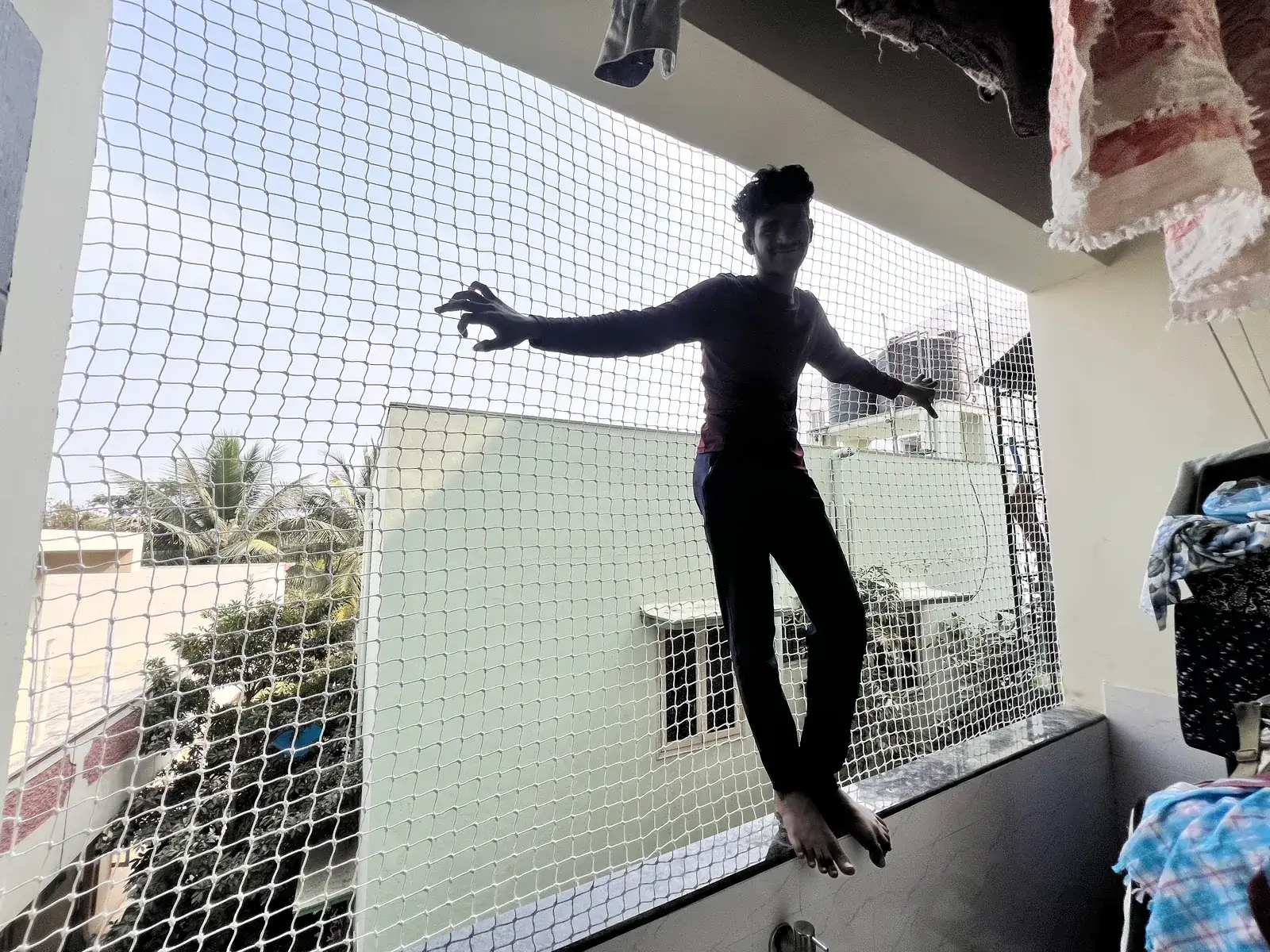
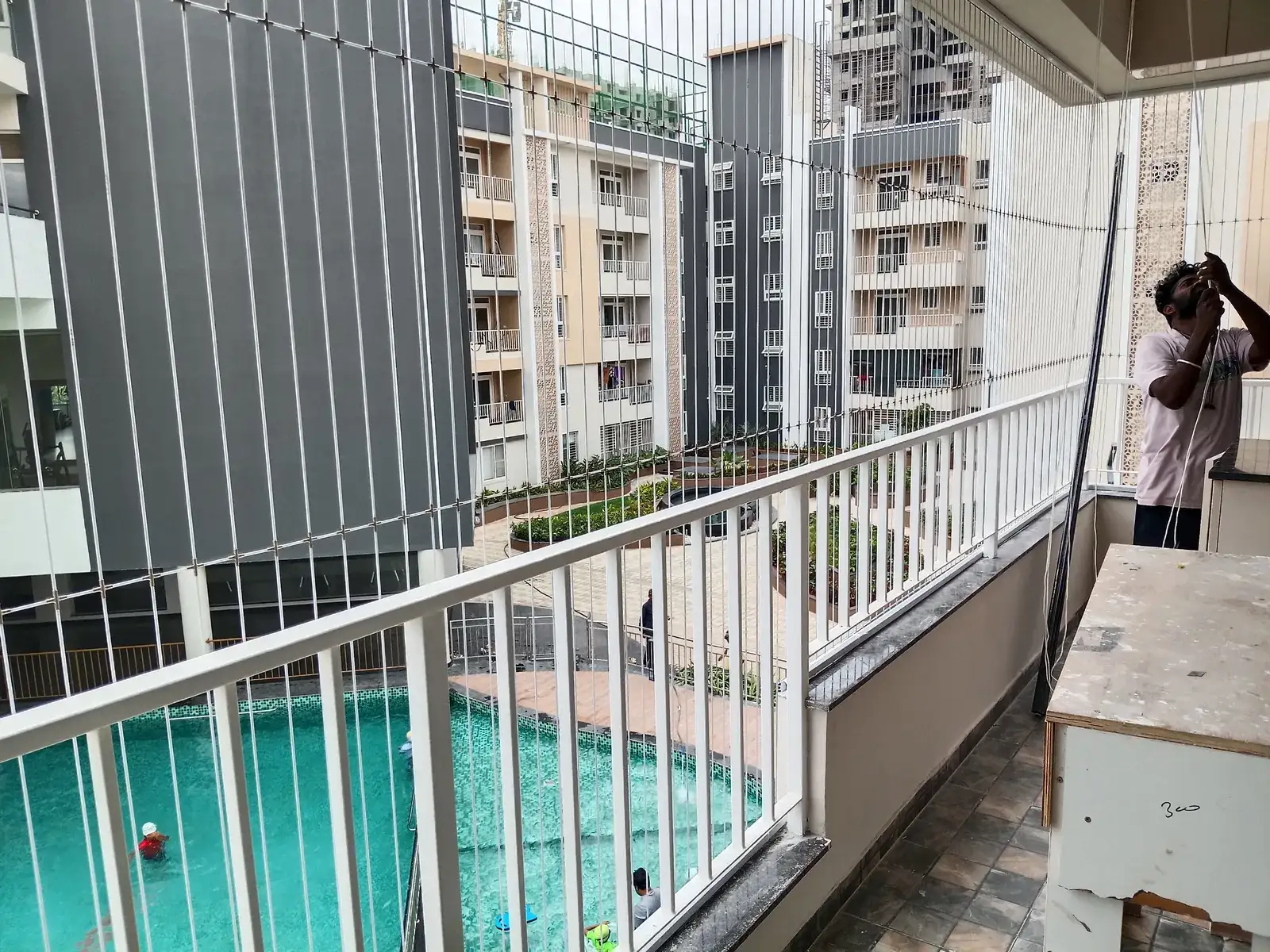
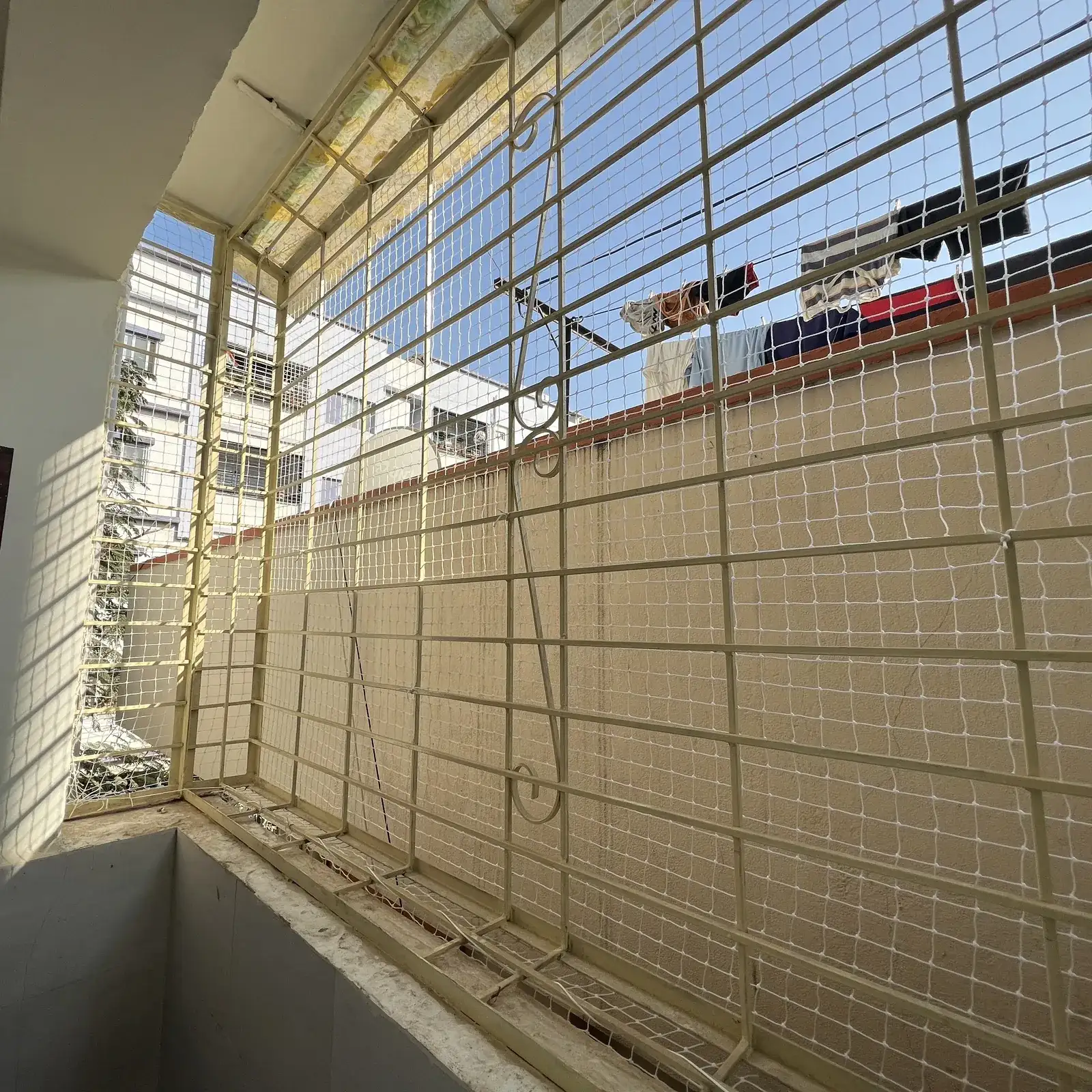
Each type needs something different. In towers it is balcony safety for children and pigeons on AC ledges and in ducts. In mid-rise blocks it is often a building-wide pigeon problem that the association wants solved together. In independent houses it is terrace safety, open staircases and drying space on the roof. We plan each installation around the building, the people who live in it and any rules the association has set.
What makes Bengaluru different
A mild climate that still wears materials down
Bengaluru sits on a plateau about 900 metres above sea level, so it is cooler than most Indian cities and far from the sea. That does not mean nets last forever. Exposed balconies still get strong sunshine, especially from February to May, and the city gets rain from both monsoons, with heavy spells around September and October and sudden thunderstorms before the monsoon. We use UV-stabilised nets and stainless-steel fittings, which handle both the sun and the long damp spells.
Apartment associations and facade rules
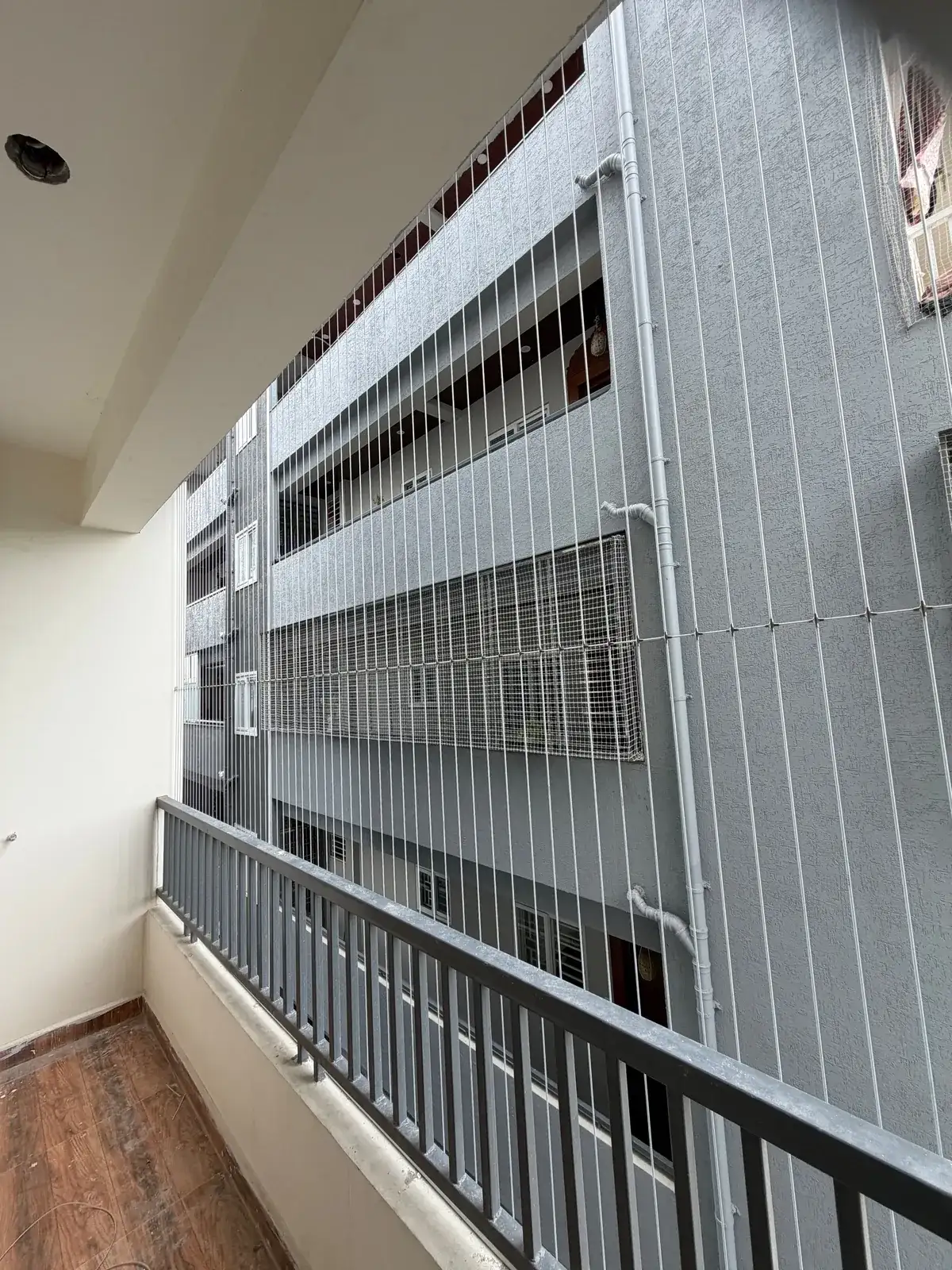
Few cities have as many active apartment owners’ associations as Bengaluru. Many have clear rules about what residents may fit on balconies: net colour, grill colour, whether fittings must stay inside the railing line and whether clothes may be dried outside. Transparent nets, invisible grills and inside cloth hangers usually fit within these rules. We are happy to talk to your association if that helps.
Pigeons in apartment complexes
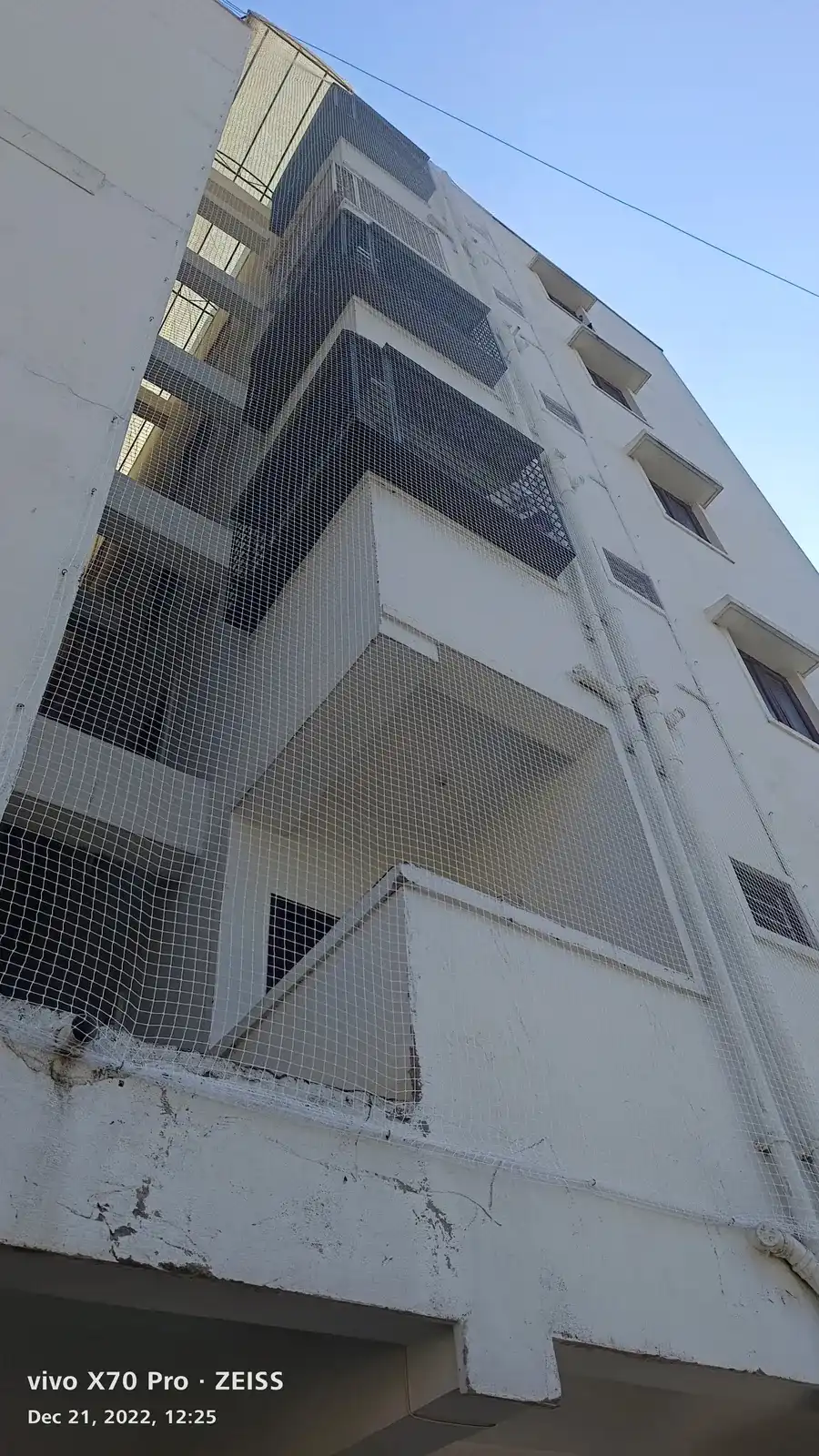
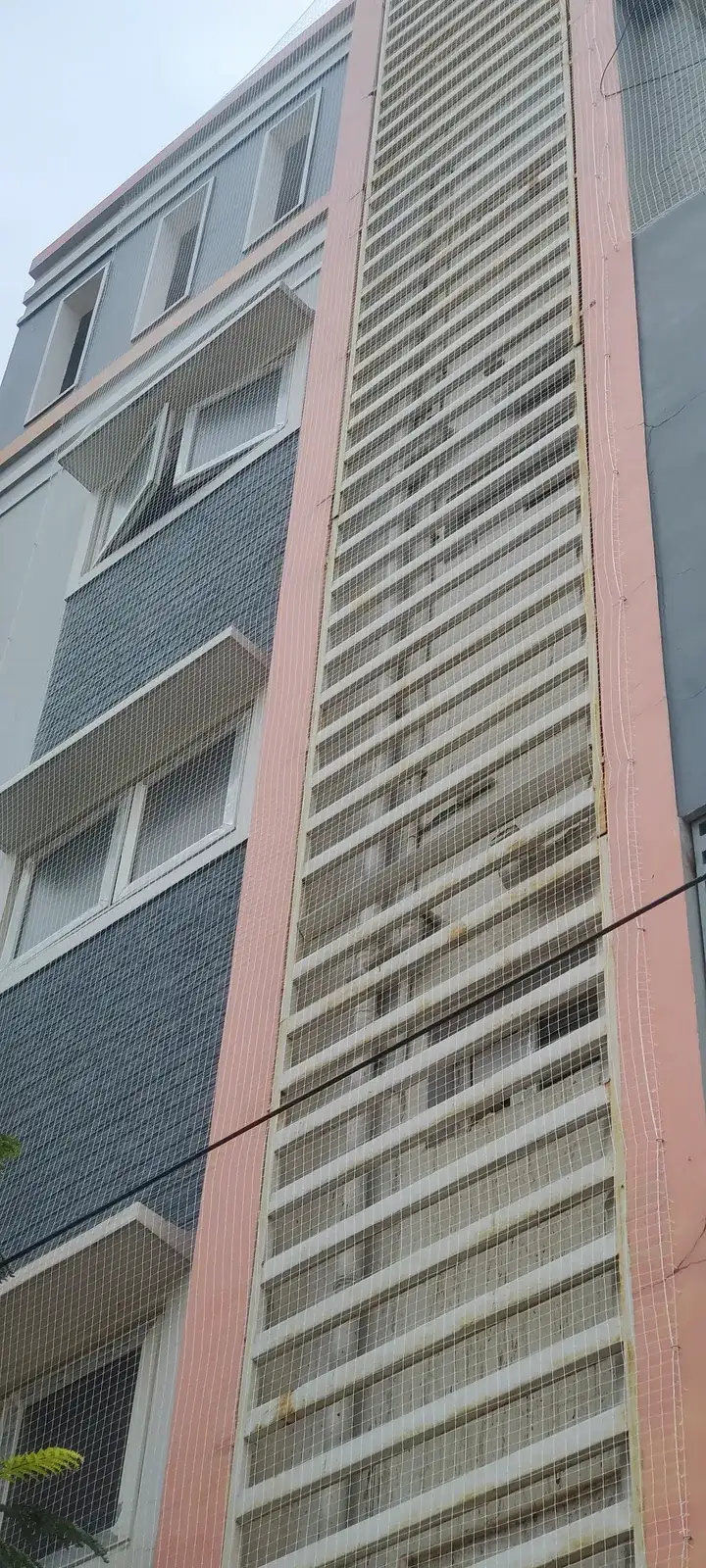
Pigeons are one of the most common complaints in Bengaluru’s apartment complexes. Duct shafts, AC ledges and quiet balconies give them ideal nesting places, and once a few pairs settle in a building, the problem spreads to neighbouring flats. Many associations now choose to net all ducts and common areas together, which is more effective than flat-by-flat work.
Monkeys in some areas
Monkeys are seen in some neighbourhoods near forests, large parks, campuses and the city’s growing edges. Where they visit, a heavier monkey safety net is needed; a pigeon net will not stop them.
Lakes and open land
Many of Bengaluru’s newer apartment areas grew up around lakes and former farmland, such as Bellandur, Varthur, Hebbal and the stretches along Sarjapur Road. Open surroundings mean more wind on upper floors and plenty of birds, so close anchoring and well-fitted corners matter.