

Monkeys near Chamundi Hills
Chamundi Hills rises on Mysuru’s south-eastern edge, with the Chamundeshwari temple at the top. Visitors feed the monkeys on the hill, which makes them bold around people, and some troops come down into the streets nearest its foot. Signs you need protection:
- monkeys sitting on the parapet, compound wall or sunshades
- fruit, vegetables or plants taken from the roof or balcony
- kitchen windows pushed open
- damaged water tank lids, solar heaters or pipes
- clothes pulled off the line
What we fit
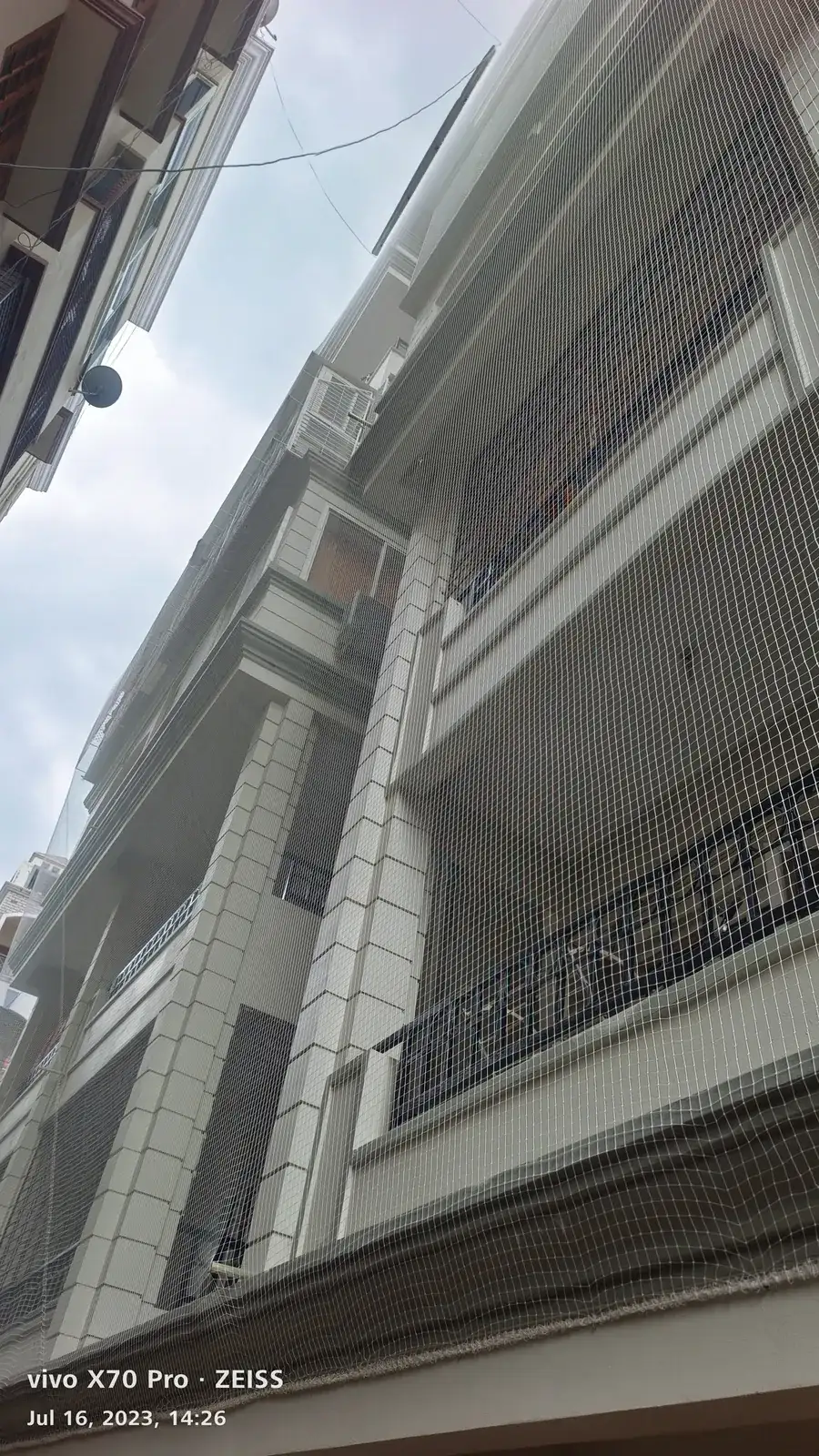
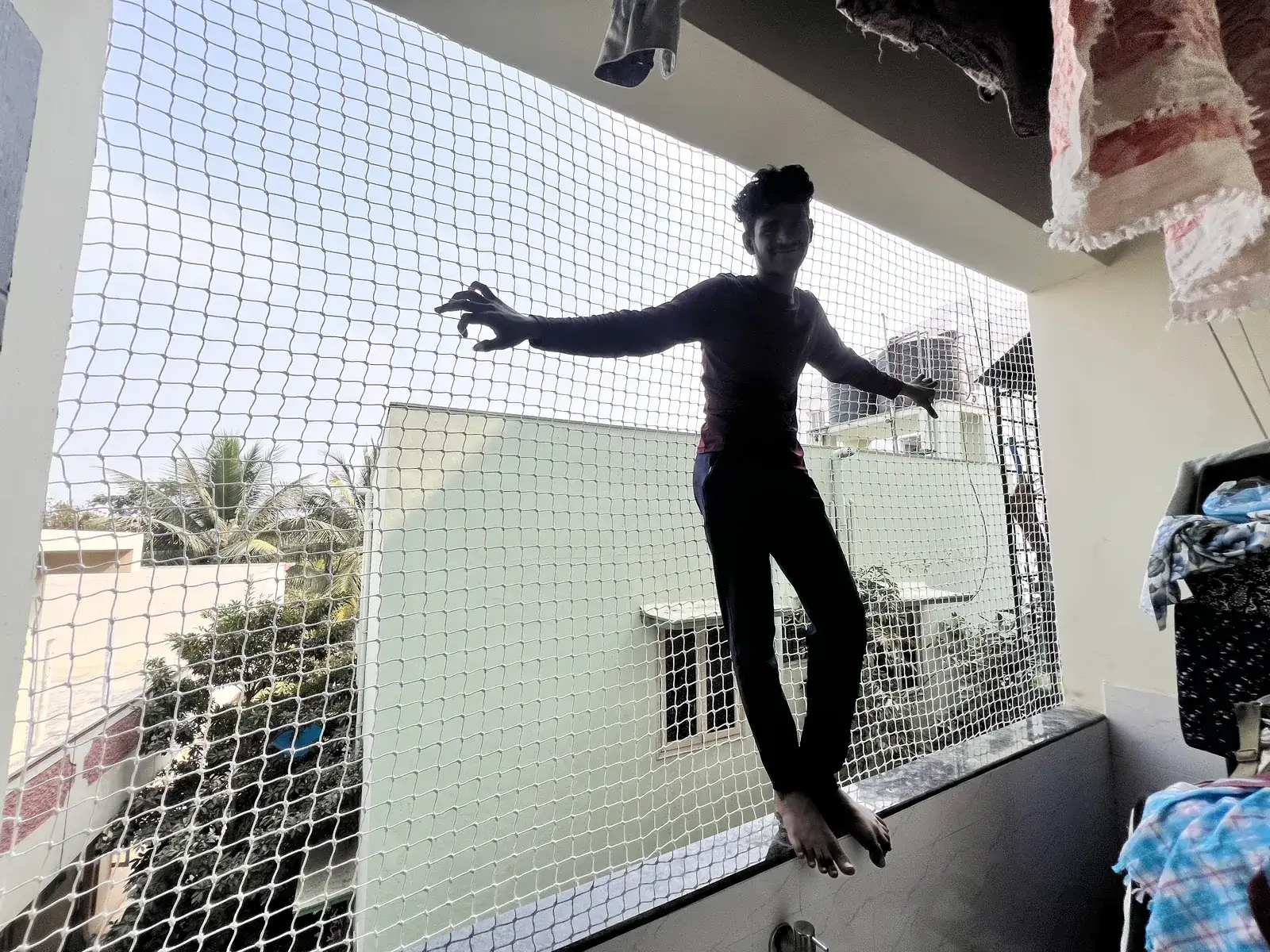
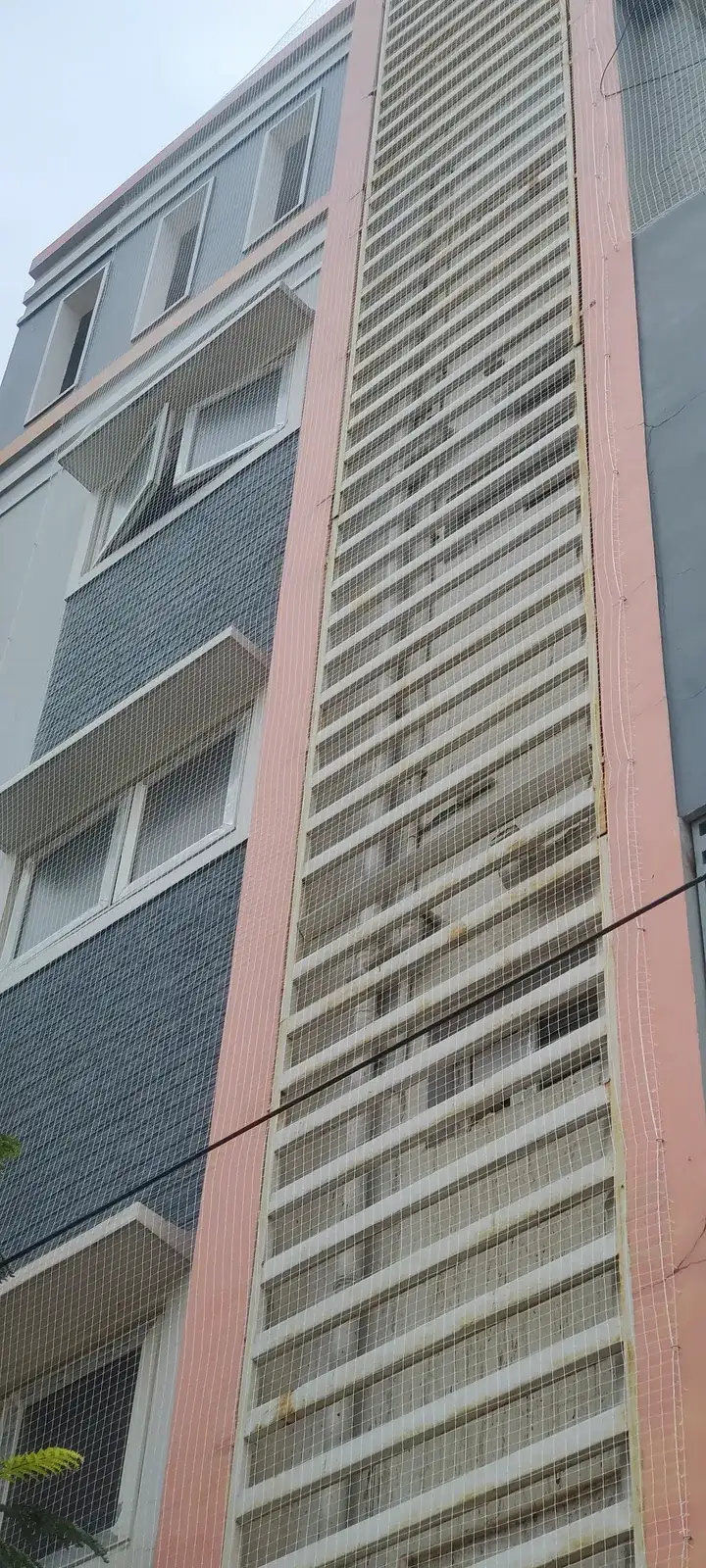
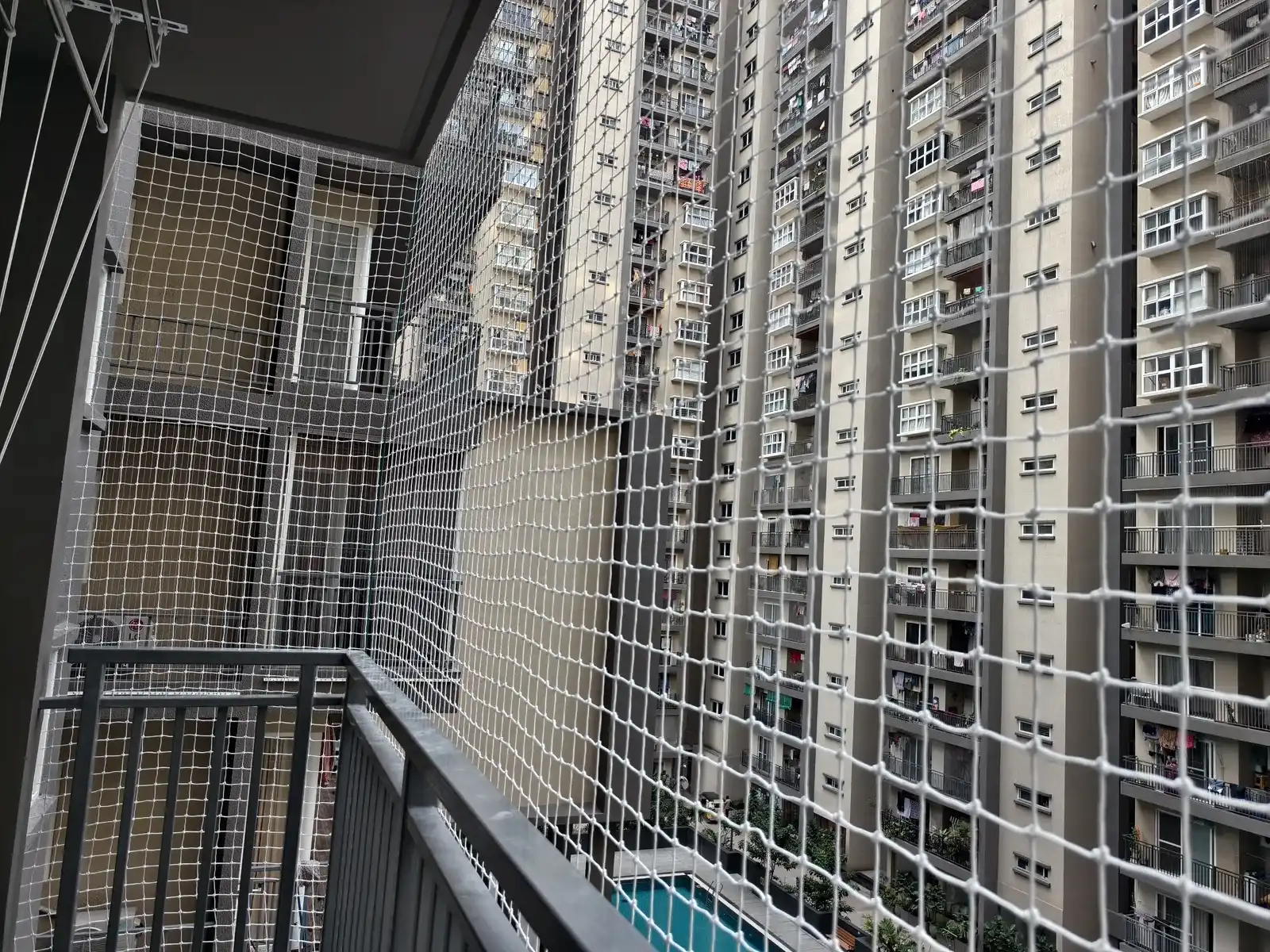
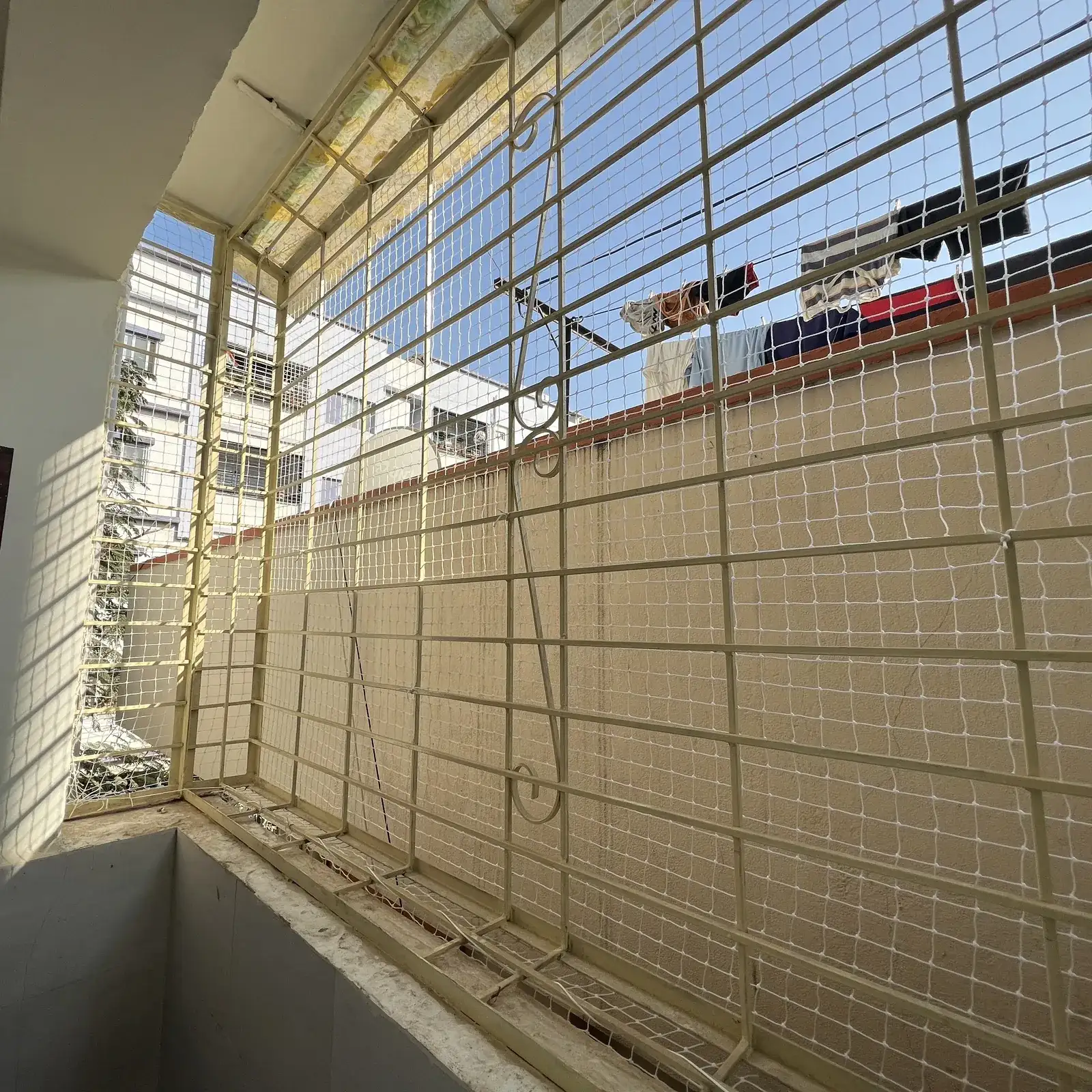
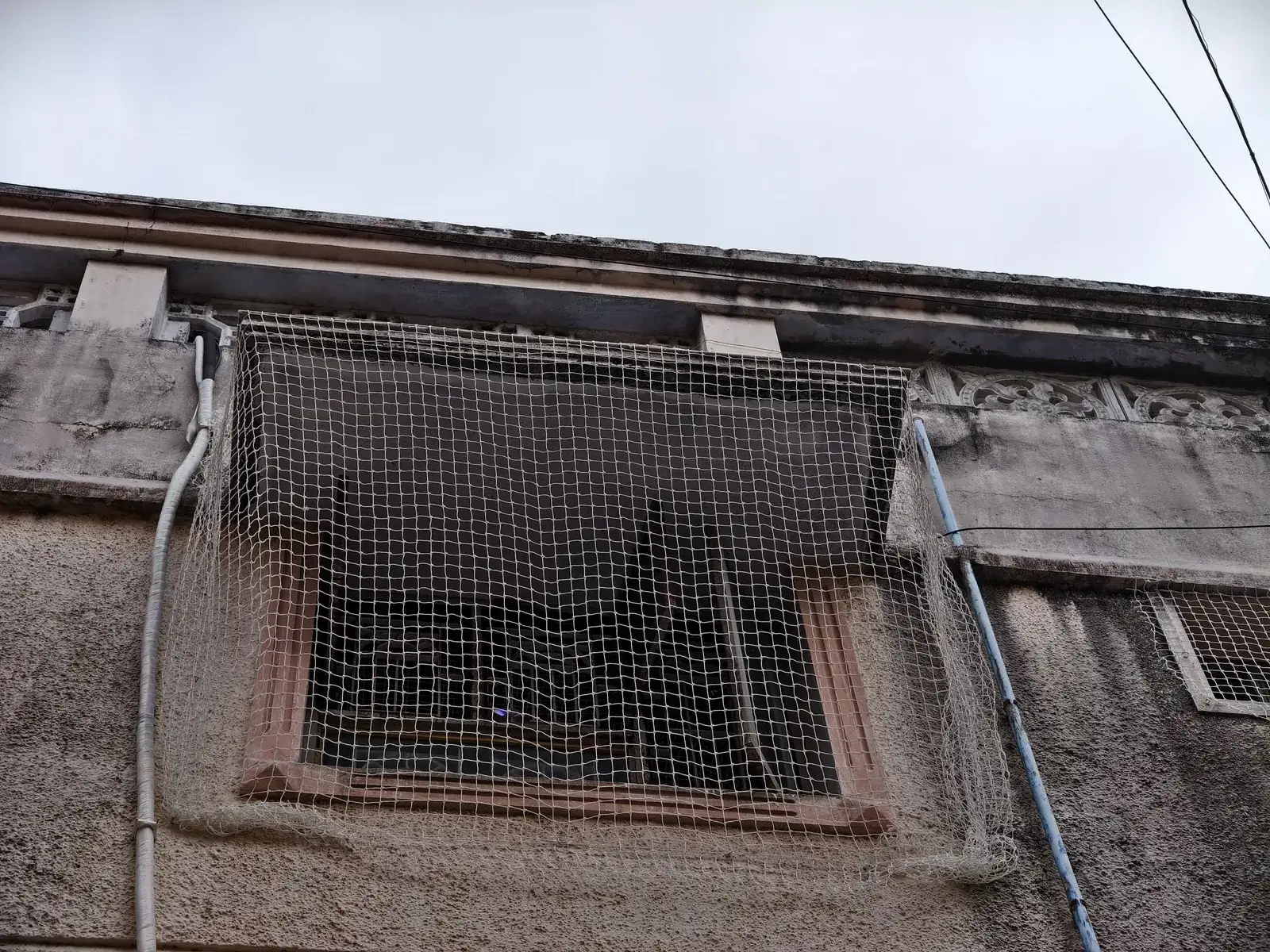
- Kitchen windows and back yards
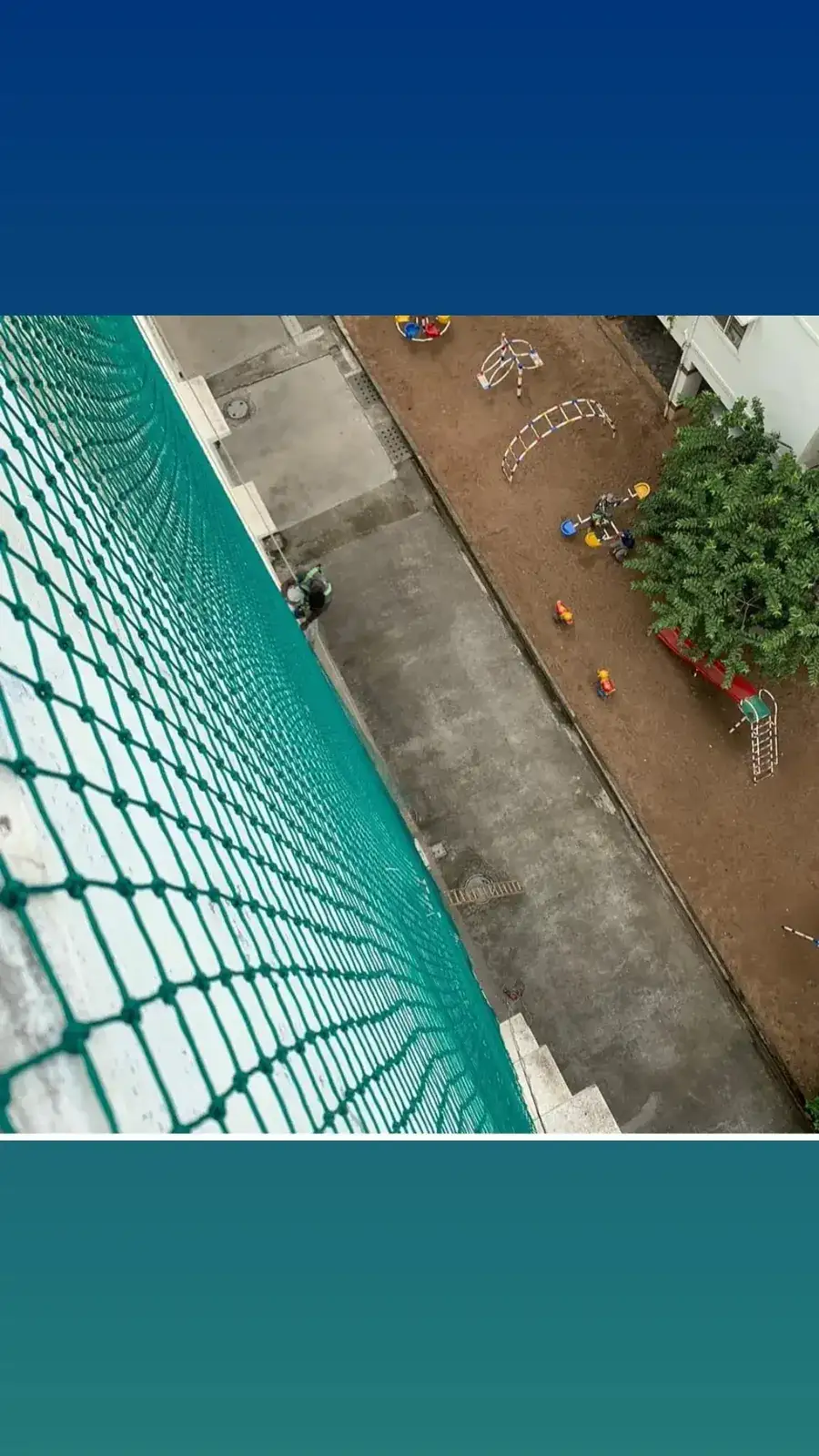
- Roof terraces, especially around the water tank, solar heater and clothes lines
- Open staircases to the roof
- Lockable doors where you need regular access
Materials
| Part | What we use |
|---|---|
| Net | Heavy-duty UV-stabilised HDPE or nylon |
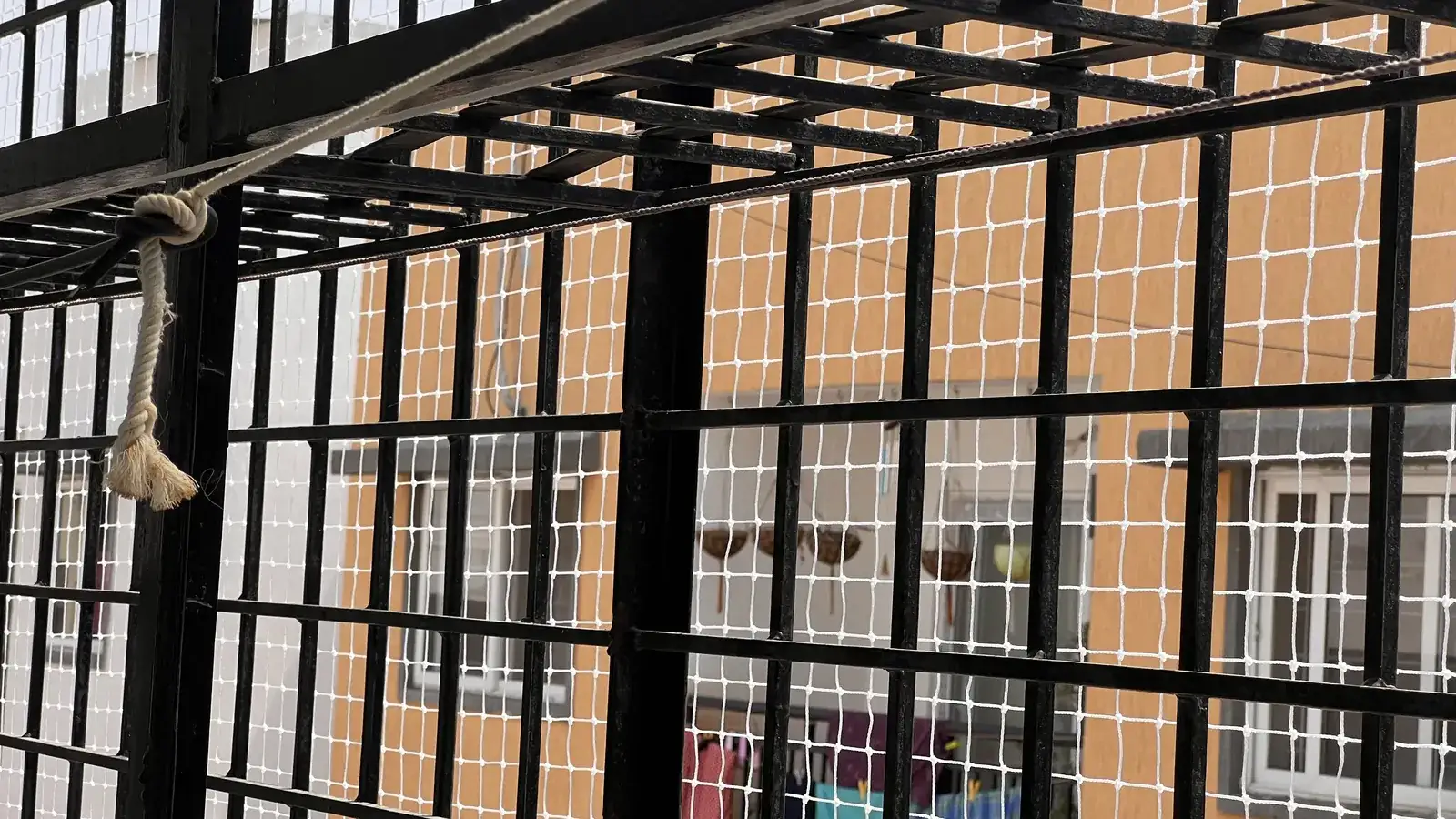
| Border | Stainless-steel wire rope or heavy rope |
| Anchors | Stainless-steel eye bolts at close spacing |
| Edges | Fully closed to slab and walls |
How we install
- Work out how the monkeys get in: walls, trees, pipes or neighbouring roofs.
- Plan a fully closed enclosure, including the top.
- Fix heavy anchors.
- Tension the border tightly.
- Lace it on, adding ties where monkeys pull hardest: the top line and the corners.
- Add a lockable door if needed.
- Pull-test the net.
Netting part of the roof
Netting a whole flat roof can be costly. Often it is enough to enclose the part monkeys target, the area around the tank, solar heater and clothes line, with a door. Kitchen windows are netted separately if needed.
Reducing visits
Bring fruit and puja items in, shut windows before leaving the house, cover the bins and resist the urge to feed any monkey. Once they stop finding food, they test barriers less often.
Monkey and pigeon nets together
One heavy-duty net with a small mesh keeps out both, so you don’t need two layers.
For the full picture, visit monkey safety nets. The guide on how to stop monkeys entering your home may help as well.
Streets near the hill
Homes on the streets leading to Chamundi Hills and in the neighbourhoods at its foot are the ones most likely to see monkeys. A few streets further away, visits become rare. If you’re not sure whether you need a monkey net, look at what is being damaged: droppings and feathers mean pigeons; torn plants, taken food and opened windows mean monkeys.
After the monsoon
Heavy nets on open roofs face months of rain. After the monsoon, check them for stretched sections and loose ties.