




Is this for you?
Cooing and flapping at dawn, a smell through the bathroom ventilator, droppings on pipes, a fan blocked by a nest or birds flying into the kitchen all point to birds in the shaft.
A typical job, start to finish
You send photos of the shaft or gap from your window and, if possible, from the roof.
We plan access. We look from inside and above to decide where the net goes and how to reach the fixing points safely.
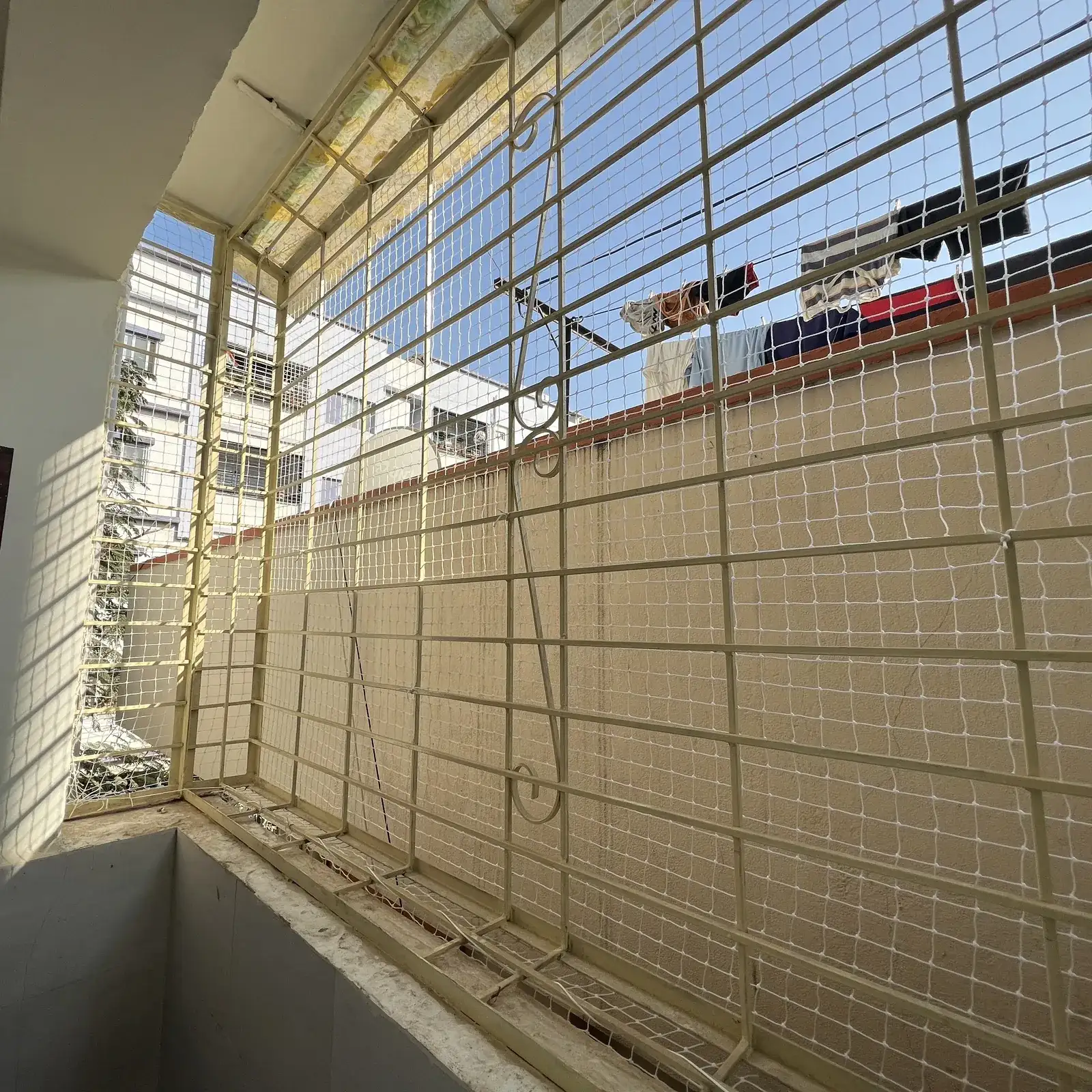
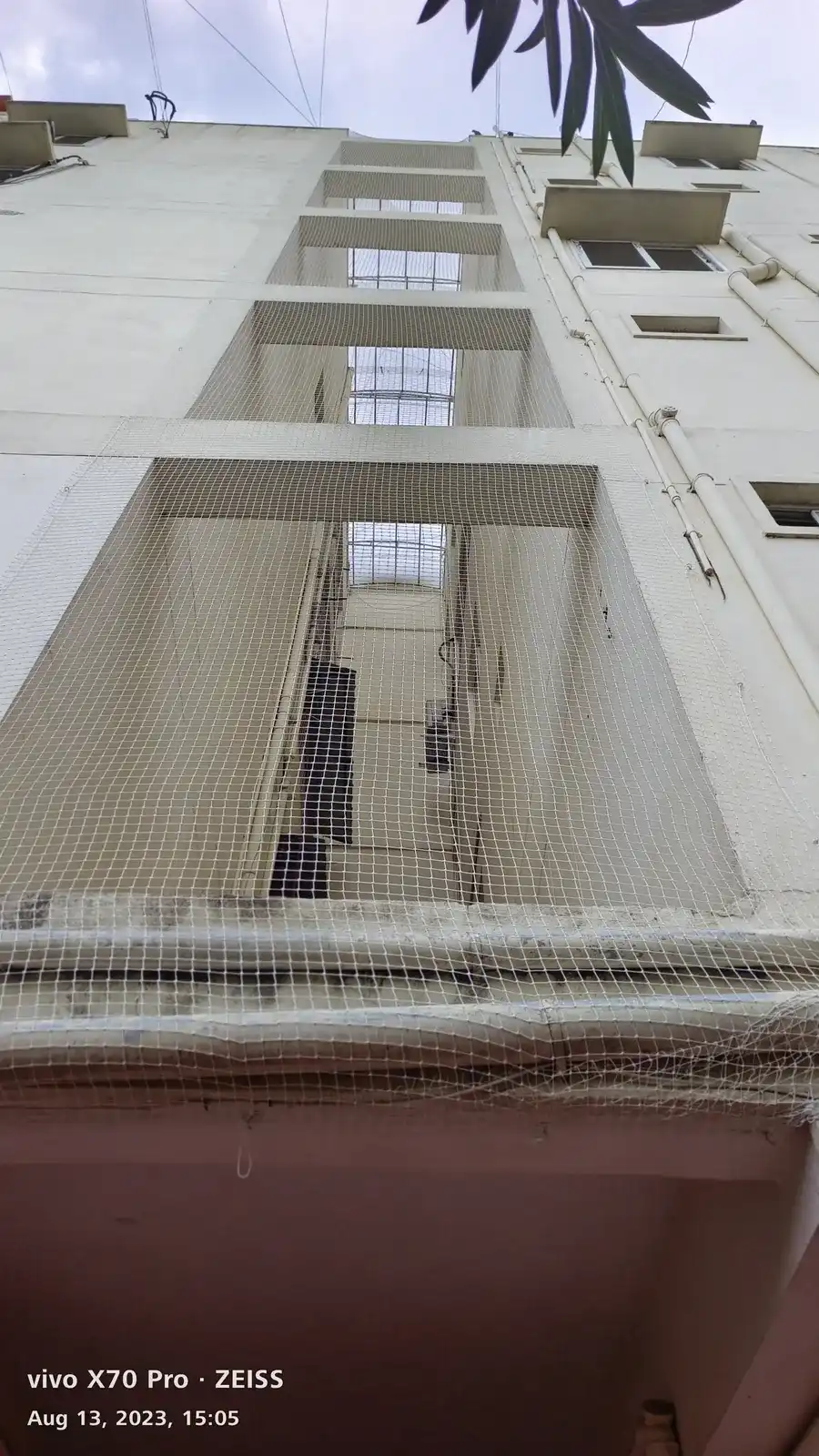
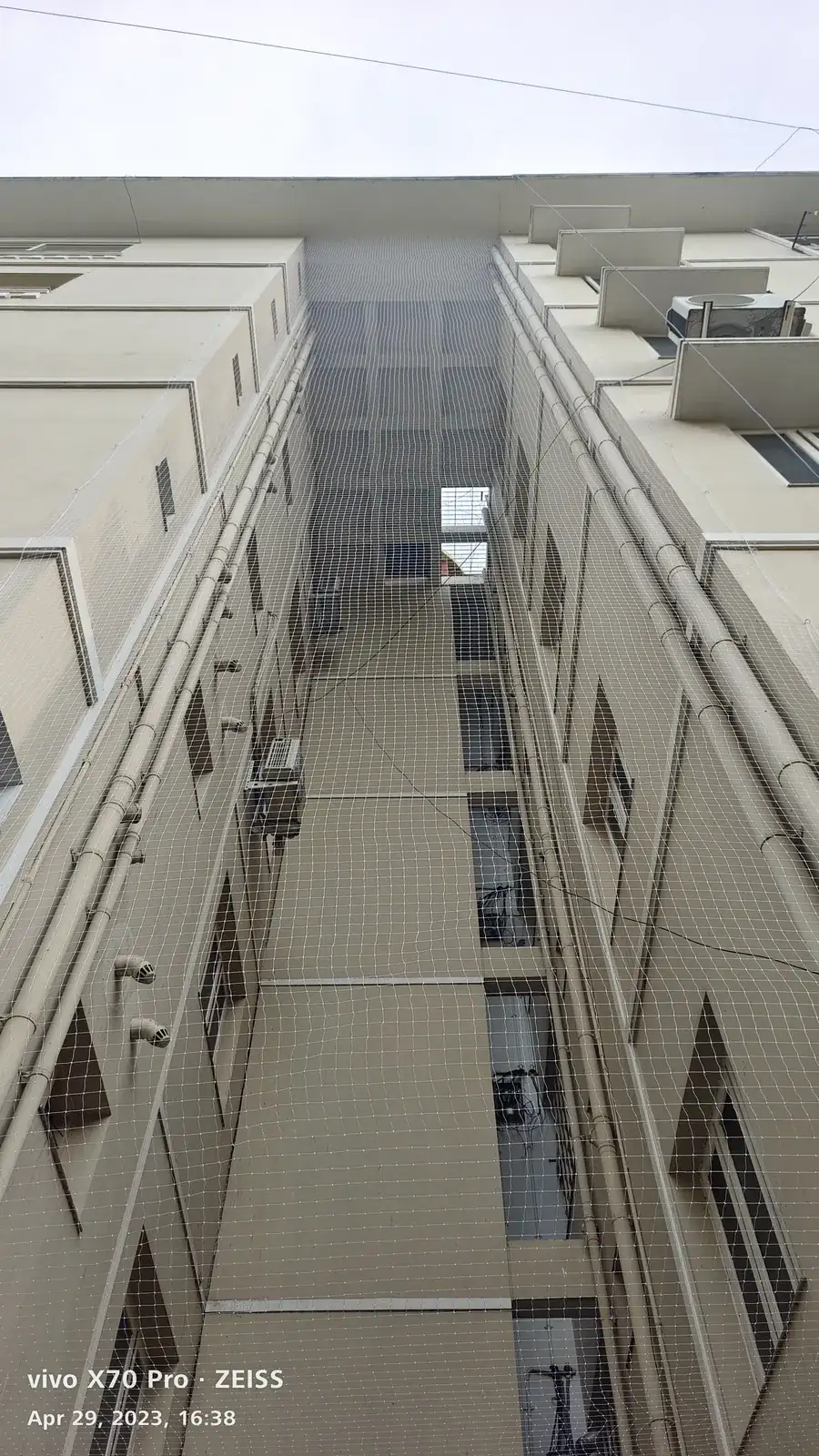
We clear, fix and seal. Nests come off the fixing points, stainless hooks go in, a border is tensioned and the net is laced across. We seal around pipes and fit an access panel for the plumber.
Which shaft needs what?
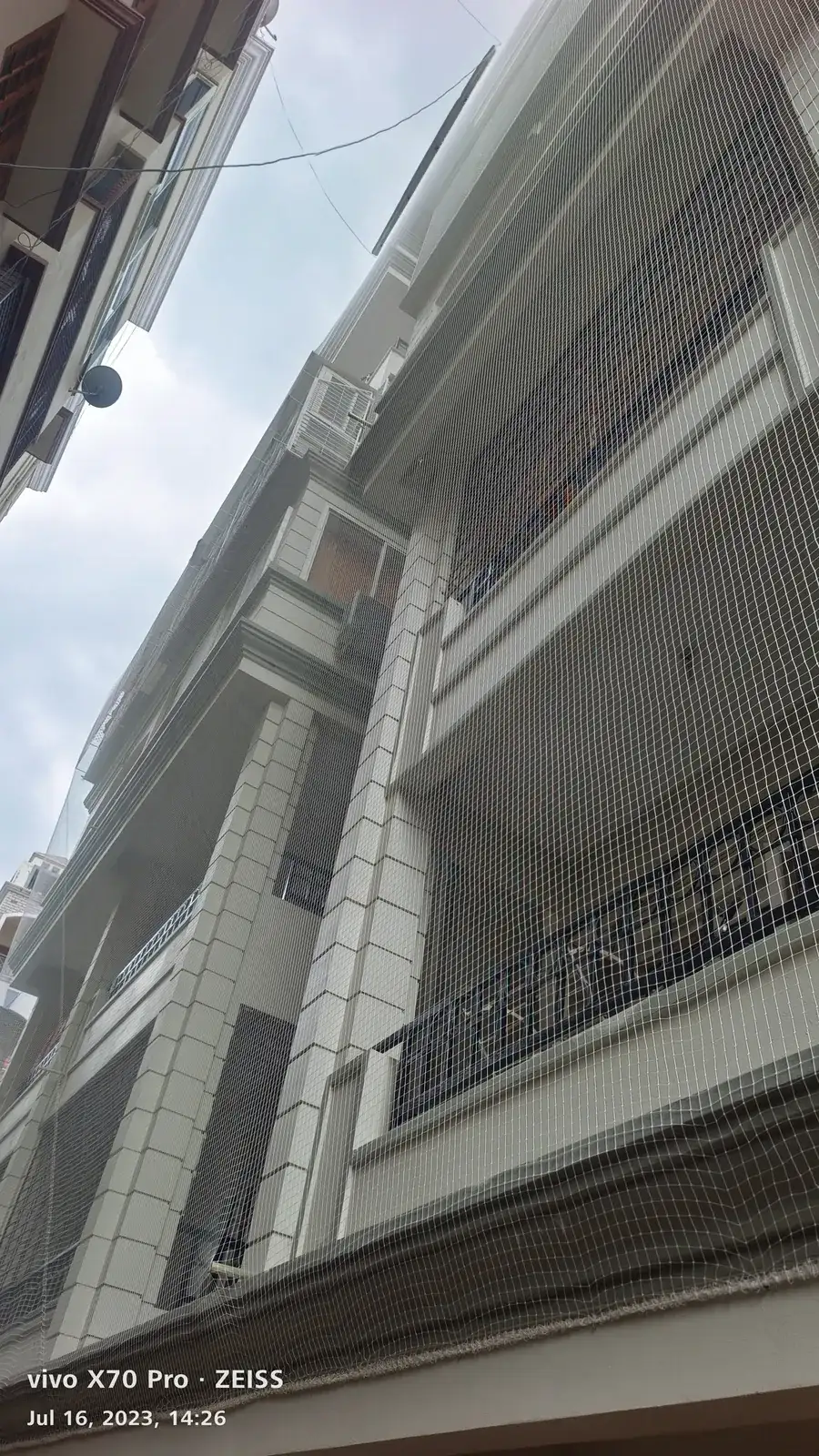
A shared apartment shaft is best netted once at roof level, protecting every flat. A light well between two houses gets one net across the top, with both families’ agreement. Your own opening gets netted if the building or neighbour can’t agree.
In the humid months
Shafts stay damp around the pipes, and Tenali’s humidity adds to it. Plain iron hooks would rust quickly, so every hook is stainless. The net is UV-stabilised bird net with a 50 mm mesh.
Looking after it
Ask whoever uses the access panel to close it again. Shaft nets are out of direct sun, so they usually last longer than balcony nets.
Cleaning
We clear nests at the fixing points. A full clean of the lower ledges is usually separate, best done just after the net goes up.
Questions we hear in Tenali
“How do I get the others to agree?” Share photos of the nests from different floors, point out that one net at the top protects everyone and suggest splitting the cost.
Read more about duct area safety nets, or see our guide on why apartment duct areas need nets.
Newer flats along the main roads
Apartment buildings that have come up along Burripalem Road and the other main roads are where open shafts are most common. Netting the top before nests build up is a single, simple job.
What to tell us when you call
Whether it’s an apartment shaft or a gap between two houses, which floors are affected, whether you can reach the roof and whether the other owners have agreed. Photos from your window and from above make it much easier to plan safe access before we arrive.
After the net goes up
The smell fades once droppings stop collecting and the ledges are cleaned, usually within a few weeks.
Older light wells
The walls of older light wells are sometimes patched or uneven. We pick fixing points on sound brick or concrete and adjust the spacing so the net lies flat across the opening without gaps at the edges, where birds would otherwise squeeze through.