

The Pune duct problem
Most Pune housing societies built over the last few decades, and nearly every new tower, have open shafts between flats for plumbing and ventilation. Bathroom ventilators, kitchen exhausts and AC drains open into them. For pigeons, a duct is perfect: dry during the monsoon, shaded in summer and almost never disturbed.
Residents notice:
- cooing and wing-flapping early in the morning
- feathers and droppings on bathroom ventilators and sills
- blocked exhaust fans
- a damp smell that gets much worse in the monsoon
Two approaches
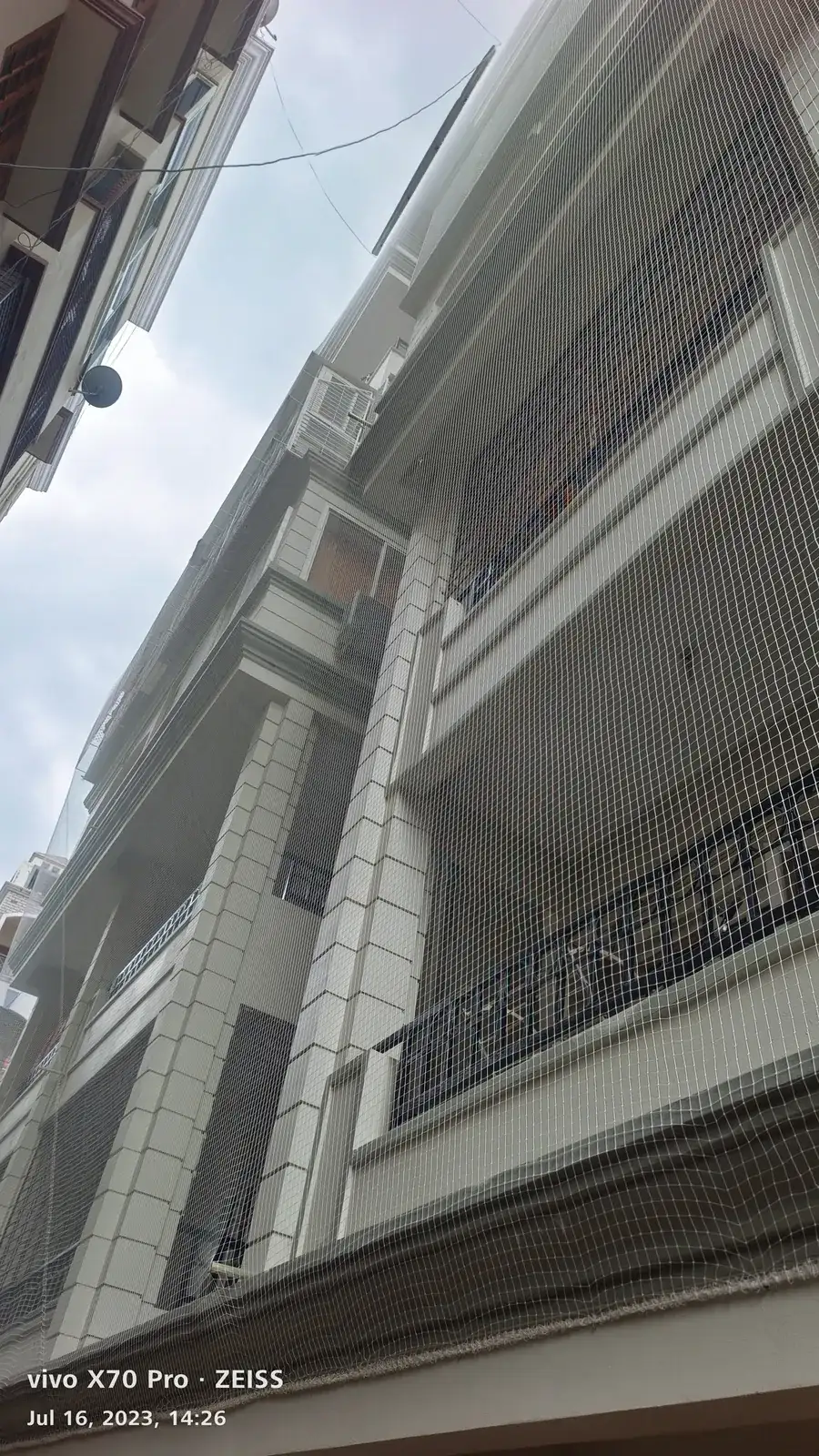
Society-wide. A net across the top of every shaft at terrace level, with open sides at lower floors netted too. Many Pune society committees prefer this because flat-by-flat netting leaves gaps.
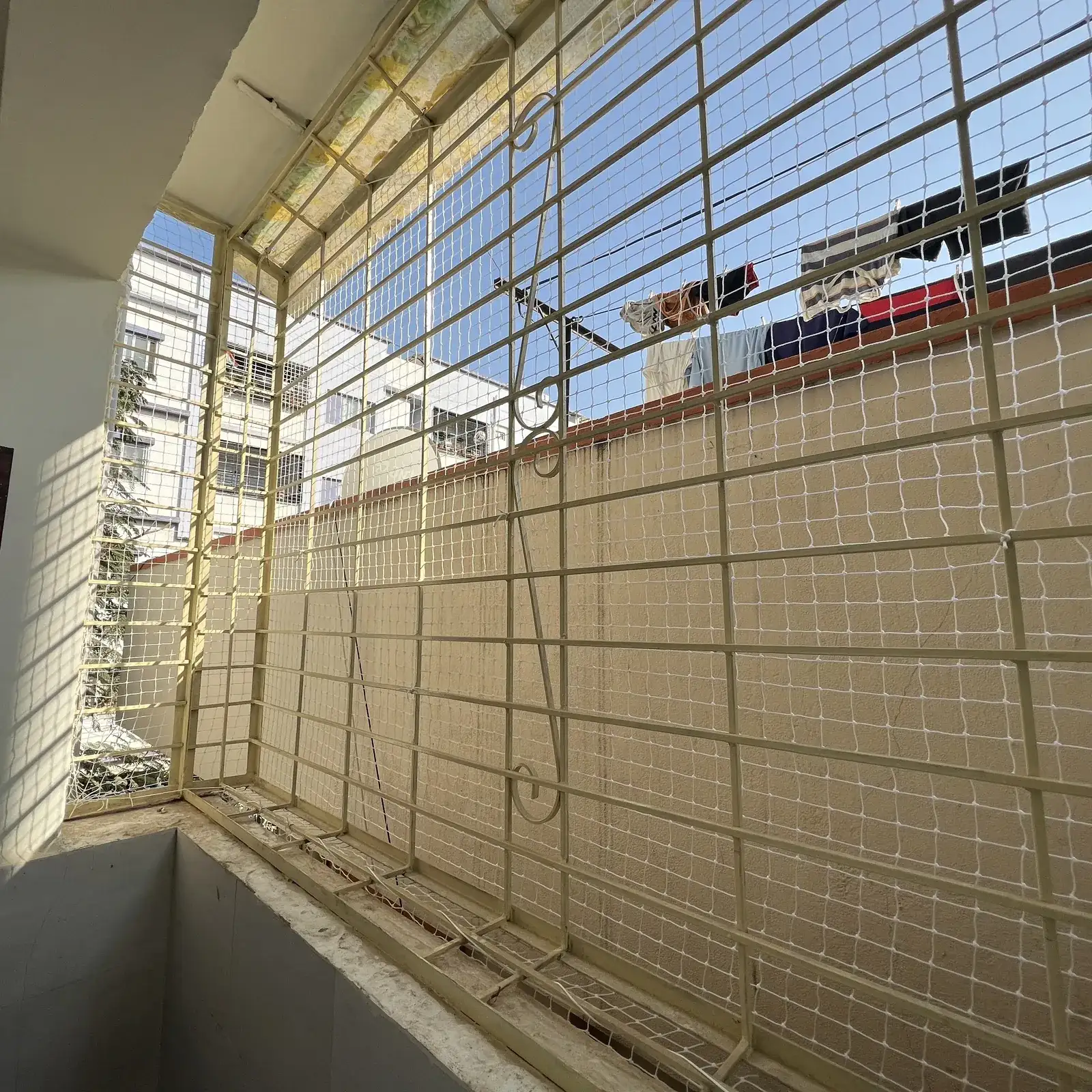
Flat-by-flat. A net across your own ventilator or the open side of the duct beside your flat, for when the society has not yet agreed a building-wide plan.
Materials
UV-stabilised HDPE or nylon bird net (50 mm, or smaller where sparrows use the shaft), a tensioned border and stainless-steel hooks. Ducts stay damp around pipes, especially in the monsoon, so ordinary iron rusts fast. An access panel is always included.
Taking it to the society committee
Pune’s cooperative housing societies usually decide shared repairs at a committee or general body meeting. If you want the shafts netted building-wide, it helps to bring photos of nests from two or three floors, a list of affected flats and a note that each shaft will keep an access flap for plumbers. Members tend to agree quickly once they see that one job fixes the problem for everyone and that the cost is split across all flats.
Installation
- Inspect the duct and decide where to net.
- Plan safe access from the terrace or a window.
- Clear nests and droppings at the fixing points.
- Fix stainless hooks around the opening.
- Run and tension the border.
- Lace the net, sealing around any pipes that pass through.
- Fit the access panel and show the committee or residents how it opens.
Keeping the shaft closed
The weak point after installation is the access flap. Plumbers and electricians sometimes leave it open after a repair, and a single gap lets pigeons back in. Ask whoever opens it to close it again, and look up the shaft now and then to check. Shaft nets sit out of direct sun, so they generally outlast balcony nets by a good margin.
Before the visit
If you are organising a society job, share photos from two or three floors and from the terrace so we can see how the shaft is built.
Our duct area safety nets page has the full details, and the guide on why apartment duct areas need nets is a useful read too.
Ducts in older and newer buildings
Older societies in Kothrud, Karve Nagar and Aundh often have narrow ducts that have been used by pigeons for years. Clearing nests at the fixing points and closing the top of the shaft usually ends the problem.
New towers in Hinjewadi, Wakad and Kharadi have tall shafts running twenty floors or more. Netting the top, arranged by the association, is far more effective than netting each flat.
Row houses rarely have shared ducts, but light wells between neighbouring houses sometimes attract birds and can be netted the same way.