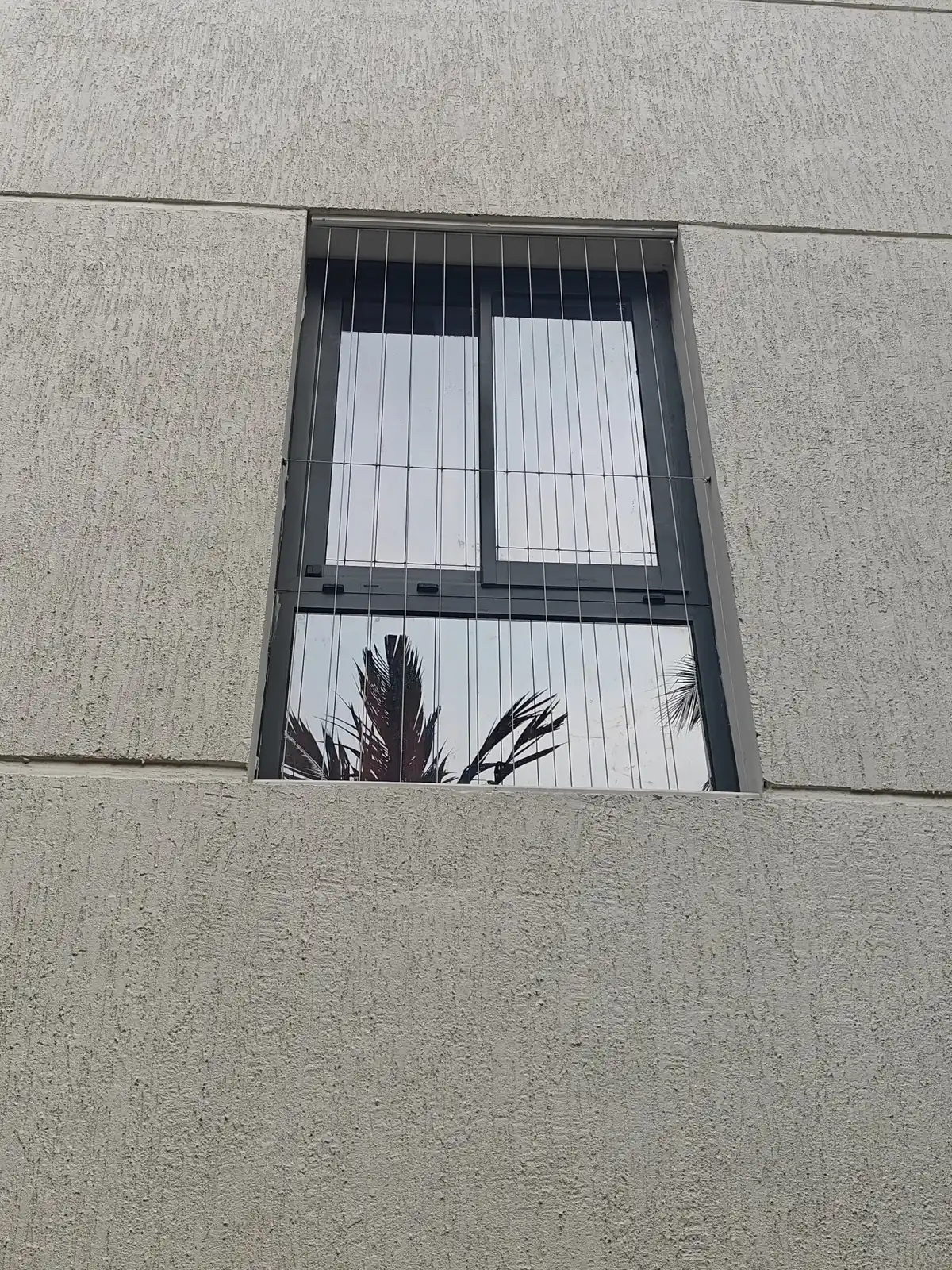
For generations, the Indian window has come with a steel grill. It keeps children safe, keeps people out and is easy to have made locally. Invisible grills offer something different: protection you can hardly see. Neither is right for everyone. Here’s a straightforward comparison.
What each one is
Traditional grills are frames of steel bars, usually mild steel, which are welded, then painted or galvanised. They come in anything from plain bars to elaborate patterns, and they’re usually fixed into the wall.
Invisible grills are thin SS 316 stainless-steel cables, around 2 to 3 mm thick, stretched between aluminium tracks at a spacing of around 2 to 3 inches. From a few metres away, they almost disappear.
At a glance
| Point | Invisible grill | Traditional grill |
|---|---|---|
| Child safety | Excellent if properly fitted | Excellent |
| Intruder resistance | Low | Higher |
| Light and view | Barely affected | Reduced |
| Rust | Very low with SS 316 | Common without upkeep |
| Upkeep | Occasional wipe and tension check | Regular repainting |
| Appearance | Clean, modern | Depends on design |
| Heat | Holds little | Bars can get very hot |
| Fire escape | Cables can be cut | Often blocks escape |
Safety for children
Both types can protect children well, if they’re designed properly. A traditional grill is safe when the gaps are small enough and there are no patterns that can be used as footholds. Decorative scrolls and horizontal bars can make it easy to climb.
An invisible grill relies on correct spacing, tension and strong anchors. Vertical cables give a child no foothold. The risk with invisible grills is poor installation, not the idea itself. If the tracks are badly fixed, or the cables are loose, the protection suffers. Read how invisible grills are installed to see what a good job looks like.
Security
This is where traditional grills clearly win. Solid bars take time and noise to get through. Invisible grills can be cut with the right tool, so they’re a safety product, not a security product. If you live on a ground floor or a low floor that’s easy to reach, think hard about this. You may want solid grills on accessible windows and invisible grills on upper floors and balconies.
The same fact has a positive side. In a fire, a solid grill can trap people inside, while cables can be cut quickly. It’s worth thinking about escape routes as well as break-ins, and many fire safety advisers point out that fixed grills can block a way out.
Light, air and view
Invisible grills are hard to beat here. Rooms behind heavy bars lose light and feel enclosed, and a good view is broken into strips. With cables, the view stays almost whole, and air moves freely. For a balcony, the difference is huge. It can turn a cage into a place you want to sit.
Rust and upkeep
Mild steel rusts. In humid and coastal cities, the paint can start to fail within a few years, particularly at the welds and where the bars enter the wall. Brown stains run down the plaster, and repainting a grill neatly is a slow job, especially on upper floors.
SS 316 resists this much better, including in salty air. Aluminium tracks don’t rust either. All they need is a wipe now and then, and a tension check every few months.
Heat
Steel bars absorb heat in strong sun and can stay warm well into the evening. They can be too hot to touch on a west-facing balcony. Thin cables hold very little heat, so in hot cities the balcony cools down sooner after sunset.
Cost
Costs vary with the size, design and material, so it’s best to get quotes for your own home. As a general guide, a simple steel grill may cost less to buy at first, while invisible grills are often higher at the start. But compare the cost over time as well. A steel grill needs repainting over the years, which adds up, especially if you need someone to work at height.
Looks and building rules
Many apartment associations now prefer invisible grills, because they keep the front of the building uniform. Some ban new steel grills on balconies. Check before you order anything. In older houses, a well-made steel grill can be part of the character of the home, and some families prefer to keep it.
What neither one does
Neither type keeps out pigeons on its own. Birds can pass through both cables and most steel grills. If birds are a problem, add a clear net behind. And neither replaces care: a chair next to a low grill can still let a child climb. Keep furniture away from the opening.
Which should you choose?
Choose invisible grills if:
- Your home is on an upper floor
- You want to keep the view, light and breeze
- You live near the sea or in a humid city
- You don’t want to repaint
- Your building prefers a clean front
Choose traditional grills if:
- Security is your main concern
- The window is on a ground floor or is easily reached
- You like a decorative pattern, or you want to match an older house
Use both if: you have accessible lower windows and upper balconies. Many homes do.
A note on old houses
In an older home, grills are often part of the design. If you love the pattern, keep it and add a net behind it where gaps are too wide for a child.
Making the switch
Replacing a steel grill is simple. The old grill is cut or unscrewed, the wall is repaired and painted, and the tracks are fixed in the same opening. Plan the removal first, since it’s usually a separate job. See our invisible grills and balcony invisible grills pages for more.