




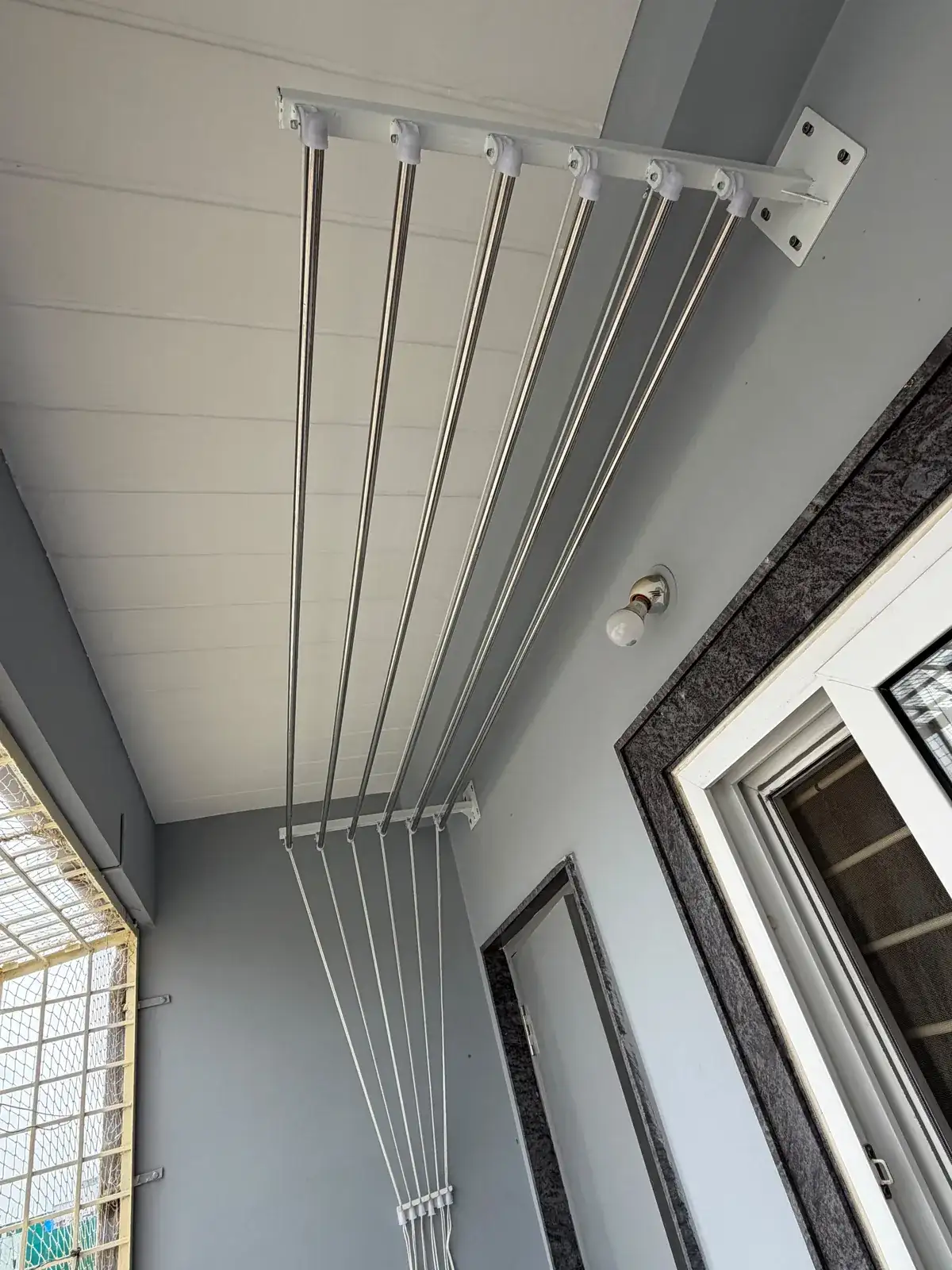

A shaded drying space
Most balconies and utility areas in Guntur houses and flats have a concrete slab, which is all a pulley rack needs. Raised under the slab, clothes are out of the direct sun that fades them and out of the monsoon rain, while warm air still dries them quickly. For older family members, there are no stairs to climb with a heavy basket.
Before fitting, we check
- That the ceiling is a concrete slab.
- The width and depth of the space.
- Lights, fans, doors and coolers in the way.
- Where the rope holders will be easy to reach.
Parts
- Stainless-steel rods cut to the width of your balcony
- Pulley brackets fixed into the slab
- Good-quality rope for daily use
- Wall cleats to tie the rope off
Fitting day
We confirm the slab, mark the bracket line with a level, drill and fix the brackets, cut and cap the rods, thread the ropes, fix the cleats and run each rod up and down until it moves smoothly.
Sizing
A couple usually manages with three or four rods; a family with children five or six. If you dry bedsheets at home, choose longer rods or one extra.
Racks with a pigeon net
If pigeons perch on the balcony, clothes hung below them get soiled. An outer-edge net fitted alongside it stops birds soiling the washing.
Monsoon tips
During heavy rain spells, spread clothes across every rod and keep a window open for airflow. Moving air dries clothes faster than warmth alone.
Care
Ease the rods down, tie off each rope and don’t load one rod with everything heavy. Replace ropes when they wear.
If your ceiling isn’t suitable, see wall mounted cloth hangers in Guntur. Full details on ceiling cloth hangers.
From the roof to the balcony
Many Guntur families have carried washing up to the roof for years. A ceiling rack on the balcony saves those trips in the heat and keeps clothes out of the harsh sun. The roof can still be used for bedsheets and large items on dry days.
Before we come
Note the balcony’s size and where its fan, light and door sit. A photo of the ceiling helps us confirm it is a solid slab.


