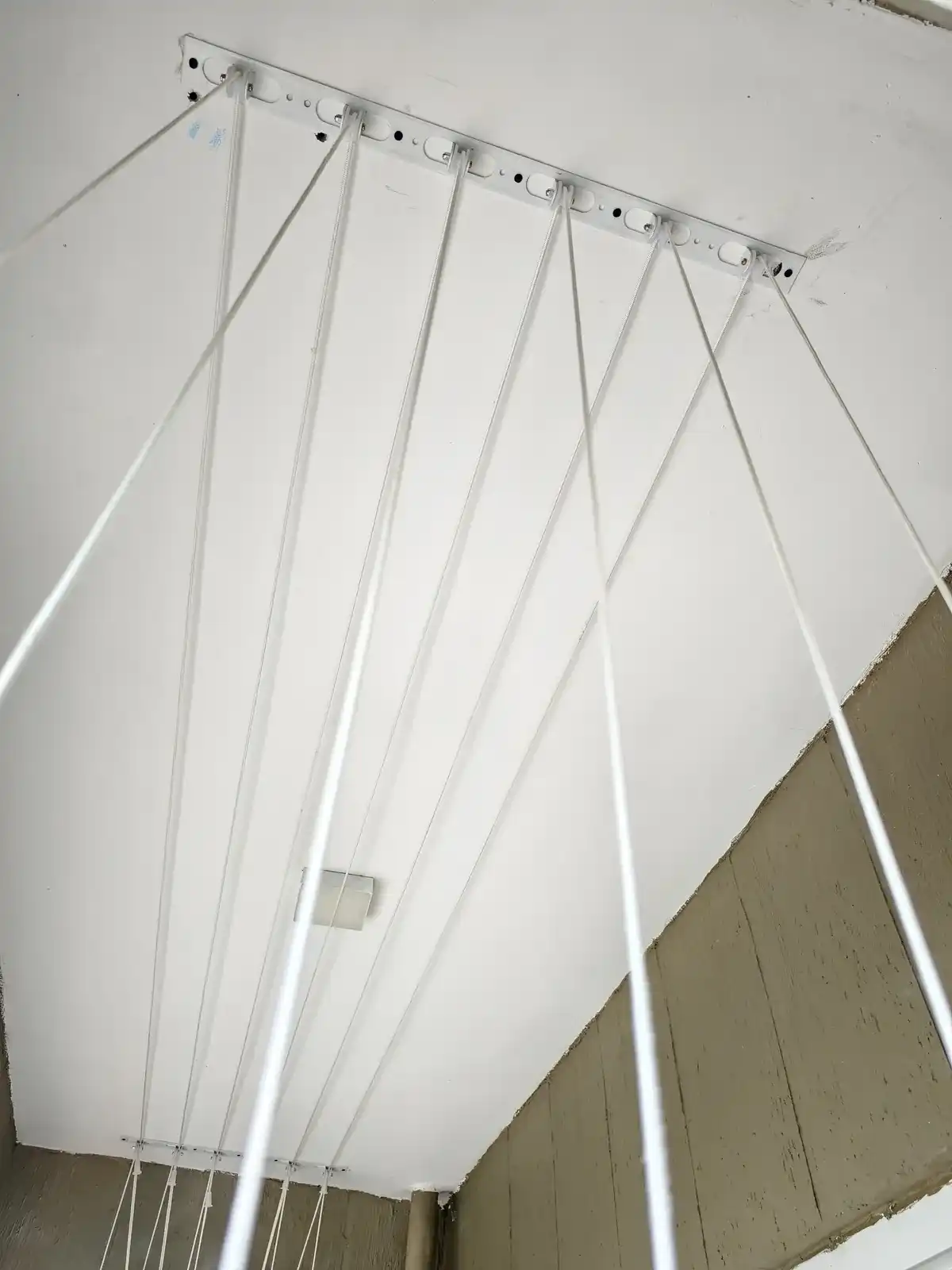


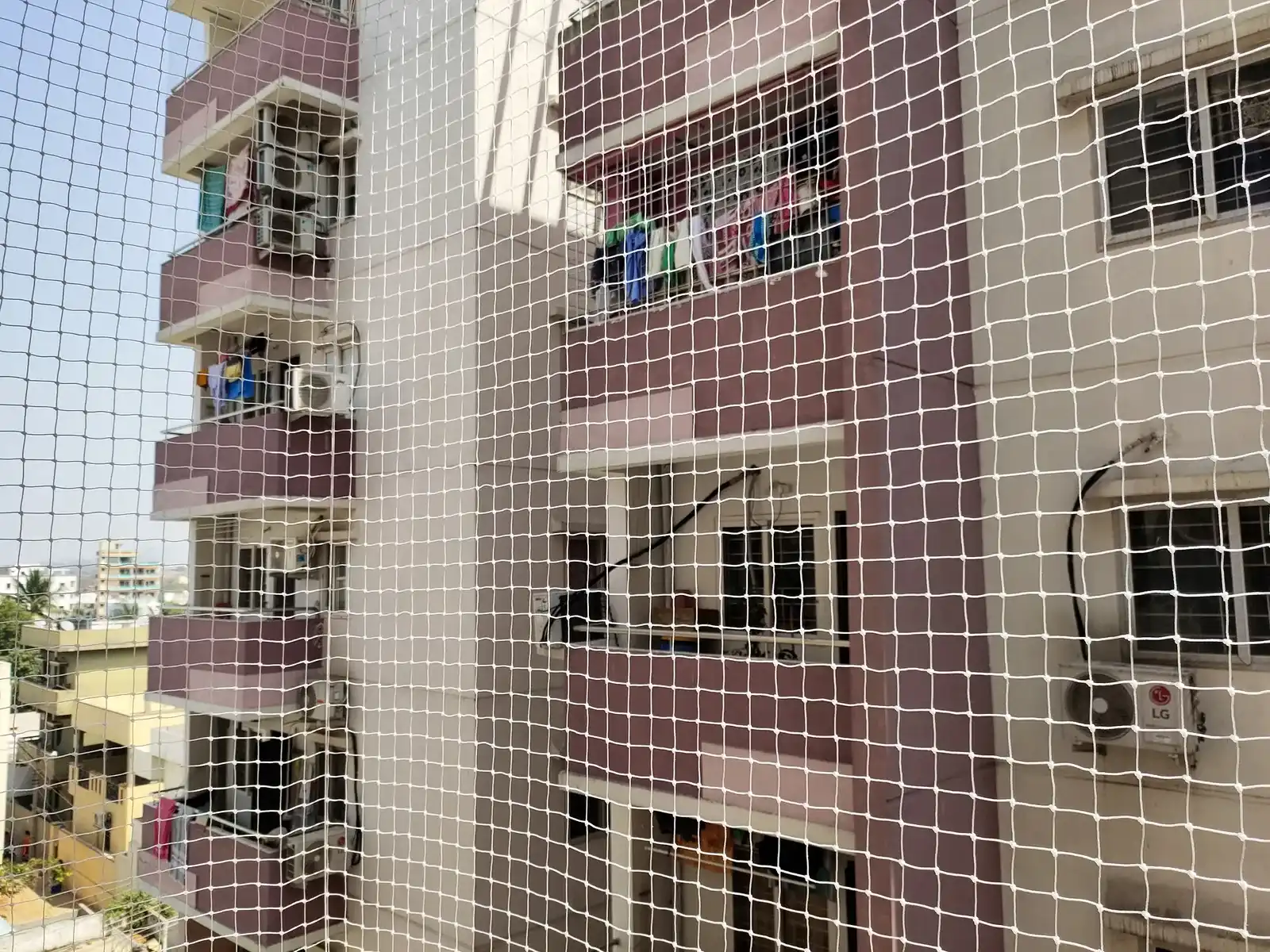

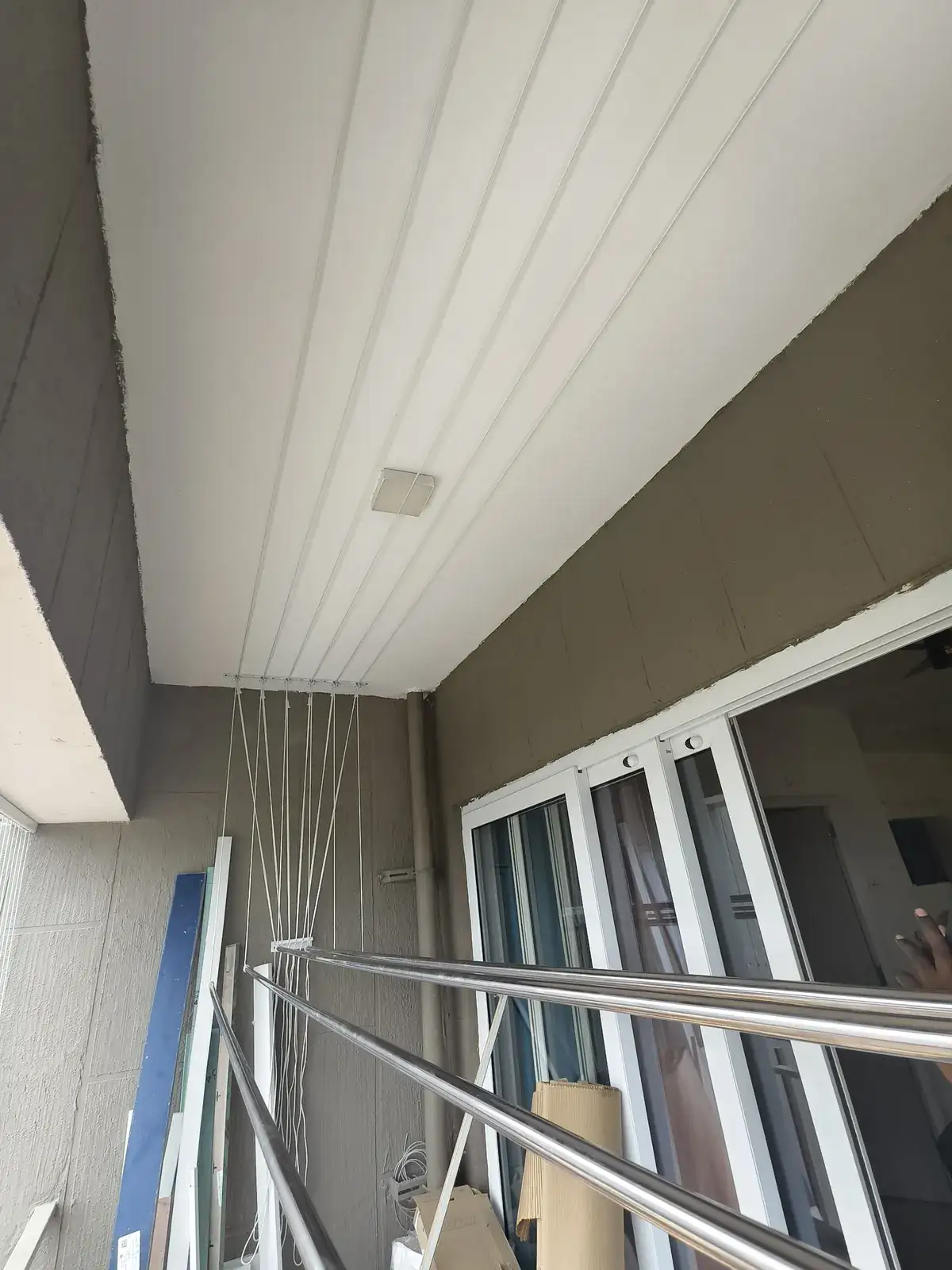
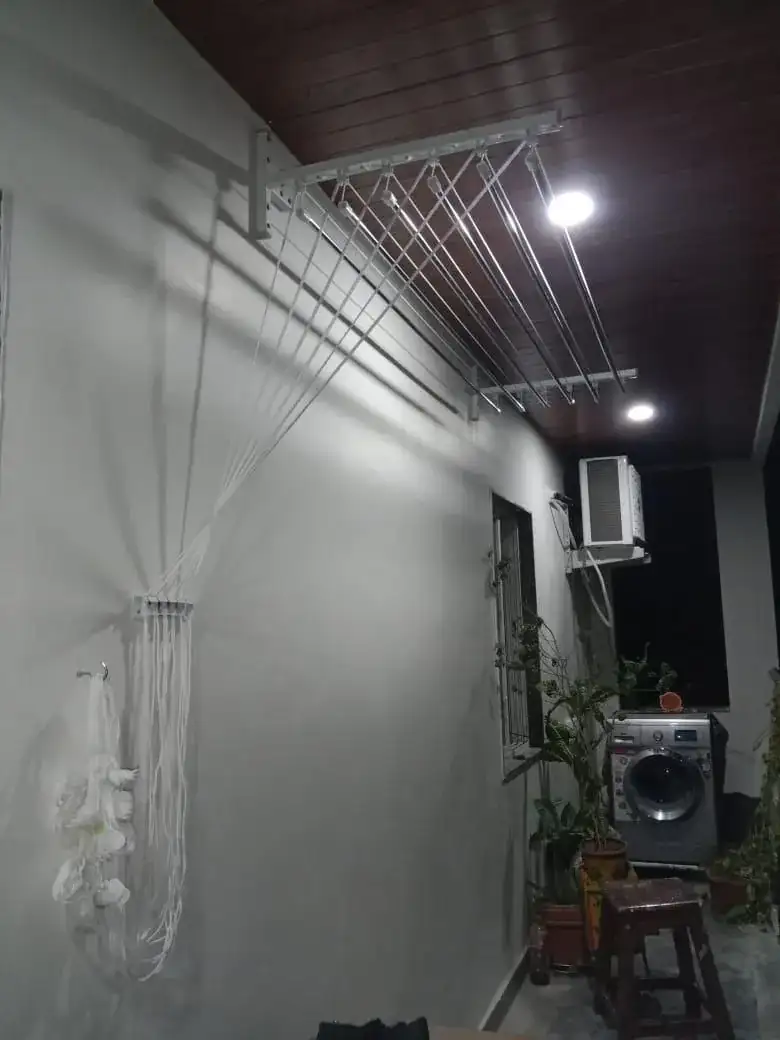

Homes that suit a wall rack
- Terraces under a sheet roof, where the sheet can’t carry a rack
- Netted terrace corners in monkey areas
- Tall yards in independent houses
- Narrow passages and bathrooms
Choosing the wall
A wall in partial shade protects colours in summer; a wall with some airflow helps in the monsoon. Kitchen and bathroom walls usually have water lines, so we check first.
Styles
| Style | Best for |
|---|---|
| Swing-out arms | A full wash |
| Pull-out rods | Narrow passages |
| Small fold-down frame | Towels |
| Fixed brackets | Netted terrace corners |
Materials
Stainless or coated steel rods and strong hinges. Brick and concrete take standard anchors.
Fitting
We confirm the wall, agree the style and height, mark and level the brackets, fix them, hang the rack and test it open, shut and loaded.
Inside a monkey net
In neighbourhoods near the hills, many families enclose a corner of the roof with a heavy-duty monkey net and a lockable door, then fit a wall rack inside on the staircase-room wall. Clothes get sun and air, and the monkeys can’t reach them.
Care
Close it gently, wipe the rods and oil a stiff hinge.
See cloth hangers in Tirupati for every option, or our wall mounted cloth hangers page.
Older relatives
A wall rack at shoulder height opens with one hand, with no ropes or stretching, which suits grandparents who do the washing.
Two racks
Larger households often fit one rack inside a netted roof corner for the main wash and a small one in the bathroom for towels.
Before we come
Choose one or two walls you’d like to use, check what’s behind them (kitchens and bathrooms often have pipes) and send a photo of the wall and the space in front of it.
Utility yards
Many Tirupati houses have an open yard beside the kitchen where washing is done. A wall rack there keeps drying close to the washing area. If monkeys visit the yard, it can be enclosed with a heavy net.


