


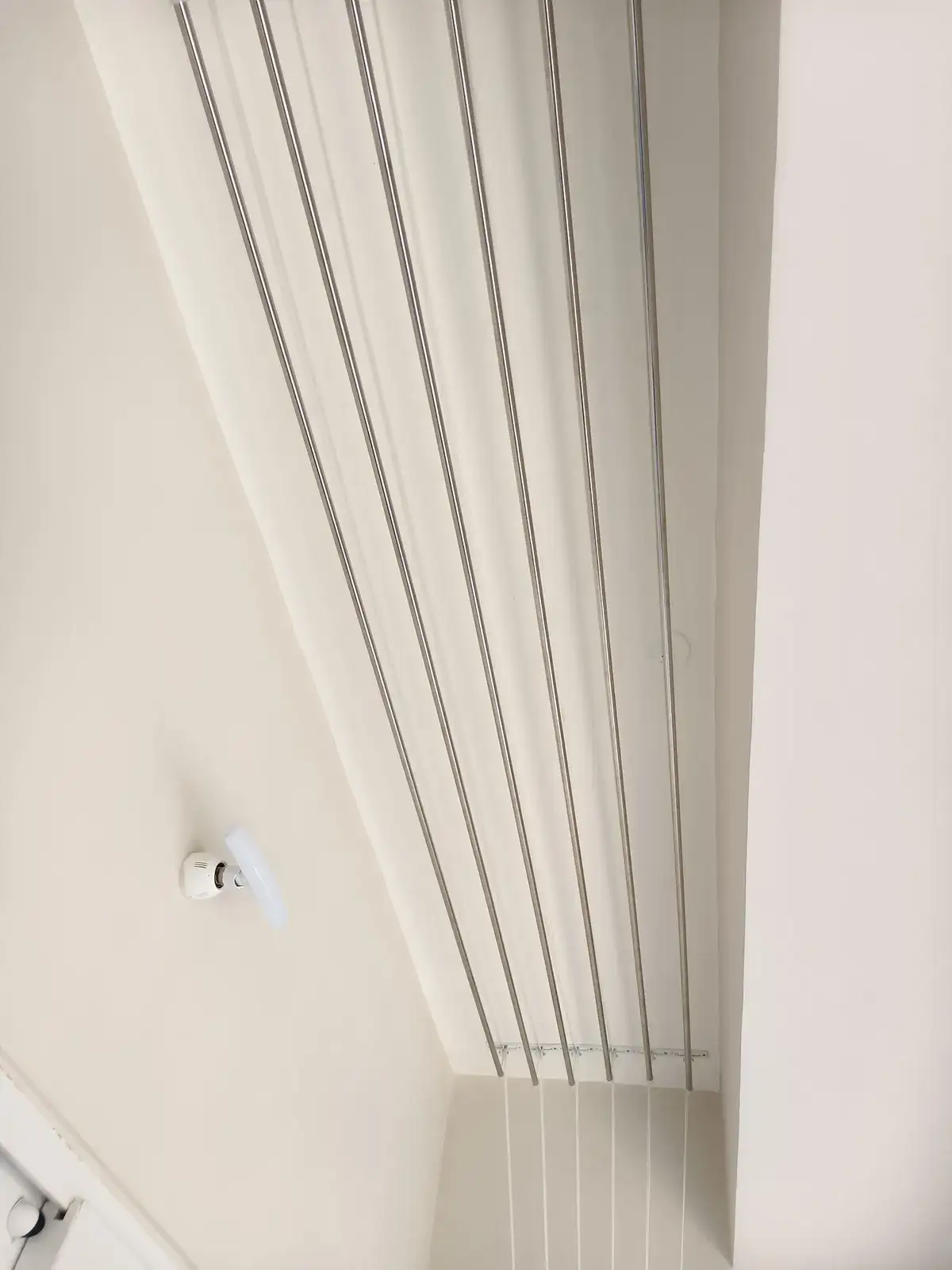
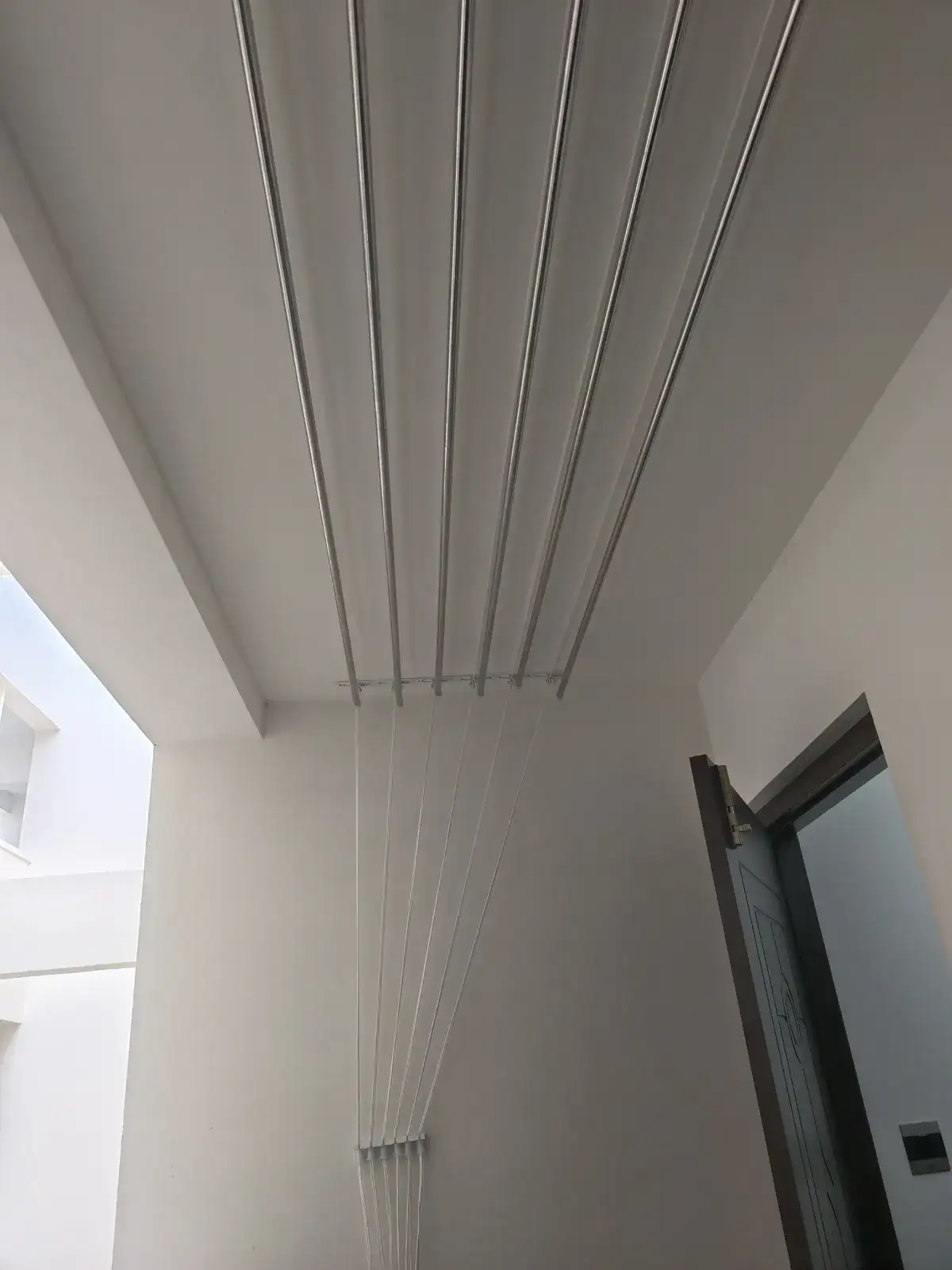
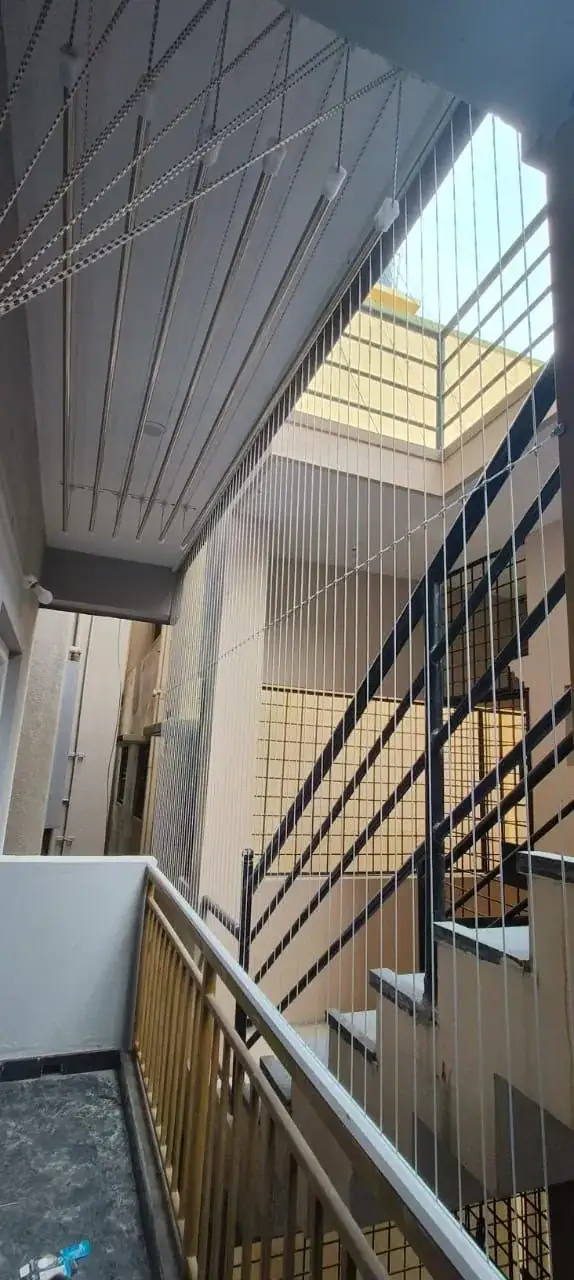
Why does a ceiling rack help in Nellore?
Warm air collects just under the balcony slab, and clothes hung there catch whatever breeze is going. In the humid months that makes a real difference to how fast washing dries. In the monsoon, raised clothes are already under cover when the rain comes. And for older family members, there’s no climbing to the roof with a heavy basket.
What do you check?
- That the ceiling is a concrete slab.
- The width and depth of the space.
- Lights, fans and doors that rods must clear.
- Where the rope holders will be easy to reach.
What goes in?
- Stainless-steel rods cut to your balcony width
- Pulley brackets fixed into the slab
- Good-quality rope for daily use
- Wall cleats to tie off the rope
What happens on the day?
The sequence is simple: check the slab, level the bracket line, drill, fix, cut and cap the rods, run the ropes, add the cleats and test each rod till it’s smooth.
How do I dry clothes faster in the monsoon?
Spread clothes across every rod rather than bunching them, raise the rods fully, and keep a window or the balcony door open when you can. Moving air dries clothes faster than warmth alone.
How do I look after it?
Let rods down slowly, secure the rope each time, keep heavy items spread out and change any frayed rope.
If your ceiling isn’t suitable, see wall mounted cloth hangers in Nellore. Full details on ceiling cloth hangers.
How many rods do families choose?
A couple usually manages with three or four. A family with school-going children, who need uniforms dried overnight in the rains, usually wants five or six. If you dry bedsheets at home, go for longer rods or one extra.
Can I combine it with a pigeon net?
Yes. If birds perch on the balcony, clothes below them get soiled. A net on the outer edge, fitted the same day, keeps them clean. The rods are placed to clear it.
Before we come
Measure the width and depth of the balcony and send a photo of the ceiling.


